
Santa Monica Homemade Umeboshi Plums
There is a word in Japanese “teshigoto” (手仕事)means Seasonal Handwork. Making Umeboshi plums is one of seasonal handwork for early summer. Japanese Ume Plum season in Japan is usually June through July, but California is usually in May.
I am fortunate to appreciate and continue to practice the Japanese origin culture even I left at 19 Japan, where I was born.
One of my favorites is making Japanese-style pickles.
I wouldn’t say I liked eating pickles growing up, and I also did not pay attention much when my grandmother and mother were making pickles.
It tasted salty and smell funny to me at that time. I always favor eating something sweet taste when I was younger.
Umeboshi plums are the only pickles I ate when I was a child because they were usually inside rice balls (onigiri) that my grandmother and my mother made. Their saltness blended well with rice, and I love nori seaweed wrapped outside of balls. I also like it over the rice in an obento box. The color of reddish-pink in white rice (I was growing up mostly eating white rice as the primary grain) was also attractive to me and did not have the weird smell that most of the pickles had.
There are many memories of eating rice balls with umeboshi plums.
I want to share one of them.
When I was three years old, my mother made a rice ball (onigiri) before going to a public bath (銭湯sento) because I was hungry. My parents were young, and they did not have good incomes so they did not have money to buy enough food on those days and I got hungry a lot. When I get too hungry, my mother made a small rice ball with an umeboshi plum. One small rice balls(onigiri) was not enough to satisfy my tummy sometimes so my mother said, “Suck the umeboshi pit if you are still hungry. “
I sacked for 2~3 hours; the pit got a little softened and I was able to break it. There was a seed inside the pit, which had the skin and when I took the skin out to find a tiny seed, I called Kamisama (God). I had no idea why I called it Kamisama (God). My mother told me that you are a strange child. And asked me, why do you call inside umeboshi pit is Kamisama (God)? I just said, “because it is so precious, I feel Kamisama (god) is inside of Umeboshi pit. “
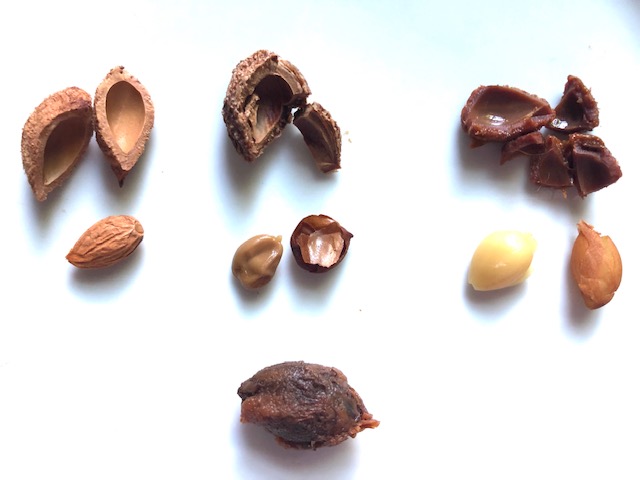
Photo: Umeboshi plums’ seeds – Left, umeboshi plum’s seed with skin separated shell after suck for 2~3 hours and dry for a few days on the kitchen counter. Center, over 20 years aged umeboshi plum’s seed and separated skin and shell. Right, three years aged umeboshi plum’s seed and separated skin and shell. The front umeboshi plum seed with shell.
When I grew up, I found out the legend that Tenjinsama (god in heaven at Tenjin shrine; a shrine dedicated to the memory of Sugawara no Michizane, who is deified as a symbol of learning.) is inside Umeboshi plum pit.
I could not believe it when I found out that Yenjinsama is inside the umeboshi plum pit, but then I confirmed what I felt every time I suck the umeboshi plum pit and got the seed inside there was Tenjinsama (god in heaven). Inside the umeboshi plum pit’s tiny whitish seed has a slightly bitter taste. It has plenty of vitamin B17 and helps to reduce fever.
I was connected to Umeplums since I was a young age. I was fortunate to go and help Kazuko and Jyunsei Yogi’s Ume orchard (they had over 400 ume plums trees and have made the first American grow organic Umeboshi plums 1983~2007) in Oroville, California, a few years later when I started to practice macrobiotics with my friend Nanayo. Kazuko and Jyunsei taught me how to work hard and appreciate the nature of Ume trees with their fruits heavest to make umeboshi plums and grow red shiso leaves. After Junsei passed in 2000, Kazuko kept working, but she retired in 2008. Now the orchard is owned by Kyoko and Nobu (since 2010) as Mume Farm https://mume.farm/. They make traditional Umeboshi plums, vinegar, syrup, and ekisu.
I have been supporting selling Kazuko’s 20 years aged California Organic Umeboshi plums which have medicinal benefits. The site to purchase Kazuko’s 20 years aged California Organic Umeboshi plums is here. https://sanaesuzuki.com/product/california-organic-umeboshi-plums/
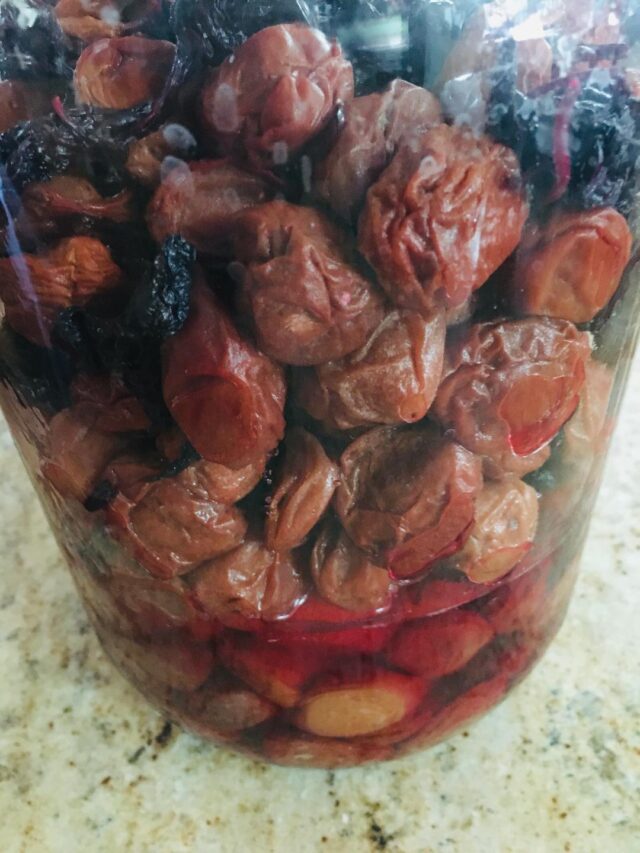
I make my Umeboshi plums (pickles) also every year and below is from last year umeboshi I made.
I also make Ume vinegar, Ume syrup, Ume enzyme juice, Ume wine, Ume jam, Ume sauce, Ume oil spread, Ume ginger, etc.
It is not easy to find good quality fresh ume plums to make my own pickles and other ume products.
I could not get fresh ume plums after Kazuko-san sold her Ume orchard; I did not know where to get fresh Ume plums. I tried Japanese market store-bought fresh Ume plums, but they did not come out good at all. I thought I had to give up making my own Umeboshi plums etc.
I had no idea that I was lead to finding Nankou Ume (南高梅)which is a very well-known Ume tree in Minabe, Wakayama, Japan. I have been supporting a woman who is growing Nankou Ume (南高梅)for 40 years and help to sell her fresh Nanko Ume plums every season for the last three years. And this year, I got some Kazuko and Jyunsei’s Ume offspring tree’s fresh Ume from Fresno, California.
My healing room was full of fresh Ume plums two weeks ago. I wish I could share the aroma of Ume plums. It is not just a sweet aroma like other plums. It has a distinctive pungent sweet smell. The smell of something brings me back to my childhood.
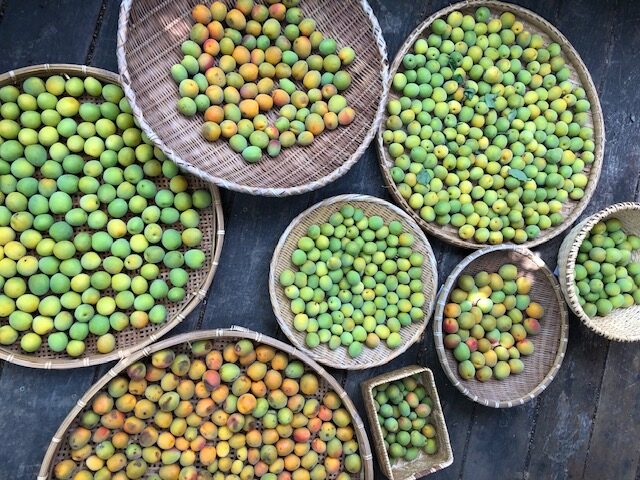
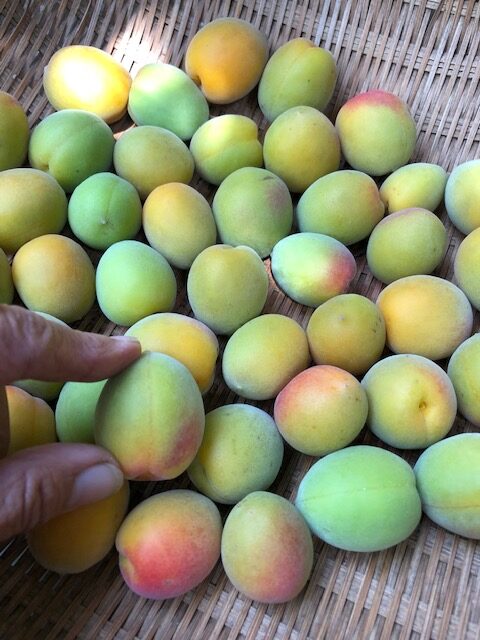
These are this year’s fresh Ume fruits that I got for making Umeboshi Plums (Ume plums fruits for making Umeboshi Plums are more rape than green hard ones).
I am also growing red shiso leaves (Red shiso leaves are also good to make Red shiso juice; here is the recipe from my blog https://sanaesuzuki.com/2019/07/22/red-shiso-juice-delicious-summer-remedy-drink-for-health/).
Here is the recipe I make homemade Umeboshi plums here in Santa Monica.
Santa Monica Homemade Umeboshi Plums
Ingredients
1 lb/about 450 g fresh ripe Ume plum fruit (if you get green firm ume plums, leave them in a cool room temperature room in a bamboo try if you have till the color turns yellowish)
120 g sea salt – 15% of ume plum fruit (traditionally 15~20 % sea salt has been using in Japan) I use Si sea salt, which you can purchase from us.
1/2 tbsp Japanese Gin or Shochu (This is for sterilizing; Gin’s alcohol content over 40%. Shochu’s alcohol content is less than 40%, commonly between 25% and 40%. You can use alcohol higher than 35% ABV like vodka too.)
Fresh Red Shiso for color
45 g red Shiso leaves (10% of Ume plums)
2 tsp sea salt for red shiso leaves
Equipment
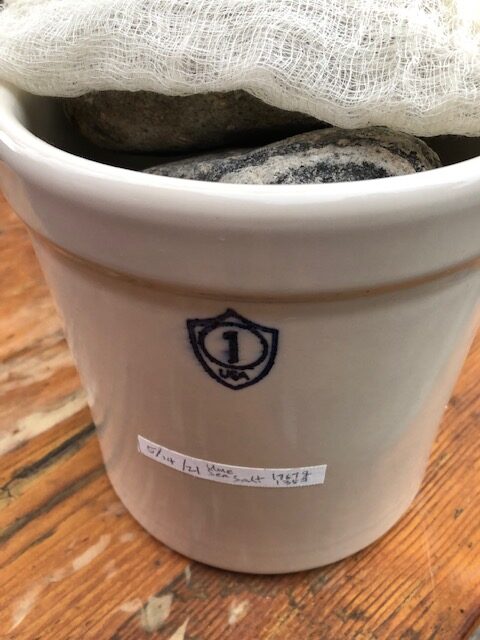
- A large mouse container (glass, ceramic, or enamel: avoid plastic and metal because of acidic sensitivity. I love #1 crock from Ohio Stoneware.
- Bamboo toothpicks
- Weight (Recommending 1.5 to 2 times of Ume plums. If it is too light, then it will be a cause of molding. I use stones as weight, but you can put baking beads, water, or other things in plastic bags to make as weight)
- A bamboo tray (to dry the pickled Ume plum to make Umeboshi)
Instructions
1. First, sterilize the container by boiling it in a large pot or pour hot water. Take out and let it dry to set aside.
2. Wash Ume Plum fruits.
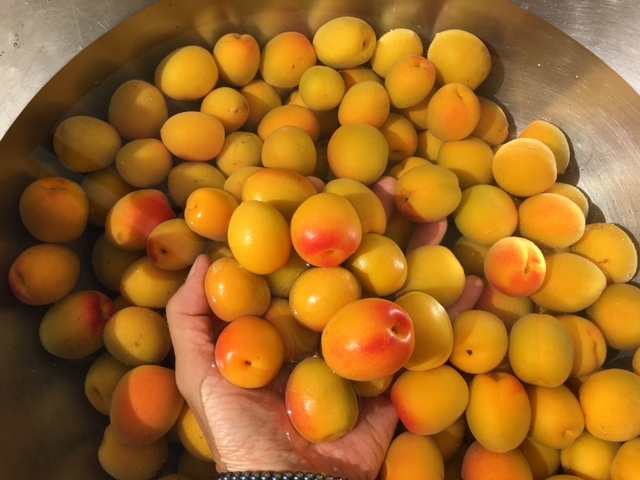
3. Pat dry the ume plum fruits with kitchen towels or cloths.
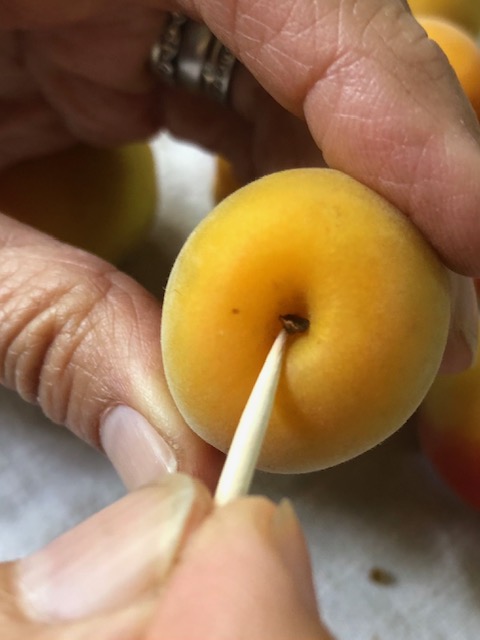
4. Using a bamboo toothpick, remove the woody bits (calyx) where the fruits are attached to their stems. It’s tedious work, but please do not skip it, so it prevents not get mold. Gently dry the ume entirely with a clean kitchen towel.
5. Put ume plums in a large bowl and pour over the Gin or Shochu to disinfect and sprinkle 1~2 tablespoons of sea salt to mix with hands. Make sure your hands are clean.
6. Pour Gin or Shochu on a clean kitchen towel and clean the inside of the container with the alcohol.
7. Sprinkle salt to cover the bottom of the crock. Then add two layers of ume. Sprinkle salt on top, followed by two layers of ume again.
8. Repeat this to make layers of umeboshi and salt until the umeboshi is all used.
9. Place a weight on top of the last layer. I used stones, but you can use baking beads inside a ziplock bag as a weight.
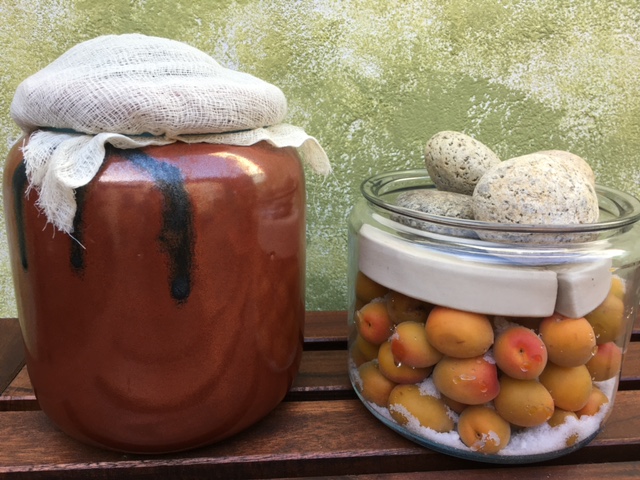
10. Recommend to write down the date and quantity of ume and sea salt used on a tape and put it over the crock.
11. Store a cool dark area out of sunlight. After a few days, the ume will start releasing moisture and you should see a layer of ume plum vinegar (梅酢, umesu) on top. If the ume plum vinegar does not come up in a few days, increase the weight so that the ume will sink in the vinegar quickly (this will protect from going bad/growing mold).
12. After one week, open the crock lid for the first time. Use clean hands and equipment to check.
13. If the ume plum vinegar is 1 inch (2.6 cm) above the plums, decrease the weight (roughly equal weight as the plums). If the plums are smashed/torn, also reduce the amount of weight. Store in a cool and dark place for at least one month, making sure the ume are soaked in plum vinegar.
Wait Until Red Shiso is Available
Patiently wait until red shiso is in season, usually mid to late June. You can leave your ume in the container as long as they are soaked in the pickling solution (ume plum vinegar). My case, my shiso leaves in my garden are ready to pick mid to late June so I usually check the weather report around that time and find three consecutive sunny days to dry sea salt pickled ume. I learned this method when I went to Kazuko-san and Jyunsei-san’s place. Fresh Ume in Japan is ready to pickle in June, but the season is a little early here and red shiso is not growing big enough to pick so I keep sea salt pickled ume for more than one month some years and dry ume first and add red shiso after I finish dry ume three days and nights.
How to dry sea salt pickled ume:
- On day one, remove the sea salt ume from the conteiner and place it onto a bamboo tray to dry. Make sure to leave a space for each ume so they are not touching. I turn each ume in the morning and in the afternoon one time each. Leave them overnight.
- On day two, repeat the same as day one to turn and leave them on the tray at night too.
- On day three, repeat the same as day two.
- This is a way to get Yin and Yang energy. Sunlight gives strength and moonlight provides softness.
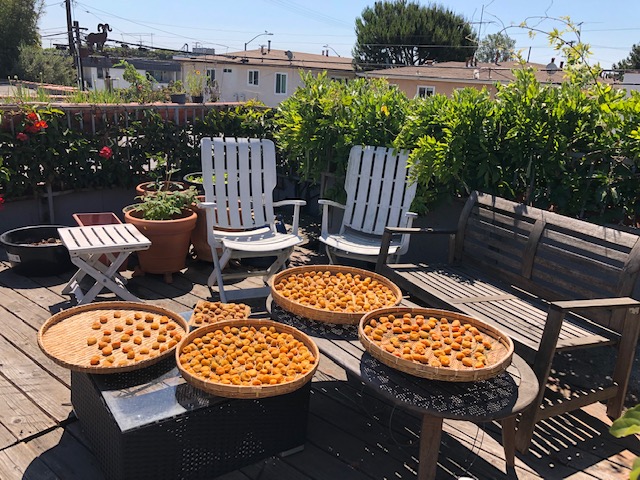
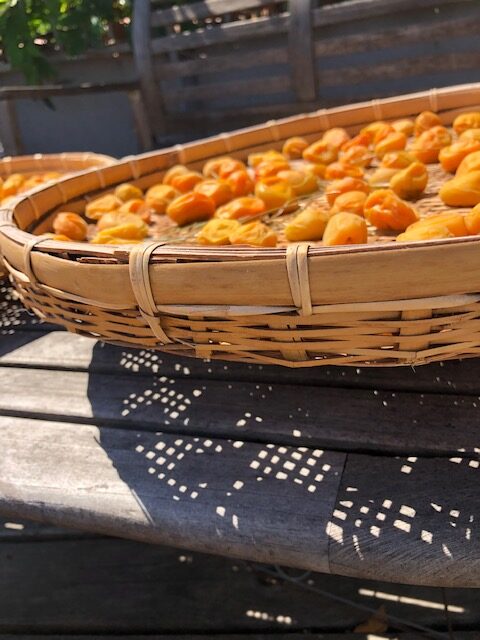
Harvest red shiso leaves from my garden or when I see them in the Japanese grocery store. If you can’t get red shiso, you can skip red shiso leaves and just sun dry to make white umeboshi plums.
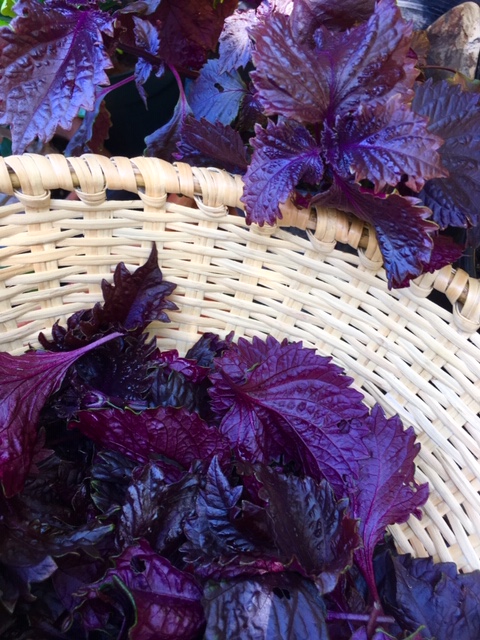
- Pick shiso leaves from the stems and put them in a large bowl.
- Prepare the red shiso leaves: Wash the shiso leaves and drain the water as much as you can.
- Sprinkle half of the salt amount on top of the leaves.
- Mix the salt and shiso leaves with your hands and then massage them.
- Squeeze and discard the dark purple liquid that comes out.
- Sprinkle the remaining half of the salt over the shiso leaves and massage again.
- Squeeze out the dark purple liquid from the leaves again.
- Place the shiso leaves into a small mixing bowl.
- Add 1 tbsp of umesu (plum vinegar) from the jar of plums.
- Add the leaves to the container of umeboshi plums.
- If you want to make red shiso condiment then you can dry red shiso as you dry the umeboshi plums.

From my experience that umeboshi plums are best to start eating at least one year from pickling. Some people eat sooner than in one year, but they will be much saltier. If you want to have much milder umeboshi plums, wait for three years. More umeboshi plums aged they become medicinal.
I will update to edit this section to add more photos later.
If you have any questions, please send me email at sanaehealing@gmail.
Love,
Sanae

30 Years Ago Today
Once in a while, there is no significant reason, but I feel not up in a lifting mood. I am sure I am not the only one to have these kinds of days.
I have been unable to get up in the morning as usual.
I could hear my husband Eric in the kitchen.
I smelled he was making my morning remedy tea, breakfast, and feeding cats and dogs family.
I was figuring out why I have not been able to get up.
Is it because I am affected by May Gray (darkens the coastal skies of sunny southern California with a marine stratus layer)?
Am I just tired because of aging? – I turned 66 last month.
Am I feeling scared that stage IV lymphoma that I had four years ago might come back?
Am I doing more than my limit, and I did not rest enough?
I think all these reasons are correct.
Eric came to bed and kissed me before he left for his work.
The house was quiet after Eric left, and all my dogs and cats’ family was around me. I talked to them a little bit, and they encouraged me.
I focused on getting up, making my morning routine, drunk remedy drink, body scrubbed with loquat leaves, meditation, and ate breakfast.
I went out my morning walk with my dogs.
I noticed the cool air and smelled jasmines blooming neighbors’ sidewalks.
I could hear a car stopped behind me quietly.
I looked back and saw Eric’s smile.
I was not expecting him to be home this morning, so I was surprised, and the dogs were excited to see him.
I decided to ride back home in his car because Kai, one of the dogs, was ready to jump in.
I asked him, “where are you going?” he said, “home.”
When we got home, he asked me,
“Do you know what today is? May 13th? “
I did not know what to say because his birthday is May 15th and May 17th was the day I received a diagnosis, only weeks to live four years ago.
My focus was on these two dates recently.
He told me that his mom called him this morning and remind him what today is for us.
He gave me blight sunflowers and said to me,
“30 years ago today, we met!”
That’s right.
How can I forget about it?
We met two days before Eric’s birthday in 1991 in Mexico, where he worked at a resort hotel as an executive chef, and I was a guest.
I usually remember this date, but this year, I looked at May Gray every morning and forgot about it.
I am very grateful to have Eric’s mother reminded him, and for him to got cheerful sunflowers for me and took time to come home to tell me 30 years ago today, we met!
I am happy to have met Eric 30 years ago today, which changed my whole life.
His existence in my life has been helping me to live and want to live more.
I wrote today as gratitude to Eric’s kindness and Eric’s mother, Louise’s love.
Note: The photo is the day we met on the first day with the sunflowers that Eric brought for me this morning.
Love,
Sanae
Liver Healing Remedy Drink
Spring is here.
Chinese medicine and macrobiotic practice that spring associated with the Liver organ. (One of my books, “Love, Sanae” has a list of five transformations of each seasons’ organs, foods, emotions, and temperaments, etc.)
I was diagnosed Only Weeks to Live with stage IV Non-Hodgkin’s lymphoma of the Liver almost four years ago.
I just went to see my oncologist, Dr. Mead at UCLA hospital in Santa Monica. She told me that lymphoma has a recurrence record after 3~5 years of treatments so I have passed the first step and she was very pleased.
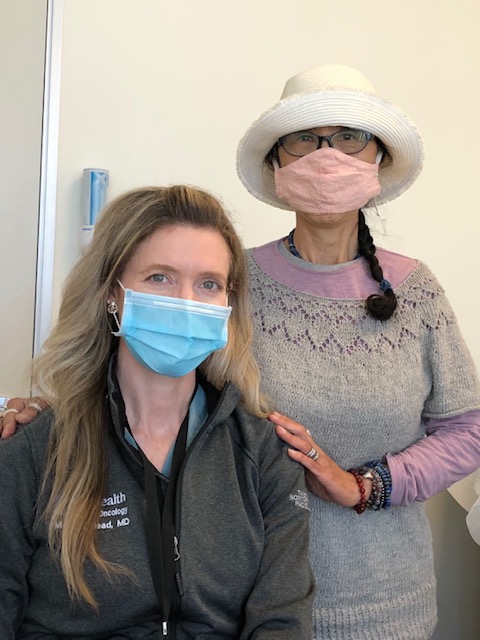
Photo: with my oncologist Dr. Mead (too bad that you can’t see our big smile because of wearing the mask).
This lymphoma was my second cancer (the first one was ovarian cancer). I was very sick and weak this time and felt that I might die. I was over 60 years old so even though I did not want to take chemotherapy, but the holistic approach was not catching up with cancer. I wanted to live so I decided to take chemo treatments with my macrobiotic practice. It was one of the hardest things I had experienced. (My blog “Chemo Sucks!“)
Dr. Mead does not know what is holistic approach nor macrobiotics practice, but she has seen what I applied to help my conditions when I was taking chemotherapies and through now with healing remedy drinks, macrobiotic plant-based foods, holistic modalities, meditation, etc., and she trusts me that I have been taking care of myself.
I would like to start sharing more about what I have been doing to help my conditions.
The first one is my morning ritual remedy drink.
I have experienced that this remedy is helping me even with side effects from chemotherapy too.
I really hope you try taking this remedy for yourself.
Liver Healing Remedy Drink
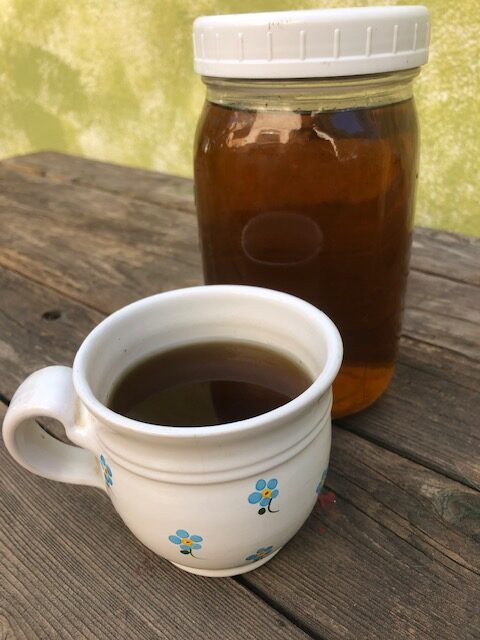
It is best to drink one cup in the morning before you drink or eat something. After you drink this remedy, 30~60 minutes later, you can eat breakfast or drink something else.
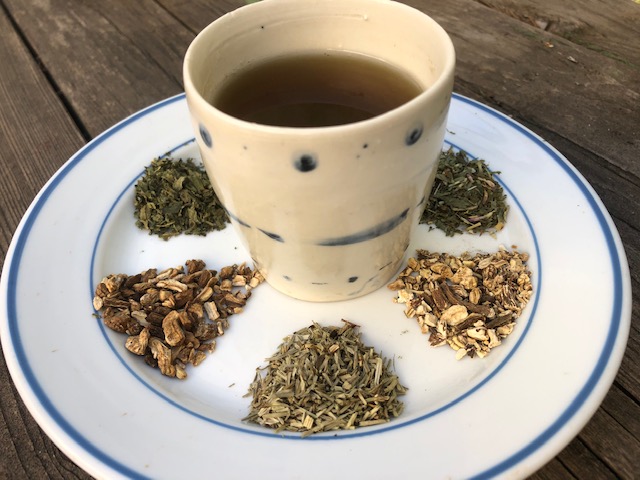
4 cups spring water.1 tablespoon organic dried burdock root
1 tablespoon organic dried dandelion root
1 tablespoon organic dried nettle leaves or organic dandelion leaves
1. Add all the roots first in the water and bring the water to boil and when it boils, turn the heat to lower, then add nettle or dandelion leaves to simmer for 15~20 minutes.
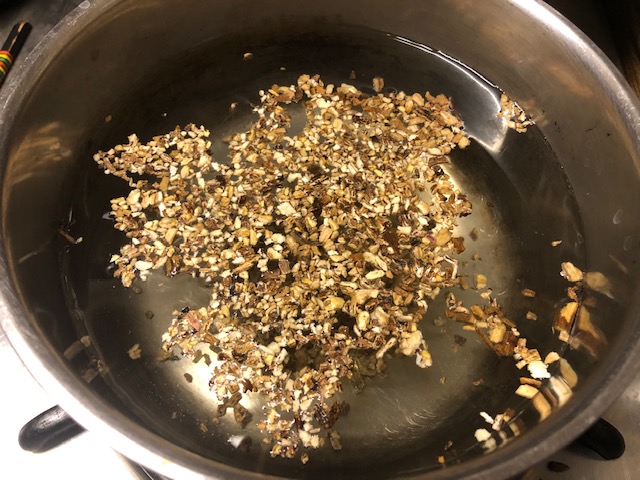
Photo: add roots ingredients first.
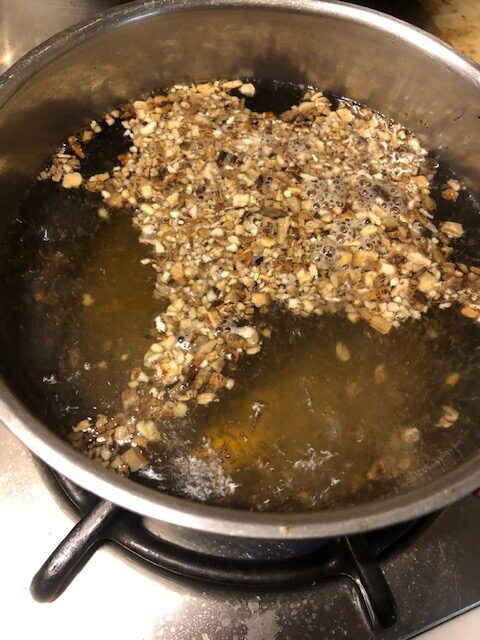
Photo: Bring the roots ingredients to boil.
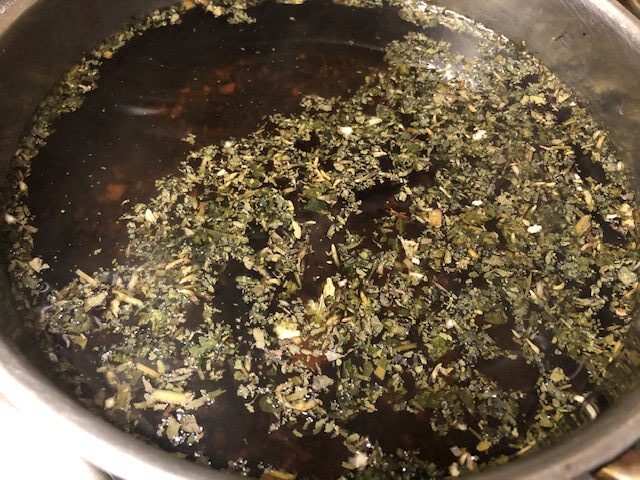
Photo: Add leaves to simmer.
2. Strain the tea and drink one cup at a time/day and cool the rest of the tea to storage in the refrigerator and heat one cup at a time to drink.
3. I recommend drinking this without sweetener, but if you must, then I would recommend one teaspoon of brown rice syrup, a half teaspoon of maple syrup, or beet sugar. No honey, brown sugar, white sugar, palm sugar, or cane sugar.
If you are going to use a teabag, then use one teabag of each ingredient with 2 cups of spring water.
I make mine with also red clover and horsetail to support bone health since I broke my bone after chemotherapy while I was hiking with my dogs. You add 1 tablespoon of each ingredient and add one more cup of spring water. You add them with nettle or dandelion after boiled roots.
All the ingredients can be purchase at Natural Food Market that carry dried herbs near you. I usually get mine from Co-opportunity Market (this website is near me in Santa Monica and Culver City in California, but if you have Co-opportunity Market then I think you can buy there too ) and Online herb stores: Mountain Rose Herbs and StarWest Botanical
Below is itemize what all these ingredients help.
Burdock root – Antioxidants, which remove toxins from the blood, may inhibit some types of cancer.
Dandelion root – Potent antioxidants. help fight inflammation. aid blood sugar control. help reduce cholesterol. may lower blood pressure. promote a healthy liver. aid weight loss.
Nettle leaves – Reduce inflammation, hay fever symptoms, blood pressure, and blood sugar levels.
Dandelion leaves – Antioxidants, reduce inflammation, reducing cancer risk, boosting the immune system.
Red clover – Osteoporosis, arthritis, hot flashes, skin and hair disorders.
Horsetail – Supports bone health, acts as a natural diuretic, promotes wound healing and nail health, promotes hair growth.
The liver is one of the organs that really important to support your health. It is always working to regulate most chemical levels in our body blood and excretes a product called bile. This helps carry away waste products from the liver. All the blood leaving the stomach and intestines passes through the liver.
Anybody who has taken any medication, not eating balanced food, oily food, drink alcohol, sugary juice, living in cities, and experience frustration so on…means everybody, right?
You can check online easily about how to take care of your liver, etc, but here are what I read so I want to share them with you.
The primary functions of the liver are:
- Bile production and excretion.
- Excretion of bilirubin, cholesterol, hormones, and drugs.
- Metabolism of fats, proteins, and carbohydrates.
- Enzyme activation.
- Storage of glycogen, vitamins, and minerals.
- Synthesis of plasma proteins, such as albumin, and clotting factors.
The symptoms of poor liver function?
Symptoms
- Skin and eyes that appear yellowish (jaundice)
- Abdominal pain and swelling.
- Swelling in the legs and ankles.
- Itchy skin.
- Dark urine color.
- Pale stool color.
- Chronic fatigue.
- Nausea or vomiting.
I really think that you do not need to wait for till showing any symptoms. Once a liver is showing symptoms, it will take a long time to heal so the key is to proactive and support the liver. In my case, I did not have any symptoms and I was very sick with lymphoma.
Here are 13 tried and true ways to achieve liver wellness
- Maintain a healthy weight. …
- Eat a balanced diet. …
- Exercise regularly. …
- Avoid toxins. …
- Use alcohol responsibly. …
- Avoid the use of illicit drugs. …
- Avoid contaminated needles. …
- Get medical care if you’re exposed to blood.
- This is my liver wellness…enjoy your life and take a rest!
I believe that taking care of your liver saves your health and life.
Have a supportive liver healing remedy drink!
Love,
Sanae❤️

Language of Flowers 2 Mimosa
I have been interested meaning of flowers (plants & trees) since I was a child. I talked to them as I grow some of them and I was so connected with them. I was so fascinated when I found out that there was the language of Flowers and I could learn what each flower meant. I read many books and sent flowers as gifts according to the language of flowers since I was in high school.
I picked Mimosa (Acacia dealbata) as my second *Language of Flowers because it is a February flower in Japan. Although it is not February anymore, I am sorry!
I wanted to write about Mimosa in February, but sometimes things do not go as I plan. My website was down and it took a while for me to bring it back. Then more things happened and I was not able to focus to post it till now.
* If you do not know what is Language of Flowers then please read what I wrote on Language of Flowers 1: https://sanaesuzuki.com/2021/01/31/language-of-flowers-1-japaese-ume-plum/

Mimosa is one of my favorite flowers in early spring. The blight yellow color warms my eyes and heart. The mimosa flowers absolutely shine and naturally represent the sun.

As I checked Language of flowers on https://hananokotoba.com/hanakotoba-ichiran/
Mimosa showed the Language of flowers in Japan,
「secret love 秘密の恋」, and 「friendship 友情」
and in the West,
「(the nature of) secret love」,「sign of joy」「sensitivity 感受性、思いやり」and「safety」
They are similar, but not exactly the same.
The mimosa flower is a genus of roughly 400 different shrubs and herbs. The name is derived from the Greek “mimos,” which means an “actor” or “mime,” while the suffix means “resembling.” This is likely because the leaves are said to mimic conscious life.
Sauce from https://florgeous.com/mimosa-flower-meaning/
It also says: She is my only love. Likewise, she is the flower of reunification. Symbol of gold and sun, mimosa is also the image of the triumphant life because of the hardness of the wood and the victory over the forces of evil.
Sauce from https://www.italyrivieralps.com/
I think this could be a unique Valentine flower gift with a note of the meaning of Mimosa Flower Languages, which is very romantic. Whoever receiving the flower understand your profound importance why you choose Mimosa flowers instead of red rose to her or him.

Love,
Sanae❤️

Raising Healthy Happy Puppies Part 3
Nalu and Kai’s puppies enjoyed their weaning food, and the weaning stage went very successfully. As they ate weaning food, I could see they grew much more and started to show their dognality (personality) a lot.
If you missed Raising Healthy Happy Puppies Part 1 and Part 2 here are the links:
They played with each other, also with Nalu mama and Kai papa and continue played with Eric (my husband) and me very often. They had fun with many different toys and cat’s tunnel.
They became more active, so Nalu mama’s job is mostly done feeding and cleaning. My turn to take care of puppies has come into the spotlight. I needed to spend more time cleaning them up, feeding homemade puppy food, play and take care of them carefully with love.
As much as I spent my time and committed to puppies, I felt that this was essential work and my favorite time.
I think Eric had so much fun in their whelping box and play-pen.

Photo: Eric and puppies playing in the whelping box.

Photo: Eric and puppies playing in the pen.
This is a sample schedule that I and Eric did for puppies every day.
I did not write here, but we sang, danced and slept together also.
6 am: When puppies got up, they did poo and pee right away, so I cleaned up them and whelping box. Hugged each puppy and told “good morning” and “I love you so much!” and played with them, and they also played with each other while I was preparing homemade food for them. Fed them and made sure they had enough food. If they were not eating enough, they were just licking and wandering around. If they ate enough, they did poo and pee again (of course, I had to clean up again), and they played and fell asleep again.
Meantime, of course, I had to take care of their parents, Nalu, Kai and two aunties and one uncle with their homemade food and took them out to the yard. Also, fed cats’ family and cleaned their litters.
This whole thing took about 2 hours.
8 am: Ate my breakfast and rest a little bit and take care of other things.
9 am: Set up the play-pen in the living room or if the weather was suitable then set up the play-pan outside.
10 am Puppies got up, cleaned up again, moved puppies to the play pan, gave snack and played again.
This time, when I cleaned their body (fur), I rub/massaged with an organic cloth (cotton or hemp), dip in a loquat leaves warm water. They loved this body(fur) rub a lot. Loquat leaves are very medicinal. Read my blog ” Loquat Leaves Body Acrub/Rub”

Photo: Lani is receiving Loquat leaves rub and animal reiki.
I comb them also then massaged their paw as they need and they fell asleep. I took some of the dogs out for a walk.
12:30 am: When lunchtime came, they got up so I cleaned up again and fed lunch and cleaned up another time and played and slept. Then I ate my lunch. Take other dogs out for a walk.
3 pm: As they were getting up, I cleaned up again, gave snack and played also, and I gave Animal Reiki this time, and they went back to sleep right away.
5 pm: They got up, I cleaned up, fed dinner, and played again and they just stayed around me in the living room and played each other while I was preparing my dinner or watched Netflix or news or Japanese show.
7 pm: Ate my dinner and checked puppies how they were doing.
9 pm: They got up, I cleaned up and played and moved them to whelping box to sleep.
Additionally, they love to play and talk with us.
They also really enjoyed holistic modalities (animal massage, animal reiki, etc.) and gentle touch.
It is so privileged for me to be their human mom and to take care of them and choose what good for them.
I wish I could keep them all, but physically I can’t take care of all of them as they grow bigger, so one of the necessary commitments for me to do is finding a trusted people to be their guardians.
I have met wonderful people through this process, and also some of my friends, students, and clients became my dog family.
Once in a while, some people would say what I want to hear, and they did not keep their words to raise puppies holistically or mindfully or blame me when something happened. So finding suitable guardians are not easy and have created my heartache and sadness. But I believe they came into my life to teach something, and wherever they go, they would teach everyone there too.
No matter where these puppies have gone to live in a new home, I continue to communicate with them and send metta to them because they are my dog’s grandchildren.
The puppies are leaving home usually around 8 weeks old. I need to get ready for puppies to leave home completed the weaning stage, giving the first puppy vaccination a few days before they leave home, and deworm them the next day.
Conventional veterinarians would give the first puppy vaccination 6 weeks or sometimes even younger, but we wait till close to 8 weeks and also giving them only necessary vaccinations, which Distemper-parve only/puppy DPV and deworming separating date.
Unfortunately, most conventional veterinarians give maximum vaccinations of 5 combinations at once and give deworm on the same day which is very harsh for puppies. I thought that I had to give all these 5 combination vaccinations, but it is not true. I found out the truth after I met a holistic veterinarian and studied myself about vaccinations.
I appreciate holistic veterinarian doctor Sally Lane who wrote Healthy Happy Pooch book forward to have taught me so much about vaccinations and other holistic approaches.
Here are photos of puppies getting check up to be ready for their first vaccination by holistic veterinarian doctor Sally Lane before they left the home. The number of puppies are the order of birth.

Photo: puppy #1 blue – Cheddar

Photo: Puppy #2 orange – Umi Banana

Photo: Puppy #3 brown – Wylie

Photo: Puppy #4 pink – Lulu

Photo: Puppy #5 green – Vasco

Photo: Puppy #6 sky blue – Lani
Getting vaccination from a holistic veterinarian doctor is important so you are not giving them vaccination at too young age and only unnecessary vaccination it means give only necessary vaccination to puppies and not maximum vaccination and no mercury and unhealthy preservative vaccinations. The better and safer vaccines have limited antigens.

Photo: Eric and Lani
Love,
Sanae ❤️

花言葉1梅
花言葉、知ってますか?
日本、ヨーロッパ、アジア、アフリカでよく使われていて知られていますがこのアメリカではあまり知られていません。
花言葉を英語で何と言うか調べたらLanguage of flowersと出ていていました。
ちょっとピンときませんが小さい時から花言葉に馴染んでいるので
ぜひこれから花言葉をご紹介していきたいと思います。
花言葉をご存知でない方には調べてみるとこんな風に書いてありました。
象徴的な意味を持たせるため植物に与えられる言葉で、一般に「バラの花言葉は愛情」のように植物と単語の組み合わせで示される。
日本では、主に西欧起源のものを核として様々なバリエーションがあり、
花をつけるものだけでなく、草や樹木、キノコにも花言葉が考えられている。
花詞とも表記される。
ウィキペディア(Wikipedia)参照 https://ja.wikipedia.org/wiki/%E8%8A%B1%E8%A8%80%E8%91%89
私は8歳くらいの時に初めて自分一人でお花を育てた頃に花言葉の事を知りました。
初めは興味心で調べていたのですが
一つ一つの花や植物に意味があるとわかってとっても感動しました。
それから花言葉を知っているとガーデンニングでお花や植物を育てたりする時に調べたり、
お花をギフトで贈る時に私にはとっても役立っています。
お花を送った相手の方が花言葉を知らなくても
なぜこの花を選んだかカードに書いて贈ると喜んでもらえてます。
そんな花言葉をこれから少しずつ紹介していきたいと思います。
まず一番初めにご紹介したい花は梅。
丁度1月の花とも日本では言われています。(もう1月の終わりでギリギリ間に合いました!)
日本での花言葉は「高潔」「忠実」「忍耐」。
西洋では「約束を守る」「忠実」「美と長寿」。
https://hananokotoba.com/hanakotoba-ichiran/
日本と西洋の花言葉が少し違うのも調べるのが楽しみです。
私の父親が育てていた梅は花梅で実はならなかったのですが赤い綺麗な花(下記)でした。

写真:赤花梅
私のご紹介する梅の花は実をつける花(淡いピンク色)。

写真:今年の南高梅花
この実は日本でよく知られている梅干しにする実です。
梅干しは薬用にも使われている日本の漬物。
私も毎年自家製のオーガニックカリフォルニアの梅で梅干しを漬けています。
昨年は梅干しで有名な南高梅で梅干し、酵素ジュース、ジャム、ソースも作りました。北カリフォルニアに住んでいる友人の数子さんの10年ものの梅干しと私の梅干しをインターネットで売っています。
梅干しは使い方、食べ方を知っていると長寿の秘訣になります。西洋の花言葉の一つに長寿とあって驚きました。
今年は梅の木を育てたいと思っていますのでいつか花が咲く事を願っています。

写真:南高梅の木(白梅花)
Love,
Sanae ❤️