
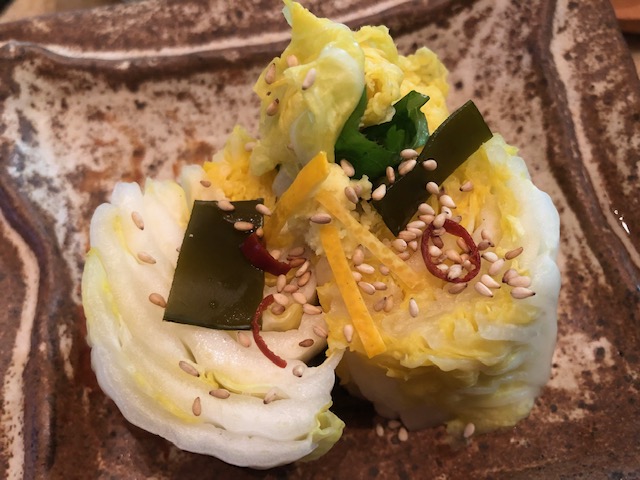
Spring is Pickles Time!
I have learned a lot since I moved to America, and the Five Elements of Macrobiotics were one of the significant lessons that changed my life.
I grew up in Japan, where people live seasonally.
The four seasons are commonly heard of, but traditionally people have lived by the five seasons of spring, summer, late summer, autumn, and winter, so it made sense to me.
It also reminded me of the *”seasonal hand-work” that my grandmother and mother used to do when I was little. *”seasonal hand-work” means making something with your hands each season.
I started to follow the seasonal rituals of Japanese tradition much later as I began to appreciate nature and season changes, even while living in Santa Monica in Southern California, where the five seasons are not as apparent.
Winter is not harsh here, but I noticed the contractions and tightness of the energy of the air and my own body so I appreciated the vegetables and fruits that grow in the winter.
Seasonal hand-work in January is making apple jam and citrus marmalade (usually mandarin). However, this year I made yuzu marmalade with my husband for the first time, and it came out very delicious. ), I also made kumquat syrup for sore throats.
February is miso-making. I make barley miso and rice miso in small amounts, and I feel the new year is here.
Then, spring suddenly emerges in Santa Monica and pushes winter out every year.
In spring the energy rises up, and the taste of sourness supports liver and gallbladder functions by the Five Elements.
I prepare my nuka doko (brown rice bran pickles bed/base)for nuka pickles: start roasting the new brown rice bran and adding it to the old nuka doko to prepare my nuka pickles for March.
I like daikon radish nuka pickles and kabu) (Japanese turnip) before the weather gets warmer. Once the weather gets warmer, I like cucumber nuka pickles. Another one is asazuke pickles (shorter-time pickles that taste more salad-like lightly pickled pickles).
In Japan, pickles (tsukemono) have been one of the staple foods, along with rice and miso soup, for a long time.
There were almost always pickles in each meal. I was not too fond of traditional Japanese pickles when I was younger because they smelled funny and were too salty and too sour. I only ate koji pickle, which had a sweet taste.
My mother always said, “Oh, you did not touch your pickles…finish your pickles. It is good for you!” She also often said, “Don’t worry you will like pickles when you grow up.”
She never told me why pickles were good for me and how much I had to grow before I like them, and I did not bother to ask.
When I came to America to study English, still, I didn’t like any of the American pickles, but I tried relish pickles, and I liked them because they were sweet.
When I studied Macrobiotics in 1993 for the first time, I found that pickles are essential to our meals. The processing of pickling allowed for the preservation of foods throughout history, and pickles are a staple food in various regions worldwide. Fermented pickles promote lactic acid bacteria, which help our digestion, strengthen intestines, assimilate food, and fight diseases. They provide the health benefits of fiber, vitamins, and antioxidants and increase appetite.
I have been loving all kinds of pickles since I have “grown up” enough to understand the benefits. I have been making homemade pickles, traditional Japanese pickles: umeboshi plum (you can see my blog for the recipe https://sanaesuzuki.com/2021/05/29/santa-monica-homemade-umeboshi-plums/), nuka pickles, and nontraditional pickles called asazuke (short-time pickling), like pressed salad in Macrobiotic recipes.
I had read in Japanese historical literature that pickles started in the Nara era (710~794) as preserved food with salt. It showed that vegetables such as eggplants and melons, as well as fruits such as peaches, were pickled in salt, mainly for temple monks as side dishes.
In the Heian era (794~ 1191), pickles were introduced as side dishes: bracken, butterbur, and melons were pickled in salt in the spring. Eggplants, persimmons, and pears were pickled in salt, miso, moromi (raw unrefined sake or soy sauce mash), and sake kasu (sake lees) in the fall.
In the Kamakura era (1180~1336) to the Muromachi era (1336~1537), because of the development of tea ceremonies and use of monkō (incense), people began to eat pickles more and more, and they learned not only to sense the taste and aroma with their senses of taste and smell, but to enjoy the atmosphere and aroma of the place with their heart. It can be said that this is related mainly to the fact that Japanese people enjoy a delicate and subtle sense of taste and smell. Pickles have the effect of renewing the sense of taste and smell, so they were served in tea ceremonies.
In the Edo era(1600~1868), the variety of vegetables increased, and many merchants from all over the country began to gather in Edo. As a result, different methods of making pickles were devised. Until then, foods were pickled for storage purposes, but research began to allow foods to be pickled for a short time for consumption more readily.
The emergence of nukazuke has had a major impact on household pickle-making. In times like this, when food shortages and conservation of the environment are of great concern, reusable rice bran beds are critical.
In the Meiji era(1868~1912), farmers in the suburbs of Tokyo and other urban areas started making takuan-zuke and narazuke (variety of Japanese pickles) as side businesses.
In the Taisho (1912~1926)and Showa (1926~1989) eras, the pickle manufacturing industry started to boom.
Over the years, there have been an amazing variety of pickles that have been made in Japan, and I am not kidding.
I heard there are currently over 1,200 pickle companies in Japan, and they make at least five~ten different kinds, so you can imagine how many pickles are made all the time besides local homemade ones, which each family has prepares with various recipes.
Most commercial pickles use instant seasoning MSG, non-natural salt, and sugar to numb consumers’ tongues and create false flavors. Making homemade pickles using quality natural ingredients is safer for our health and improves taste.
These are the nine pickles that are the main varieties in Japan today:
1. Salt pickles (shio zuke)
- Simplest and most common types of pickles.
2. Rice Bran (nuka zuke)
- Household pickles are fermented in a mixture of roasted rice bran (the hard outer skin of the rice that is removed when polishing the rice grain), salt, kombu, and other ingredients.
3. Sake Lees (kasu zuke)
- Pickles are preserved in a mixture of sake lees (the yeast mash that is left over after filtering sake), salt, sugar, and sweet cooking wine (mirin).
4. Vinegar (su zuke)
- Pickles brined in vinegar are known as Su zuke. Rice vinegar is commonly used as the pickling agent and lends a crunchy texture and sweet and sour flavor to the resulting pickles.
5. Miso (miso zuke)
- Pickles are made by covering vegetables in miso, a fermented soybean paste.
6. Soy Sauce (shoyu zuke)
- Pickles are preserved in a soy sauce base.
7. Koji pickles (koji zuke)
- vegetables, fish, other meat, etc., are pickled in base (toko/doko), which is made by mixing koji with sugar and salt.
8. Mustard (karashi zuke)
- Pickled in mustard mixed with sake and rice malt after being pickled in salt.
9. Lightly pickled (asa zuke)
- Pickled with seasoning for a short time. You can easily make it using various vegetables such as napa cabbage, radishes, and cucumber.
I want to share Japanese pickles recipes that I have been making for spring.
Nuka Pickle ((Brown Rice Bran Pickles) edited from Love, Sanae cookbook
It is my favorite pickle in spring-sour, salty, and pleasantly pungent taste with a satisfyingly crunchy texture and refreshing flavor.
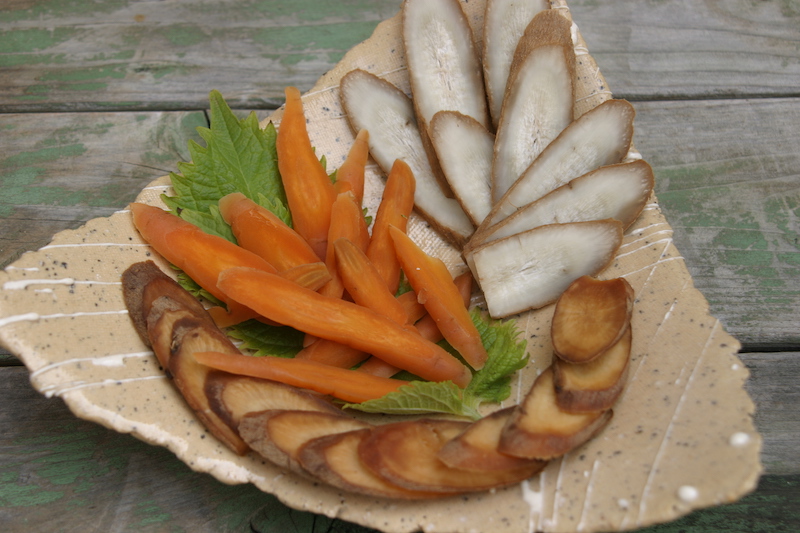
For the nuka bed:
1 pound nuka (brown rice bran)
2 cups purified water
2 to 4 tablespoons sea salt
2-inch square piece of kombu kelp (5cm)
one cup “starter” vegetables (carrots, cabbage, daikon, etc.), coarsely chopped
To make the nuka bed:
1. The first batch of nuka doko is very important in making nuka pickles. In a large skillet over medium-high flame., dry roast the bran (nuka) until the color changes slightly and the smell of bran intensifies. When evenly roasted, turn off the heat and allow it to cool.
2. In a small saucepan, boil the water. Add the sea salt and stir to combine. Add kombu, turn off the heat and let it cool.
3. Transfer cooled-off nuka to a ceramic crock, wooden barrel or enamel container. Add the kombu water mixture. Using your hands, gently combine the ingredients to form the nuka doko, or basis of the brown rice bran pickle bed.
4. Add chopped starter vegetables (dry them with a kitchen towel to take moisture out) which help to stimulate the fermentation process. Cover the crock with a clean cotton cloth and allow it to sit overnight.
5. Mix the nuka by hand once daily for the next 3 to 5 days. After this time, remove and discard the starter vegetables (I put them in the compost). The nuka doko is ready to make your delicious pickles.
6. Make sure vegetables (dry them with a kitchen towel to take moisture out) are ready to eat in a day, a couple of days to one week, depending on the kind of vegetables. Root vegetables and bigger sized vegetables take longer, and leafy vegetables and smaller sized vegetables take a shorter time.—For example, carrot- 2~3 days, red radish- 1 day, and small whole cucumber- 1 day.
7. Once you add vegetables, leave the crock in a cool dark area and mix vegetables daily.
If you cannot mix them daily, you can leave them in the refrigerator for a few days to a week. If you have kept it too long, the vegetables get more sour and salty, so make sure you rinse them with water.
If you are going out of town for a while, keep nuka in the refrigerator without vegetables. You can usually use the nuka bed to re-start making nuka pickles by adding a new roasted nuka to the old nuka bed to refresh.
Asazuke Napa Cabbage Pickle
Popular pickle with a refreshing taste for someone who loves crispy and light vegetables.
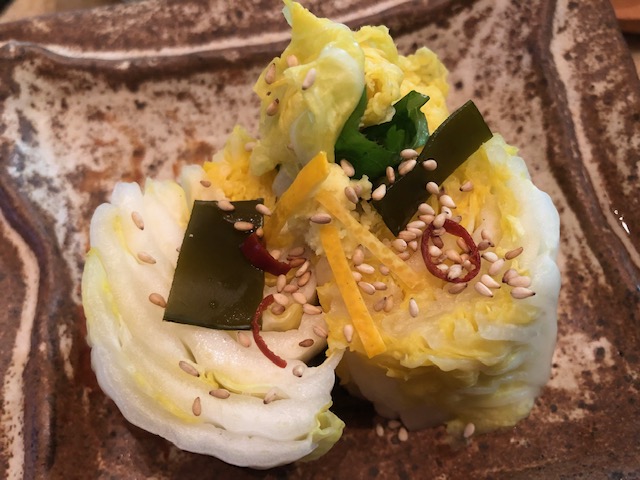
Ingredients
- 500 g napa cabbage (about half of whole)
- 80 g red radish (option)
- 20 g carrots (option)
Seasonings
- 10~20g sea salt 2~4% of the total weight of the vegetables
- 1 sheet kombu kelp 5cmx8cm/2”x 3.2″(Approximately 0.5 to 1% of the weight of the vegetables)
- 5 g ginger root shredded (optional)
- 2~4 dried red chili pepper without seeds sliced into rings to taste (optional)
- water (1/3 of the container)
- weight – Approximately 1.5 ~ 2 x of the weight of the vegetables
1. Gather all the ingredients.
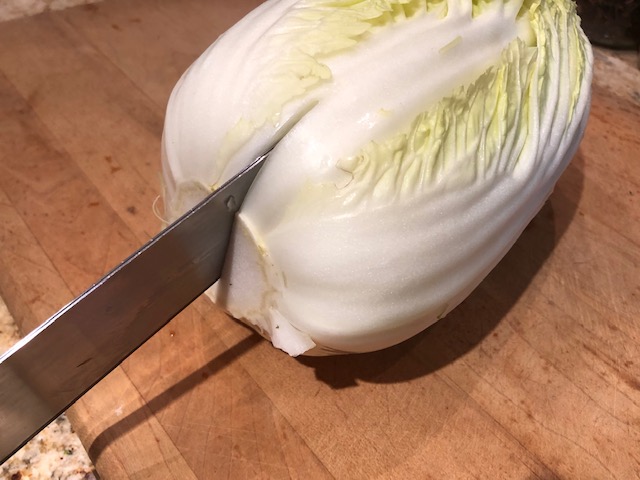
2. *Cut napa cabbage: Make an incision about 5 cm (2 “) deep from the base of the napa cabbage and tear it into two pieces. It will make them not come apart. Furthermore, insert a kitchen knife in the same way, tear it apart, and divide it into four pieces. If the nap cabbage is large, you can split it into 6 to 8 pieces.
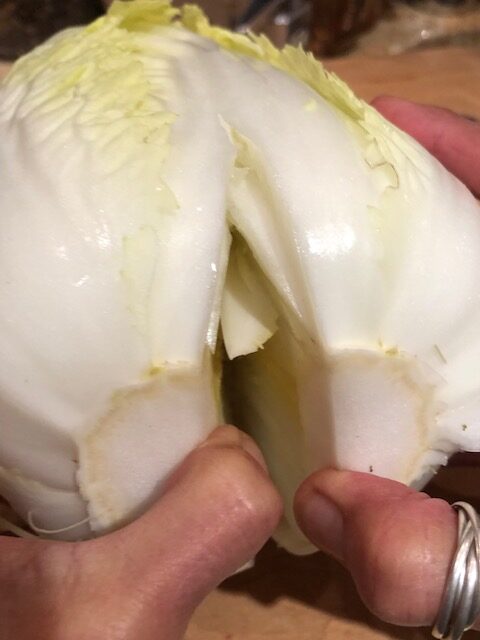
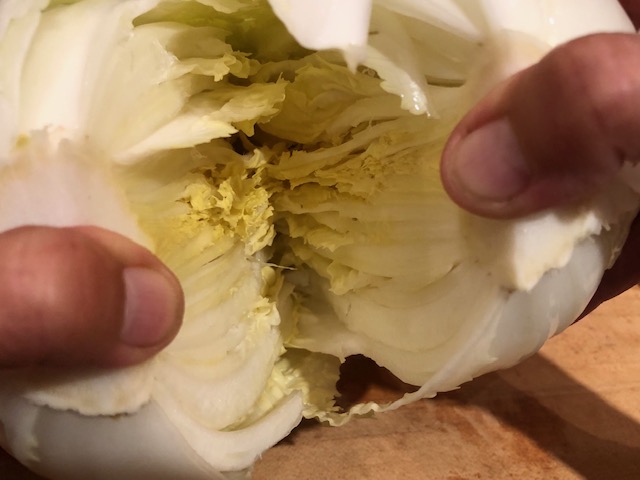
3. Add water to about 1/3 of the capacity of the pickle’s container and add salt to dissolve.
4. Arrange the cabbage in the same direction. If you need to layer the second ones, put half the salt on the first layer and sprinkle red chili pepper and kombu. Place the remaining napa cabbage in the opposite direction, place them in the second row, and sprinkle with the remaining salt. Press it firmly with your palm while applying it, which helps water rise easily.
5. Put a drop lid on it and use weight (I use big river rocks) to press.
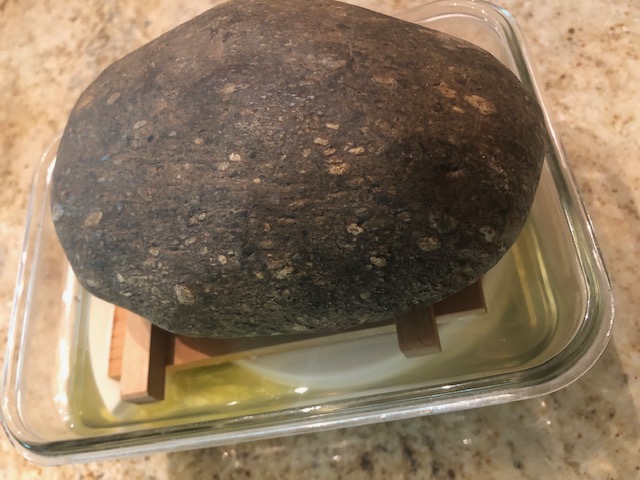
Cover with a thin cotton cloth and leave it for 12 ~ 24 hours (in colder times, leave it for 24~48 hours)
6. When you’re ready to eat, take out just the portion you’re going to eat, squeeze out the juice, rinse with water and squeeze it again.
7. Cut into bite-sized pieces before serving, and add **condiments if you like.
Note:
- Cut napa cabbage: if you want the cabbage to pickle faster, cut it into small pieces, but you may lose the crispiness.
- * Condiments: If you like, add roasted sesame seeds and citrus juice, such as yuzu or lemon or zest, and grated ginger to make it even more delicious!
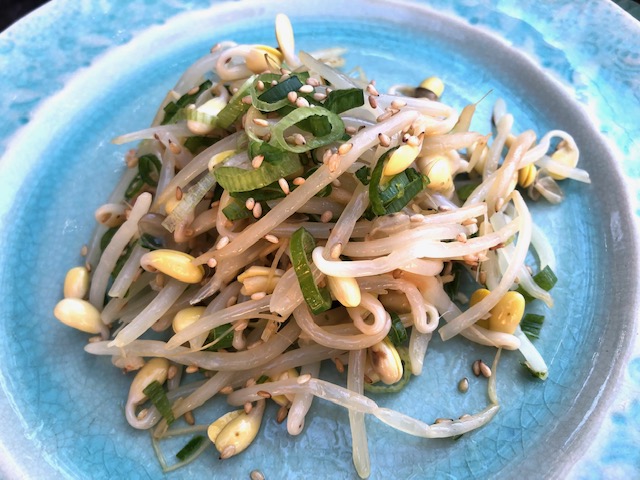
Soy Beans Sprout Quick Pressed Salad Style Pickle
It is not like your usual pickles – My mother made this more to my liking, crispy like a salad and less salty, so I could enjoy it as a child, and I still love it as a side dish.
Ingredients
- 1 pound of soybean sprouts, rinsed and drained
- 1 teaspoon sea salt
- 1/2 cup water
- 1 green onion, chopped
- 1 teaspoon roasted sesame seeds
- 1~2 teaspoon toasted sesame oil
- 1~2 garlic clove, minced (option for people who eat meat/fish)
- Place soybean sprouts in a pot. Add the salt and ½ cup of water and cover. Bring to a boil over medium-high heat for 5 minutes. Drain.
- Put the cooked soybean sprouts in a mixing bowl. Add green onion, sesame seeds, and toasted sesame oil and mix well by hand.
- Put a lightweight plate as a lid over it to press for one hour.
- Transfer to a serving plate.
- Serve as a side dish to rice.
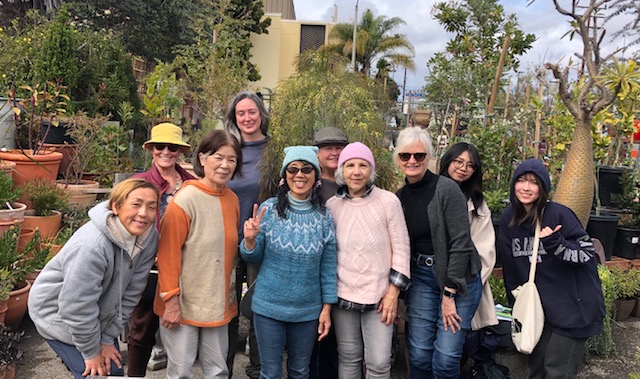
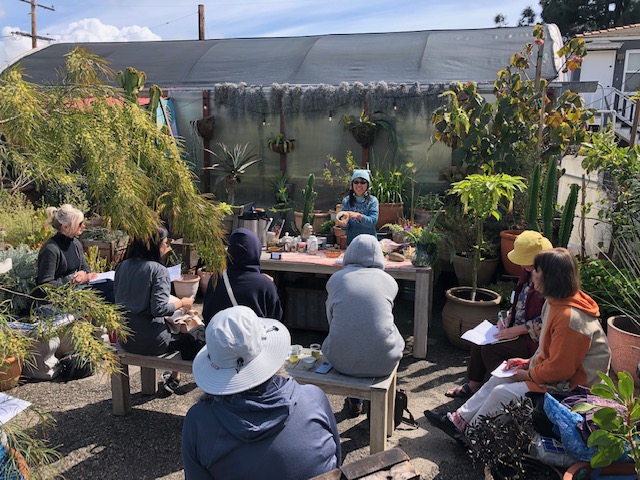
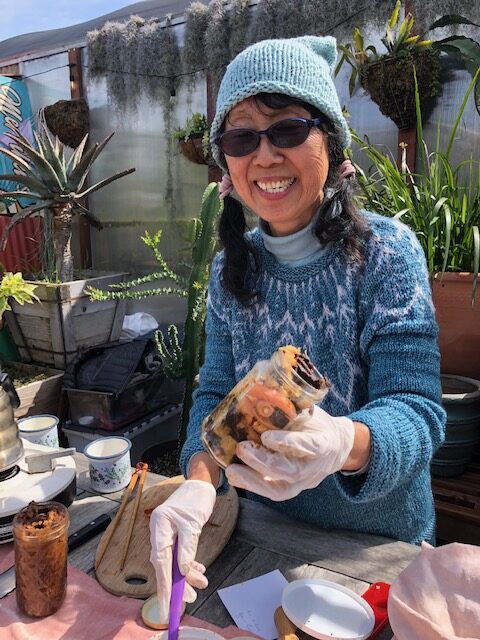
My pickles class on March 5th.
Enjoy your spring pickles!
Love, Sanae❤️
I wrote this article for “Macrobiotic Today” March 15th, 2023 Issue.
Subscribe for FREE: https://madmimi.com/signups/828f181e33dc41d0ae4d59bb5f4f2301/join

九星気学、バッチフラワー、薬草茶クラス
節分も終わり、九星気学では新しい年をスタート。
今年初めてのクラスは九星気学とバッチフラワーと冬の臓器(前回のクラスで学んだ冬の薬草の続き)で腎臓と膀胱を助ける薬草茶。
九星気学で今年2023年がご自分がどんな年になるかを見て、バッチフラワーでみなさんがこの年を精神的(気持ち的)に有意義に過ごせる助けをもらい、新年に飲まれている昆布と梅干しを緑茶とではなく腎臓と膀胱を支える薬草茶、Nettle(イラクサ)で飲みました。身体に効果を感じる味で美味しかった!

1時間半のクラスはあっと言う間に終わりました。
一番最初に、みなさんに今年からのゴール、そしてそのゴールに進んでいくのを妨げているものは何か、そのゴールに向かって自分で何を努力しているかを書いていただきました。
その後、みなさんの九星気学の番号を見て少しづつ説明しました。
クラスに参加した人は三碧木星の人が多く、二黒土星、四緑木星、七赤金星の方もいました。

今年の九星は、「四緑木星」がセンターの位置(上の写真は基本の九星気学のチャートで五黄土星がセンター)。
整わせるエネルギーの年、四緑木星は育つ繁栄する九星。繁栄するには整う必要があります。これはクラスではもっとわかりやすく”巻いた種から芽が出て、もっと育つようにするためには間引きが必要”とお話ししました。間引きはたくさん芽が出て育ってきたものを整理して本当に育てていきたいものだけにフォーカスをしていきます。それには今まで蓋をしてきたものを一掃する必要があることをも示しますので精神的にも気持ち的にも整理が必要でしょう。
クラスに参加した人たちの例で言えば、
特に三碧木星の人は今年はもっと育つ年の位置にいますので、丁寧に時間をかけて間引きが必要。
二黒土星の人は昨年種まきの位置にいたのでその種が芽を出せるようにお水を上げて太陽の光を与え、発芽できるようにしてあげる毎日を過ごす事が必要。
四緑木星の人は繁栄する(もっと育つ)九星なのですが、今年はセンターの位置にいますので、左右、上下のエネルギーが入ってきて他の人を繁栄させる年にもなりますので自分の繁栄(もっと育てる)を忘れないで進む事をお勧めします。
七赤金星の方は今年は種まきの年。新しい事を始める年です。

九星気学とは違いますが今年は干支で言うと卯(兎年)、癸卯(みずのとう)。
うさぎは平和で忍耐強いエネルギーを表しています。
うさぎは、行動する前に物事をよく考えることで知られる優しい生き物です。
このエネルギーは、挑戦や機会に落ち着いて合理的に取り組むことを奨励します。
うさぎの平和なエネルギーに加えて、水の要素は直感と内なる平和をもたらします。
水とは、私たちの内なる叡智を活用し、本能を信頼することです。
自分の感情と調和し、周囲の人々に敏感になるよう促します。
2023 年の卯年は、そのエネルギーを利用して最大限に活用する時。まず、愛する人、同僚、その他の人との強いつながりを築くことに集中しましょう。結局のところ、ウサギは調和のとれた関係を築き、維持する能力で知られています。
次に、キャリアに目を向けてみましょう。 2023 年は、専門的な開発と昇進に集中するのに最適な時期です。ネットワーキングの機会を活用し、同僚との関係を築き、新しいプロジェクトや追加の責任を引き受けることを検討してください。
もちろん、うさぎは富と繁栄を表しています。そのため、2023 年の干支占いによると、今は家計に集中し、収入の増加に取り組む絶好の機会です。株式、不動産、またはその他の種類の貯蓄計画への投資であるかどうかにかかわらず、今こそ賢明な金融行動を起こす時です。
ただし、慎重であることの重要性を思い出してください。うさぎはまた、信頼性と気楽な態度に関連付けられていますが、詐欺や詐欺の可能性について警戒することが不可欠です。信頼しますが、確認してください。
より創造的な点として、ウサギは創造性と芸術的才能にも関連しています。私たちの内なるアーティストに触れて、私たちの創造的な側面を探ってみましょう。新しい趣味を始めたり、絵を描いたり、書いたり、興味のある他の形式の芸術に挑戦したりするなど、可能性は無限大です。
最後に、うさぎは自分自身のケアにも関連しているため、セルフケアと健康的なライフスタイルの維持を優先しましょう。よく食べ、定期的に運動し、十分な睡眠をとることで、バランスを保ち、その年のポジティブなエネルギーを活用することができます。これらのヒントに従うことで、2023 年の卯年を最大限に活用し、それがもたらすポジティブなエネルギーと機会を活用することができます。
[Source: The Chinese Zodiac]

バッチフラワー
クラスに参加した人たちの例は
転換期の人ーウォールナット
これからの先がよく見えない人ーワイルドオート
不安を感じている人ーミムラス
今まであった事に恨み心を感じている人ーウィロー
進歩の障害ーゲンチアナ
ずっと家族の面倒を見ていてプレッシャーに負けそうになっている人ーエルム
考えすぎの人ーホワイトチェストナット

みなさん1〜2週間分のバッチフラワーレメディを毎日2滴を最低4回とっていただくようお持ち帰りしていただきました。
みなさんがどのようにこのレメディで成果がでるか楽しみです。
薬草茶
ミネラル豊富なNettle(イラクサ)を選びました。


新年に緑茶と一緒に飲まれている昆布(The Seaweed Man)梅干し(私のホームメイドSanta Monica Homemade Umeboshi plums)茶を緑茶の代わりにNettle(イラクサ)で飲みました。

Nettle(イラクサ)は腎臓と膀胱を支え、肝臓、肺にも効果がある薬草。
昆布は腎臓、膀胱、肝臓と胃に効果があります。
梅干しはアルカリ性食物で腸の働きを助け、疲労回復、デトックス、喉の痛み、、脂肪肝、コレステロール、水を浄化する作用もある。

薬草茶は自宅で簡単に作って飲んでセルフケアーできるものです。
ぜひみなさんもやってみて下さい。
Love,
Sanae❤️
バッチフラワーのオンラインクラスまたは個人コンサルテーション( individual consultations)に興味がある人、薬草茶のコンサルテーション(Medicinal Tea consultation)に興味がある人はメールでお知らせ下さい。sanaehealing@gmail.com
Nine Star Ki, Bach Flower and Medicinal Tea Class
Setsubun ((節分) is February 3, the day before the beginning of spring/the new year in the old calendar in Japan is over, and Nine Star Ki’s new year has started. (it starts the day after Setsubun).
This year’s my first class was held last weekend.
I taught Nine Star Ki, Bach Flowers, and Medicinal Tea (support winter organs, kidneys, and bladders).
See what kind of year you will be in 2023 at Nine Star Ki, and get help to spend this year mentally (emotionally) meaningfully at Batch Flower.
Traditionally, the Kyoko area has new year’s tea Obukucha (Kombu kelp and Umeboshi plum tea with green tea), but I chose the medicinal tea of Nettle instead of green tea with Kombucha kelp and Umeboshi plum for the class.
The hour-and-a-half class ended in no time.
First, I asked everyone to write down their goals from this year (and three years and ten years), what is preventing them from progressing toward that goal, and what they are doing to reach it.
After that, I explained briefly by checking everyone’s Nine Star Ki number.
Many people who participated in the class were with Three Tree. Other people were Two Soil, Four Tree, and Seven Metal.
This year’s Nine Star Ki is “Four Tree” in the center (above is Nine Star Ki Basic “Five Soil” is in the center). Four Tree is growing and prosperous in Nine Star Ki.
To thrive this year, we all need to be in shape. What does mean “need to be in shape”? It is not a physical shape the case.
In the class, I explained to everyone that after planting seeds of what you want to do and it sprouts, then thinning is sorting out/shaping up the things that have sprouted and grown and focusing on only the things you want to grow.
It also means that you must clean up what you have been procrastinating or not connecting with your feelings, so you also need to mentally and emotionally organize yourself.
For example, those who attended the class, especially for people with Three Tree are in the position of growing up more this year, so they need to be thinned out.
The person with the Two Soil was in the position of sowing seeds last year, so it is necessary to water and give the sunshine so the seeds will sprout and spend every day regularly.
People with Four Tree‘s nature is growing in Nine Star Kinninth, but this year they are in the center position. They might feel the energy from the left, right, up, and down (it means from everywhere or everybody)will come in, so they might support other people’s prosperity more than themselves. Remembering to support yourself to grow more this year is important.
Seven Metal person is the year of sowing this year. It’s the year to start new things.
It’s different from Nine Star Ki, but this year’s Chinese zodiac is Water Rabbit year.
The Rabbit represents peaceful and patient energy. The Rabbit is a gentle creature known for thinking things through before acting. This energy will encourage us to approach challenges and opportunities calmly and rationally. In addition to the Rabbit’s peaceful energy, the Water element brings intuition and inner peace. Water is all about tapping into our inner wisdom and trusting our instincts. It encourages us to be more in tune with our emotions and sensitive to those around us.
As the Year of the Rabbit 2023 has come, it’s time to tap into its energy and make the most of it. Let’s focus on building strong connections with loved ones, colleagues, and anyone else in our lives. After all, the Rabbit is known for its ability to create and maintain harmonious relationships.
Next, let’s turn our attention to our careers. 2023 is the perfect time to focus on professional development and advancement. Take advantage of networking opportunities, build relationships with colleagues, and even consider taking on new projects or additional responsibilities.
Of course, the Rabbit represents wealth and prosperity, so according to the Chinese horoscope 2023, it’s a great time to focus on our finances and work towards increasing our income. Whether it’s investing in stocks, property, or other types of savings plans, now is the time to make smart financial moves.
But let’s remember the importance of being cautious. The Rabbit is also associated with trustfulness and an easygoing attitude, but it’s essential to be vigilant regarding potential scams or frauds. Trust, but verify.
On a more creative note, the Rabbit is also associated with creativity and artistic talents. So, let’s tap into our inner artists and explore our creative side. The possibilities are endless, whether it’s taking up a new hobby, trying your hand at painting, writing, or any other form of art that you’re interested in.
Lastly, the Rabbit is also associated with taking care of oneself, so let’s prioritize self-care and maintaining a healthy lifestyle. Eating well, exercising regularly, and getting enough sleep will help us stay balanced and take advantage of the positive energy of the year. By following these tips, we can make the most of the Year of the Rabbit 2023 and take advantage of the positive energy and opportunities it brings.
[Source: The Chinese Zodiac]
Bach Flower Remedy.
I asked people what they were going through emotionally and mentally.
These are examples of people who attended classes that they needed for Bach Flower Remedy recommendations:
Person in transition – Walnut
People who can’t see the future – Wild Oat
Anxious people – Mimulus
Those who feel resentment for what happened – Willow
Setback – Gentian
People who are taking care of their families all the time and are overwhelmed by responsibility – Elm
Overthinking – White Chestnut
Everyone got their remedies to take home. They will take 2 drops of Bach Flower Remedy at least 4 times a day for 1-2 weeks. I look forward to seeing how all students progress with their remedies.
For the Medicinal Tea, I chose Nettle, which is rich in minerals and suitable for the New Year.
For the New Year, Kombu kelp (I get it from The Seaweed Man)and Umeboshi plum (Check my blog: Santa Monica Homemade Umeboshi plums)with green tea is a traditional drink in the Kyoko area in Japan.
Nettle instead of green tea, which supports the kidneys and bladder and is also beneficial for the liver and lungs.
Kelp benefits the kidneys, bladder, liver, and stomach.
Umeboshi is an alkaline food that aids intestinal function and relieves fatigue, detoxifies, sore throat, fatty liver, and cholesterol, and purifies water.
Herbal tea is easy to make at home, and you can drink it and take care of yourself.
Please give it a try.
Love,
Sanae❤️
Please email me if you are interested in Bach Flower online classes or individual consultations.
Also, if you are interested in Medicinal Tea consultation, please let me know by email.
sanaehealing@gmail.com

ゴールデンレトリバー: ルミちゃんの輪廻転生
うちの犬娘ルミちゃんが先週13歳の誕生日を迎えた。
ゴールデンレトリバーの寿命は10〜12歳らしい。
彼女が一生懸命生きているのを毎日見ている私は彼女に感謝と愛を込めて、ブログを書く事にした。
ルミちゃんの誕生日は2010年1月19日。
生まれ変わって生きていく輪廻転生を信じない人もいるかもしれないが、ルミちゃんは過去55年間に3回、生まれ変わって来て現在4回目の犬生を生きてる。
ルミちゃんは前世が短命だったので、彼女が顕在化して人生を全うするのを私は手伝うことを約束したのは彼女が生まれた時。
アニマルコミュニケーションを勉強して、動物の生まれ変わり・輪廻転生について学んだ。それから動物の家族を (年齢、病気、事故のいずれかの理由で) 失った時にまた会えるかもと、かすかでも感じられるようになり悲しみの気持ちからが和らいだ。
動物家族が亡くなった後、彼らとコミュニケーションして、また会うのを待ち遠しくなった。と言っても全ての動物がちゃんとコミュニケーションできるというわけではないので私たち人間がお勉強して努力して動物家族の声を聞いてあげられるように知る必要がある事にも気がついた。
私は初めアニマルコミュニケーションを理解する自信がなかったので、ルミちゃんが一番最初にロロとして初め生まれ変わっていることに気づかなかった時期(2000年)もあった。でも2001年に私が瀕死の自動車事故を起こしたときにロロが死んでしまって、そして2年後にドレが私のところにルミちゃんとして生まれてきた時、私はすぐにそれがロロであるってわかった。ルミちゃんは生まれた時に明確にコミュニケーションを私に送った犬なのだ。

好奇心旺盛なドレはみんな(ドレのママーキンちゃん、妹のクラちゃんとオロちゃん)がカメラを見ているのに全然違うところを見ている(笑)
ドレは好奇心旺盛な犬で、彼女の願いは母親になりたいだった。それで彼女はノース フォークの隣人の男犬(黒のラブラドールレトリバー)の子犬を私たちが知らないうちに妊娠。子犬が生まれた時の彼女の喜び方は誰が見てもわかるくらいだった。

ドレと息子のコナ(サービスドッグになった子犬)
ドレの子犬の 1 匹(コナ君)を介助犬財団に寄付し、介助犬の訓練を修了し、16歳の身体障害者のパトリック君を生涯助け私たちの尊敬する犬になった。
ドレは大好きな子犬(チビグム)と幸せに生きてたのですが、チビグムが生後5ヶ月の時になぜか毒殺されてしまう事故が起こった。
ドレもチビグムの嘔吐物を舐めて死にそうになったりした
とても衝撃的で悲しい出来事で、こうして書いていて思い出すだけで涙がポロリなので今回はその事は書きません。
ドレは一命を救われたのですが、チビグムの死を受け入れられなかった悲しみに沈んで、いつもチビグム探してた。
ドレはチビグムを探すため、お庭の秘密の場所から脱出をし始めた。
彼女はいつも家に帰ってきましたが、私たちは心配で庭を隅々まで調べて、何回も彼女の秘密の脱出場所を見つけようとしたのに見つからなかった。
ある日、ドレはまたチビグムを探しに脱出した日、ピックアップトラックの運転手が路地でドレをひき逃げしたと、近所の人が見て私に電話してくれて慌てて行ったら、ドレは私を待ってた。私がドレに触ったら手と足を伸ばして光の中に行こうとして、「ごめんね、ママ、トラックがぶつかってくるとは知らなかったんだよ。また戻ってきたいよ!」って言った。私は「わかってるよ、大好きだよ。いつでも戻って来ていいよ。ママはいつもここにいうるからね!」と伝えてドレは逝った。
ある日、ロロとドレが車の事故で亡くなった事実を考えていたら、中学生の頃に少しの間一緒にいた愛犬のオリバーの事を思い出した。母はオリバーがお家の玄関から飛び出して表の道で車にひかれて死んでしまったと学校から帰ってきた私に言った。
この悲しいニュースを聞いてショックを受けた私はこの悲しみのトラウマを心の奥深くに閉じ込めていた事に気がついた。ドレが亡くなり、ロロの死がオリバーの死と繋がっているかもと、私は勇気を持ってオリバーと話すことにしたところ、
うわー、信じられない。
オリバーはロロでロロはドレだった。そして全員車の事故で死亡。
ドレは犬家族と私とまた一緒に暮らしたいと言っていたので、私は彼女の旅をサポートすることに決め、彼女と話をする事でいつ戻ってくるかわかるようにした。
ドレが亡くなって2年後、彼女はルミとして戻ってきた。
ルミは他のどの子犬よりもとっても小さくって、生まれたときは呼吸をしていなかった。母親のオロは必死で舐め続けました。彼女は子犬を救う使命を帯びているように舐め続けた。
私はこの小さな子犬に話しかけました。
オロが舐めるのをやめたとき、私が心肺蘇生法を手伝ったところ、ルミちゃんは呼吸を始めました。
奇跡!

奇跡のルミちゃん誕生1日目
その瞬間このパピーはドレだと分かった。
彼女が戻ってくるまでの道のりは簡単ではなかったのかも、でもオロは姉のドレが戻ってきたいと思っていることを知っていてこのパピーがドレだと知っていたようで、舐めるのを続けていたんだなとわかった。
子犬の名前は”ルミ”ちゃんにしたのはインスピレーション(霊感・神感)/光という意味。

一番小さい真ん中がルミちゃん

ルミちゃんはお母さんのオロちゃんに寄り添ってる

ルミちゃん(左)とお兄ちゃんのブブちゃん
ルミちゃんはとっても勇敢で元気。自分を表現することを恐れない子犬だった。
犬たちのご飯を用意している時に、誰かが電話したり来たりして中断すると、彼女は足でそわそわタップダンスをしているように、「ママ、私たちのご飯作りに集中して。お腹がすいたよ!」と言い諦めない。
今でも、外に出たくなると足ステップをしてそれでも気がつかないと声を大きく出して主張。
ルミちゃんはドレと同じように好奇心旺盛ですが、今回の彼女の視界はドレの時よりも明晰。彼女はより注意深く、また子犬を産んで、残りの人生を子犬と一緒に暮らし、人生を全うしたいと私にハッキリ伝えきった。
それぞれの犬が転生して同じ精霊犬に戻ったとしても、見た目や考え方は違う時もあってわかりにくい時もあるけどその犬の生きる目的は同じ。
私はルミちゃんがこの犬生を生きぬき、今世は車にひかれないように助けると約束し!
ルミちゃんに、交通事故なく健康で長生きできるように努力してくれるよう約束するように頼んだ。ルミちゃんの返事は「きっと、そうするよ!」

ルミが子犬を産んだ後
ルミちゃんは私たち(娘、義理の妹、姪、甥、夫のエリック、そして私)と大声でコミュニケーションをいつもとってる。時々怒っているように聞こえることもあるんだけど、ルミちゃんはこうして3回も戻って来て自分の犬生目的である犬家族と私たち人間家族と一緒に自分の本当の寿命を生きている喜びでエキサイト・興奮してるんだよと言ってる、可愛い子なんだ。

ルミちゃん(左)犬家族と私とハイキング
ルミちゃんはゴールデン・リトルリバーにしてはかなり小さかったので成長しても約30~35ポンド(13〜15kg、平均多重メスの場合25〜29kg)、10歳を過ぎてからも、いろんな人がよく「可愛い子犬ね!」彼女を称賛すると、ルミちゃんは自分が特別なんだと鼻を高くしてる。
ルミちゃんは娘のハッピーちゃんにはとても辛抱強く素晴らしく良い母親で常にどんな事があってもハッピーちゃんには何も言ったりした事がない。
今でもふたりで一緒に寝ている事が多い仲良し。

ルミとハッピー一緒に寝てる

ルミ(左)とハッピー散歩の途中
ルミちゃんは1年くらい前から右膝が関節炎になったので少しビッコをひいて歩いてる。
対処にホメオパシー薬とバッチフラワーレメディを服用して今でも彼女は、2 か月に 1 回はハイキングに行ったり、毎日自分のペースで近所を私と一緒に散歩してる。

ルミ下り坂ハイキング
びっこ足でも安定したペースで歩いているルミちゃんを見かける人は彼女に頑張ってと敬意を表する褒め言葉をかけてくれる。ルミちゃんはそれがとても好きらしく必ずその人たちのところに立ち止まりスマイル☺️。
今は大きなイビキもかいてよく寝てる。ヘルシー ハッピー プーチの手作りドッグフードとおやつを食べるのが大好き。ルミちゃんは動物霊気、マッサージ、温灸、ブラッシング、お腹のマッサージをしてもらえる事が喜びだよって言ってる!
ルミとお姉ちゃんのポーシャは、13歳の誕生日を祝うために一緒にバースデー散歩を公園までして記念写真!

ポーシャ、ハッピーとルミ(左から)ポーシャの人間ママと私
Enjoy life with dogs!
Love, Sanae ❤️
Lumi, the Golden Retriever Reincarnation
As Lumi’s birthday of 13 years came.
Golden retrievers have a life expectancy of 10-12 years. I see Lumi lives her life her best every day, so I decided to write a blog with my gratitude and love for her.
Lumi was born on Jan. 19th, 2010.
Some people may not believe in reincarnation, but she came back to live with me four times in the last 55 years.
She had a short life previously, so I promised to help her to manifest her lifespan and fulfill her life this time.
I learned about animal reincarnation when I studied Animal Communication.
After I learned about animal reincarnation, grieving losing my animal family (either because of their age or sick or accident)got eased. I started communicating with them even after they passed and look forward to seeing them later, and many times I know when they are coming back.
Lumi was one of the dogs that clearly communicated when she was coming back.
I did not have the confidence to understand Animal Communication in the beginning, so I did not notice that she came back to live with me as a reincarnation first time as Lolo.
Lolo died when I had a near-death car crash in 2001.
She came back to me as Dore then, I knew it was Lolo immediately.
Curious Dore looking at something while her mother, Kin and her two sisters Kula and Oro were looking at the camera
Dore was a curious dog and wanted to be a mother, and she got pregnant with the next-door neighbor’s dog in North Fork. She was so happy when she got puppies.
Dore with Kona who became a service dog
We donated one of her puppies to a service dog foundation, graduated from service dog training, and helped Patrick (a 16 years old disabled boy)all his life. We kept Dore’s favorite puppy (we named her “Chibi-Gumu”). Dore was delighted being a mother, but when Chibi-Gumu got poisoned for some reason when she was only five months old.
It was a very shocking and sad time, and even remembering it brings me so much sadness, so I am not going to write about it this time.
Dore, too, almost died from cleaning Chibi-Gumu’s vomit.
She survived but could not accept Chibi-Gumu’s death and endured so much grieving.
Dore started to escape from her secret place to look for her Chibi-Gumu.
She always came back home, but we checked our yard everywhere but could not find her secret escape location.
One day, she escaped again. A pick-up truck driver hit her in the alley and ran away near our house. A neighbor saw it and phoned me, so I went to Dore immediately.
She was waiting for me, but when I touched her, she stretched her legs to the light and said, “I am sorry, Mommy, I did not know the track was going to hit me. I want to come back!”
I told her, ” I understand. I love you so much. You can come anytime. I am here for you!”
I realized Lolo and Dore died after being hit by a car, and I remember my dog, Oliver, who was with me for a short time when I was in junior high school. My mother told me that Oliver died because he ran out of my parent’s house, and a car hit him.
I was too shocked to hear this sad news when I came home from school. I think I kept the shock/trauma feeling deep, deep inside of me, but after Dore died and connected Lolo’s death brought Oliver’s death, I decided to talk to him.
Wow, unbelievable; Oliver was Lolo and Dore, and they all died cause of a car hit.
Dore said she wanted to come back to live with her family and me, so I decided to support her journey, coming back to us once again by talking to her.
Two years later, after Dore passed, she came back as Lumi.
Lumi was so much smaller than any of the other puppies and not breathing when she was born, but her mother Oro kept licking, licking.
It was like Oro was on a mission to save the puppy (Lumi).
I communicated to this little puppy(Lumi), “you gonna make it! Breath! You can do it!!!”
When Oro stopped licking, I helped with CPR, and the puppy (Lumi) started to breathe.
It was a miracle!
Lumi one day old
I knew the puppy was Dore at that moment.
Her journey coming back was not easy, but Oro knew it was Dore, her big sister, who wanted to come back as Lumi.
We named her “Lumi” as
We named her “Lumi” as luminaire – inspiration/light. She was feisty and not scared of expressing herself.
Smallest in the center is Lumi
Lumi lying down to her mother, Oro
Lumi (left) and her brother Bubu
While preparing the food, if anybody called or came and it got interrupted, she showed the intense paw steps and told me, “Mommy, focus on preparing the food. I am hangry!”
Even now, if she needs to go out, she does paw steps constantly until we notice her request.
Lumi is curious like Dore, but her vision has more clarity than Dore’s this time. She is more careful and wants to have another puppy and live with her puppy for the rest of her life and fulfill her life.
Even though each dog reincarnated to return as the same spirit dog, they may look different and think differently, but their purpose is the same.
I promised to help her live her life and no more getting hit by a car!
I also asked her to promise that she make efforts to live a long, healthy life without car accidents. She said, “You bet!”
Lumi with her puppies
She communicates loudly with us (her daughter, step-sister, niece, nephew, Eric-my husband, and me). Sometimes she sounds upset, but she expresses as excited since she is living her life again as her purpose is to be with her daughter/family and us.
Lumi (left) hiking with her dog family & me
Since she stayed pretty small for Golden Retriever (about 30~35lbs, average Golden Retriever weight is 55~71lbs), many people have always come to greet her and ask if she was a puppy, even though she was over ten years old. She likes being different and having fun when people admire her.
She has been an excellent mother to her daughter, Happy. She is very patient with her and never barks her back. They are sleeping together even now.
Lumi and her daughter Happy sleeping together
Lumi (left) with her daughter Happy
Now Lumi is 13.
She has right knee arthritis, so she limps. She takes homeopathic medicine and Bach Flower Remedy to cope.
She still wants to go hiking once every two months and she walks in the neighborhood at her pace every day wit me.
Lumi hiking
When people see Lumi’s limping, but she walks at her steady pace, they come to her to give their respects, and she likes that a lot so she give them her smile☺️.
She sleeps a lot and snores loudly but loves eating Healthy Happy Pooch homemade dog food and treats. She also enjoys animal reiki, massage, moxibustion, brushing, and a belly rub!
Lumi and her sister Portia had their birthday walk together to celebrate their 13th birthday in the park!
Portia, Happy and Lumi (left to right) with Jennifer Portia’s mom and me
Enjoy life with dogs!
Love, Sanae ❤️
柚子胡椒
日本にはレモンやライム以外にも柑橘類があります。ゆず、すだち、かぼす、ゆうこなど。ゆず独特の香りが私は好き。過去 10 年間、日本系のマーケットではゆずが増えてきましたが、他の柑橘類はまだ見たことがまだないかも。
レモンは、口に入れると爽やかなすっきりしたピリッとした酸味がある(マイヤーレモンは違います)。
ライムの香りはレモンよりややマイルド、熟成前の収穫したものはピリッとした酸味がしっかりあり、レモンよりも軽やかでフレッシュな心地よい香りが特徴。
ゆずは収穫時期によって、まだ緑で熟す前のもの、黄色く熟していたもの、さまざまな楽しみ方があります。熟成後の果汁はほんのり甘くさわやかな味わいで、酸味はやや中和されています。
うちの庭に柚子の木を植えてから約3年、やっと1つだけ実がなった時は緑のダイヤモンドを見たようなドキドキ感でゼストだけを大切に使ったのが懐かしい。
翌年から小さいながらもいくつかの実を収穫。
青柚子(青柚子の旬は7月~8月)の皮と柚子の実を混ぜて柚子ペーストを作った。
シンプルですがとても風味豊かな美味しさは忘れられなかった。
たくさん収穫はまだないので、作った柚子ペーストの量は少なく、鍋ものの野菜やサラダに使ったらあっという間になくなってしまい、いつかもっと作れたらいいなって願った。
数ヶ月後、クローヴィスの友人から、使いきれない量のユズを収穫したと連絡があり、ノースフォークの帰りにユズを取りに行ってたくさんの柚子が我が家に来ちゃった!
うわー、誰かが私の願いを聞いていたんだなと、ありがたかった。
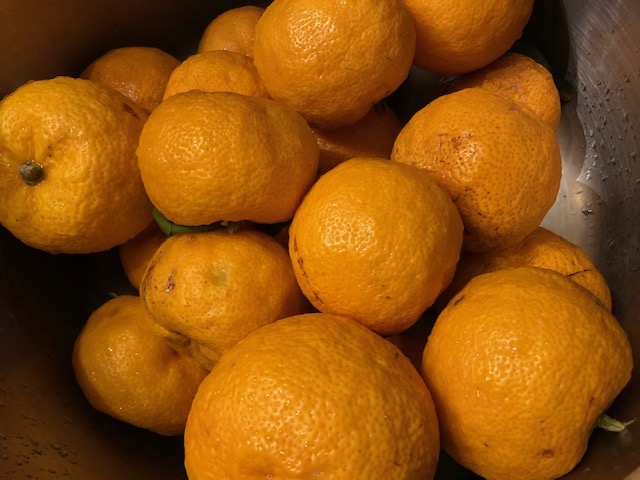
今回は*柚子胡椒を作ることをエリックに提案しました。
※柚子胡椒とは、日本の調味料の一種。
胡椒は日本語で「コショウまたはコショウの実」を意味するため、通常は白または黒のコショウを表す。柚子胡椒は九州・大分が発祥とか。
「胡椒」という名前なので、柚子と白胡椒か黒胡椒を混ぜたもの、と思っていたら、九州の一部地域では、胡椒は白胡椒や黒胡椒ではなく、日本の唐辛子を意味する古い言葉であることがわかった。
自家製の柚子胡椒は食べたことがなく、市販の柚子胡椒は通常「青柚子」で作られていて結構辛くって私はあまり好みでなかった。
でも友達からもらった柚子が「熟した黄色い柚子」だったので、調べてみると完熟黄柚子は苦味が少なくまろやかで辛味も少なく香りも甘いとのことでどんな味になるか興味津々。
スパイスが苦手な私なので、唐辛子を少なめに調整してあまり辛くないのを作れるので作る前からワクワク。
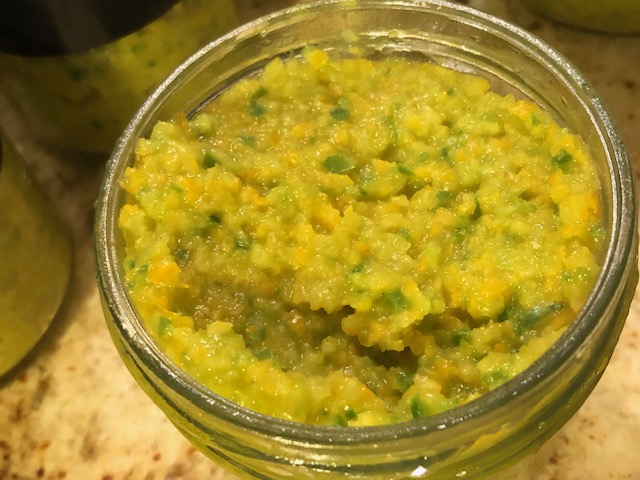
味は、ピリ辛で柚子アロマいっぱいが出来て大満足!
柚子胡椒レシピ
材料:
黄ゆずの皮 100g
青唐辛子 25g(日本国産青唐辛子がおすすめですが、こちらでは手に入りにくいのでハラペーニョ青唐辛子を使用)
自然海塩 25g
*これらの材料は私たちが使用したもの ( 一般のレシピは柚子と青唐辛子の使用量がほとんどは同じ量で、海塩はゆずの量の3分の1)
お好みで辛さやしょっぱさを調整できます。
1. 柚子とピーマンを水洗いし、キッチンタオルで水気をふき取る。
2. 包丁で皮の黒い斑点を取り除き、ゆずの実を半分に切る。種を取り除きます(柚子には種がたくさんあるので、小さなスプーンを使って取り出しました)。柚子の実を皮から切り離します。皮と実の間の皮の表面の下にある白い髄をできるだけ避けてください。柚子胡椒は髄を使うと苦味が出ます。できる限り髄を取るために、慎重にナイフで髄を切り落としました。
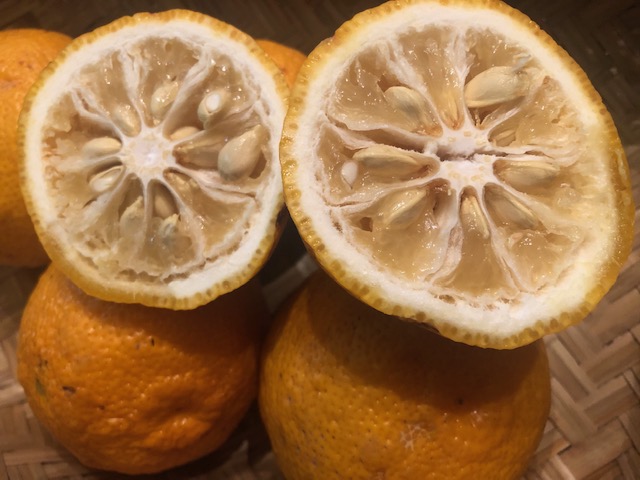
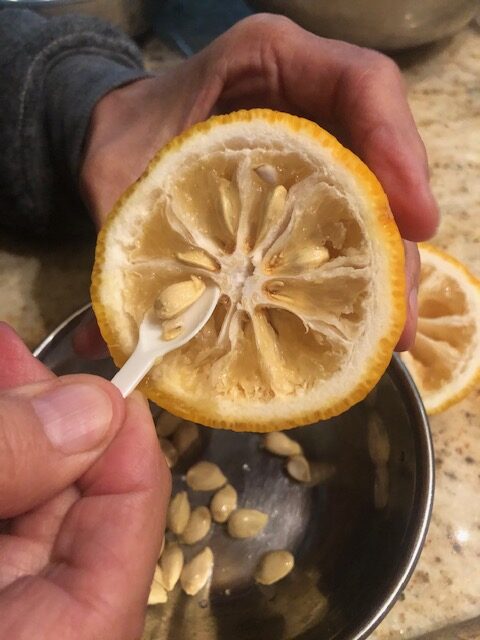
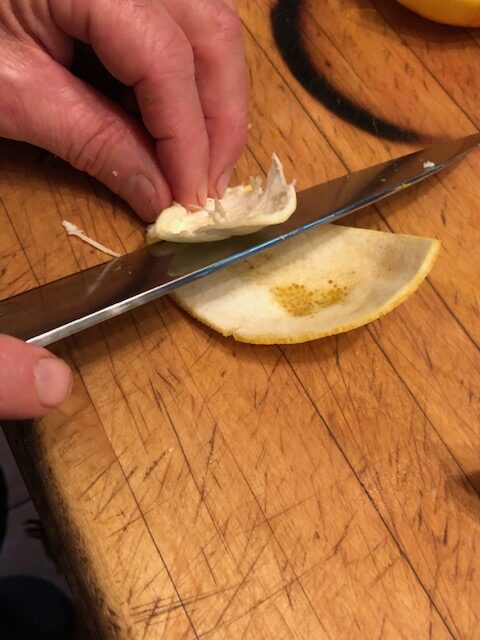
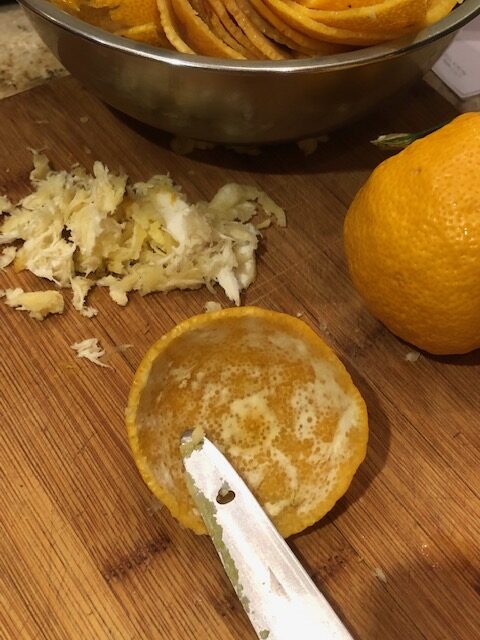
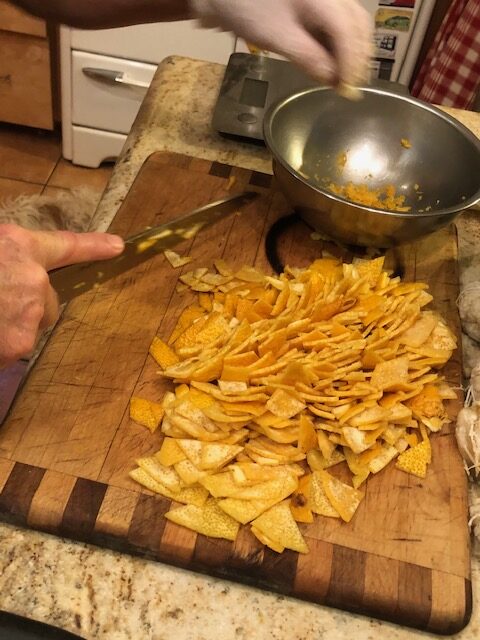
3. 柚子の皮を小さめに切る。
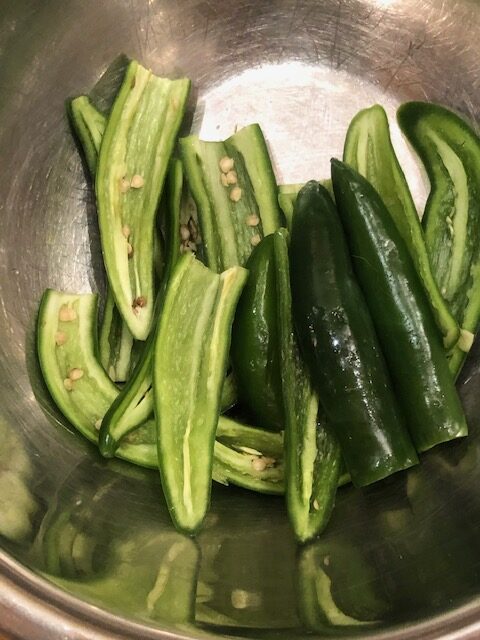
4. 青唐辛子の種と茎を取り除きます。青唐辛子は刺激が強いので、人によっては目や肌を刺激する可能性があります。敏感肌の方は注意してください (キッチン用手袋を使用し、肌、目や口に触れないようにすることをお勧めします)。
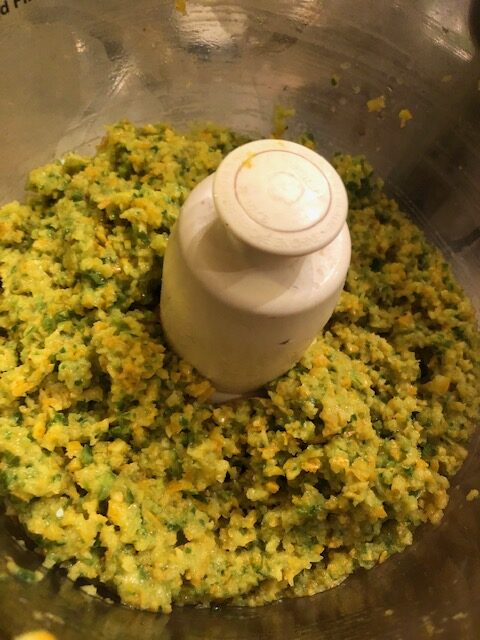
5. 切った柚子の皮、青唐辛子、海塩をフードプロセッサーにかける。材料を滑らかにします。材料がよく混ざり、滑らかになったら出来上がり。
フードプロセッサーがないときは、おろし器を使う。
おろし器を使ったとき、髄を取り除く必要はありません。
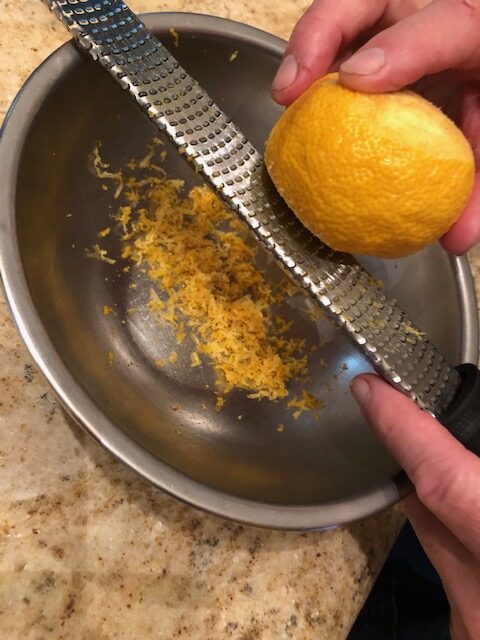
柚子は洗ってキッチンタオルで水気をふき取った後、なるべく髄を入れないように気をつけながら皮の表面をすりおろす(ゼスト)。
陶器のすり鉢で木のスリコギを使って初め柚子の皮(ゼスト)をすり、次に細かく刻んだ青唐辛子、最後に海塩を入れてすり混ぜます。
これは作るのに時間がかかるので心の忍耐と時間の準備をしてください。:)
6. 出来た柚子胡椒を保存するためにガラスの容器を湯せん消毒して準備。
このままで柚子胡椒は料理に使えますが、私は冷蔵庫で1週間以上寝かせて、辛さをまろやかにして味の調和をとるのが好き。
柚子のジュースが余ったら、ドレッシングやディップソース(味噌やたまりと混ぜわせ)、湯豆腐や餃子、鍋物などの醤油ダレに。
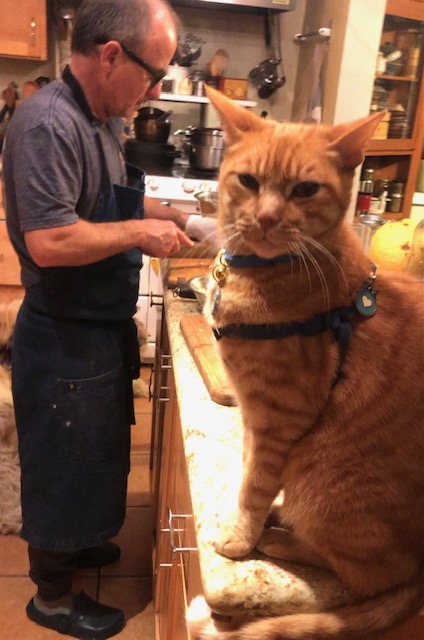
うちのネコ家族の一員、ティンティン君は柚子の香りが好きらしく、柚子胡椒作っている間ずっとお台所にいたんだよ。
Love, Sanae ❤️