

Japan Spring 2023 Diary Day 3 Tokyo
There are many hands-on classes in Japan to learn about Japanese culture.
On this day, I originally wanted to go to the hands-on Kintsugi class (Kintsugi 金継ぎ, “golden joinery,” also known as the Japanese art of repairing broken pottery by mending the areas of breakage with lacquer dusted or mixed with powdered gold, silver, or platinum; the method is similar to the maki-e technique.) early in the morning, but I decided to take it easy.
Sometimes, less is better, and I believe an opportunity to learn kintsugi will come in the future.
After relaxing and having breakfast, Ringo-chan and Shigeru-san accompanied us to the bus stop, and we took the bus to Futako Tamagawa station.

Our first destination was our favorite glass shop, JINS (4th floor of Futako Tamagawa Rise).
JINS is a Japanese glasses store established in 2001. I found out about JINS 5 years ago on a 2020 Tokyo TV show program. I saw JINS’ mission is to provide functional, innovative, and lightweight eyewear at affordable prices for everyone.

JINS frames are designed in Tokyo and carefully assembled with the spirit and passion of Japanese craftsmanship.
We went to JINS in Asakusa 4 years ago for the first time. Indeed, JINS was efficient, courteous, prompt, and reasonably priced. Eric liked it very much and was looking forward to going to JINS again to get new glasses made.
This time we chose 5 glasses. If we made 5 pairs of glasses in America, we would be bankrupt here in America, but it was less than 1/4 of the price there.

Eric chooses two cool bifocals. I have one for bifocals, one for computers, and one for craft/calligraphy.
While waiting for the glasses to be ready, we went to the “Bunkyodo” bookstore on the 6th floor for about an hour.
* Bifocal glasses take 1 week. In our case, JINS send it to our friend in Setagaya, and she will send it to Santa Monica. If you go to Japan and make bifocals at JINS, I recommend that you go there as soon as you arrive in Japan and pick up your bifocals a week later.
I love Japanese bookstores. A spacious and full of things other than books, where you can find something you did not even think to enjoy. Check out the calligraphy pens, ink, and Japanese paper, browse magazines and comics, and I could spend time all day there.
I only know a bookstore like the Japanese one is Burns’s Nobel bookstore on the third street promenade Santa Monica. I was sad when it closed.
When I was in a wheelchair, I often went there with my service dog, Kula. Checked out various magazines and books, grazed at photos of thick heavy hardcover photo books, and chose colorful stationery.
While I was focusing my viewing, Kula accommodated everyone and made them smile.
The Bunkyoudo had the same relaxing atmosphere; it reminded me of the nostalgic good time I spent with Kura at the bookstore.

I was not looking for particular books, but I bought Snoopy’s book, “Snoopy Prepares Your Heart.”
This book explains Japanese quotes and Zen words.
 Peanut comics, which are drawn in black and white and have blank spaces, have something in common with Zen, and the lines of the characters that appear often overlap with Zen language.
Even in silence, there is a world that is familiar to Zen.
An example given at the beginning of the book is the – Natural result.
“You just do it first and see what happens.”
This is one of my life mottos to live my life.
I learned English by reading Snoopy’s book when I was little, so I felt a connection with this book, and there was something I could learn from this Snoopy book again.
I had Snoopy’s book and Dennis the Menace’s book to study English. I also watched Sesame Street TV shows, listened to English music records, and translated the lyrics, which are fond memories.
Well, after the bookstore, we were hungry, and I was exhausted.
It was lunchtime, and there were long lines at all the restaurants, so when we were wondering what to do, we saw one restaurant called “Japanese Cafe Tsumugi” with almost no queues, and we thought this place might not be so good food.

We decided to eat there anyway since we did not have much time. As for the taste, the food was fresh and delicious for us to enjoy it.

Thanks to lunch, I regained my sharpness a little. We went to pick up my three glasses, then took the Tokyu Den-en-chofu Toshi Line train and the JR line to Ikebukuro.
Ikebukuro station, where we were supposed to be, was not easy to find, and I got a little tired, so I was relieved to see Junko and her family.
When Junko was a student, she did a homestay at our house in Santa Monica to study English. We’ve known each other for a long time since Junko returned to Japan, and now she is married and has two children. Eric and I are so surprised to see her children grow up fast every time.
Our final destination and purpose for the third day were to go to Itabasshi to see Masaki, an old friend who worked as a chef in Los Angeles. We used to go to where he used to work every Fri. with other friends. The last time we saw him was almost 20 years ago in Shinjuku. Maybe I was in a wheelchair at the time. After that, he moved to Spain and New Zealand.
He recently returned to Japan and opened his new restaurant, “Space Cafe,” in Itabashi, Tokyo, and we promised to see him at his new restaurant.
Junko kindly chose where to go near Masaki’s restaurant with her husband, Hisashi, who used to live in the area.
We went to Tokyo Great Buddha (I did not know there was Great Buddha in Tokyo).


After some research, I found that the “Tokyo Great Buddha,” synonymous with this temple, is Amida Nyorai. The Tokyo Daibutsu Jorenji Temple in Itabashi Akatsuka, Tokyo, has a history of 600 years.

This temple was a resting place for the Tokugawa shogun’s falconry. The height from the base is 13 meters/42.6 feet, and the head alone is 3 meters/10 feet. It weighs 32 tons.

At the time of its completion, it was the third largest Buddha in Japan after the Great Buddha of Nara at Todaiji Temple and the Great Buddha of Kamakura at Kotokuin Temple.


Amida Nyorai is the Buddha who created “paradise” to save people in a world without suffering. Please put your hands together and say, “Namu Amida Butsu.”

I have seen Great Budda, Nara Todaji, and Great Buddha, Kamakura, which are eye-opening Great Buddhas. The Tokyo Great Buddha looked softer, as if it had a gentle soul relaxing its vibrations in the busiest city, Tokyo.

We took many pictures and had a great time with Junko and her family. Her son Ikkei danced on the ground of Tokyo Great Buddha to impress how good a dancer he was to us.

He wants to study abroad in America, so he might come to stay at our house like his mother, Junko. It’s a double memory that shares the past and the future. I hope it will come true.
After Tokyo Great Buddha, for my request to go to a botanical garden – they chose Akatuka Botanical Garden, a walking course blessed with nature, which was within walking distance from the Tokyo Great Buddha.

This botanical garden was opened in October 1981 as a facility that uses the hilly area of Akatsuka, which still retains the vestiges of Musashino, where nature and plants can be more familiar.
It started to rain, so we had to shorten our walk there, but it was the gift of nature: I gained my energy back and got ready to meet more friends.


When we were driving by Masaki’s, the rain stopped, and he was outside looking up at the sky – he could not hear, but we called his name loudly, “MASAKI!”. Eric quickly got out of the car to surprise Masaki.
Masaki said later to us, “It might be a rainbow after the rain, so I was outside, but instead of the rainbow, Eric came!” with his big smile!!!

What a reunion for the first time in 20 years!
Masaki’s restaurant opened about a week ago, so he was alone greeting customers, taking orders, cooking, and cleaning up. We were so impressed with him.

We also planned to meet up with Kuni and his wife, Kumi, at Masaki’s restaurant. Kuni used to work in Tahiti with Eric more than 30 years ago, and Kumi loves dogs, so I had a mutual connection.

We all had such a great time with Masaki’s sophisticated, tasty food!


What a way to see old friends with good food!
After we left Masaki’s restaurant, Junko’s daughter, Mako, said, “How about Gelato?”
We stopped by A La Campagne near Soshigaya Okura Station on our way to Setagaya, where we were staying.

I didn’t eat gelato, but Eric bought me a cute bag for dessert.

There are many cute shops around. When I passed by after gelato, the flower shop that caught my eye was called “Green Mind.” The next time, I definitely want to go there, so I’m looking forward to it.

Well-planned and executed, unexpected things and plans for the future.
Ending the third day of my Spring 2023 trip to Japan was perfect!
Love, Sanae ❤️

春の日本旅行日記2023年2日目千葉から東京
日本の春の旅1日目の夜はカエルの合唱で眠って、2日目の朝は雨音で目が覚めた。
春の雨はやみそうもなかった。

予定は鵜原理想郷 にデコちゃんと星野先達山伏さんとその生徒さん達とハイキングに行く事になっていたんだけど雨で中止。
かわりにデコちゃんがシンギングボウルヒーリングに招待してくれた。

デコちゃんとお喋りしててエリックにシンギングボウルヒーリングに行くって言わないで行っちゃったんだよ。
全部日本語だったし多分エリックはシンギングボウルヒーリング初めてだから大丈夫だったか気になってあまりリッラクスしてなかった私(笑)。
終わってから参加者全員が一人づつ感想をシェアーになってエリックは「シンギングボールの音はスムーズに体に入って心を落ち着かた。」と答えて私はびっくり。
エリックが 10 日間のヴィパッサナー瞑想に参加したときのことを思い出しました。彼は最初はヴィパッサナー瞑想コースに行きたがらなかったけど、ちゃんと終了して家に帰って来た。10日間、毎日何時間も座っているのは大変だったと言いましたが、それは彼にとって有意義な経験だったと友達に話してた。
エリックはスポーツが大好きで肉体で物事を考えているように外見は見えます。でもただの肉体人間ではないと今だに時々私を驚かせてくれる夫友達。
シンギングボウルヒーリング終わった後、星野先達山伏さんヒーリングを少し見学できた。雨さん、ありがとう。

何があるかわからないのが旅の楽しみのひとつだね。
その後は、週末だけ薪窯で焼いているパン屋さん” Acoustic,” に連れて行ってもらった。可愛いお店で美味しそうなパンとカルダモンロールとかが並んでた。

すぐ食べたい気持ちをこらえて後で電車に乗って東京に行く時のおやつ用に買った。
みんなで記念写真。

ブラウンズ フィールド のライス テラス カフェで、新作の玄米パスタなどを購入。パスタ大好きな私たちはサンタモニカに帰ってから食べてみるのが楽しみ!


本当はハイキングで食べる事になっていたお弁当をデコちゃんと最後の楽しいおしゃべりしながら食べた。短い滞在だったけど、Brown’s Field にまた来れてデコちゃんの頑張っているのを見て、希望と力をもらい、またそこに戻ってくると誓った。

JR外房線わかしおに乗って食べた”Acoustic”のカルダモンロールは噛めば噛むほど美味しかった。

東京駅での乗り換え。
東京駅は1日当たりの列車発着本数は約3,000本、400,000人が入れ替わるという日本を代表するターミナル駅の東京駅で中央線に乗り換えする時には息もできないくらいの目の回る人混み。東京には叔母がいて中学校くらいから実家の名古屋から遊びに行っていたがいつもここには住めないって思った。その気持ちはこの東京駅を見てもっと現実化した。


Arriving in Shinjuku, in the rain, we went to the green Italian restaurant 新宿に着いて雨の中、待ち合わせのグリーン イタリアンレストラン「 トルチャ」”Torcia” へ。

トルチャは以前、チャヤマクロビオティクスで3回ほど行った事があったレストラン。1年半前くらいにヴィーガンメニューを気軽に楽しむことのできるヴィーガンフレンドリーなイタリアンレストランとして新しいトルチャが開店。雰囲気はあまり変わってないように見えたが全てイタリアンになってヴィーガンだけではなくメニューは豊富だった。Trucha is a restaurant

私たちは全員で7人だったのでヴィーガンメニューをほとんど全部オーダーして、みんなでお味見、お料理はクリエイティブできれいで美味しかった。
12コースのテイスティングメニューをしたって感じ!


私が気に入ったのはプラントベース雲丹と生湯葉の濃厚豆乳カルボナーラと苺の生絞りVegan錦糸モンブラン!


マクロビオティックの「和の会」でご活躍されている講師の先生と活動者のみなさん:永井 邑なかさん、櫻井 裕子さん、千葉 芽弓さん、七林 秀郷君 有沢奈々さんに会う事になって、初めて会う方々もいらしたので行く前私は少し緊張気味だったにもかかわらず、みなさんがとても暖かい方ばかりで打ちとけられて感謝の気持ちでいっぱい。ありがとうございます!

今回はみなさんとお会いする事ができて本当に有意義な時間を過ごせました。

みなさんとこれからつながって日本でワークショップやトークができたらいいなと願います。
楽しくお話をして別れが惜しいくらいの気持ちでみなさんとお別れしてエリックと私は東京の宿泊地世田谷へ。新宿駅から今度は小田急線に乗った。
世田谷にはペッペーダイン大学時代からの友人がいてそこの愛犬リンゴちゃん(ビーグル犬)に歓迎をしてもらってお土産の犬用クッキー、シャンプーなどを渡した。

たくさん歩いて腫れていた足をお風呂でマッサージして日本のマクロビオティックの話を聞いた興奮から気持ちは醒めないまま二日目の夜の眠りに入った。 Sanae
Japan Spring 2023 Diary Day 2 Chiba to Tokyo
On the first night of my spring trip to Japan, I fell asleep to the chorus of frogs, and on the second day, I woke up early to the sound of rain.
The spring rain did not seem to stop.
Eric and I were supposed to go hiking in Ubara Utopia with Deco-chan, Yamabushi (the thirteenth generation of the 400-year-old temple lodging “Daishobo” in the Temukai area at the foot of the three mountains of Dewa), and his students; of course, no more hiking.
After breakfast, Deco invited us to a local sound bowl healer session with Mr. Hoshino Sentatsu Yamabushi and his students.
I forgot to tell Eric we were going to Singing Bowls Healing.
It was all in Japanese, and maybe Eric was new to Sound Bowls Healing, so I wondered how he felt.
After the session, all the participants shared their impressions individually, and Eric said, “The sound was soothing and connected to his heart.” What a perfect answer.
I am amazed at him once again.
I remember when he went on ten-day of Vipassana meditation; even though he first did not want to go, he came back home and said that it was challenging to sit for so many hours every day for ten days, but it was a meaningful experience to him.
Eric loves sports and is physically active, but he is not just a physical person, and still amazes me.
After the Singing Bowls Healing session, fortunate to see a tiny part of the healing work by Mr. Hoshino Sentatsu Yamabushi.
One of the joys of traveling is not knowing what to expect.
Deco took us to a bakery with a firewood kiln,” Acoustic,” open only on weekends.
There were delicious-looking bread and baked goods lined up in a cute shop.
I wanted to eat them right away when I saw them, but I bought them for a snack for a train ride later that day.
Took a photo with the baker, his wife, and son.
We shopped at Brown’s Field Rice Terrace Cafe, their new Brown Rice pasta, etc. We love pasta and can’t wait to try it when we get back to Santa Monica!
We ate the lunch box that we were supposed to eat on the hike while having a last fun chat with Deco-chan.
It was a short stay, but visiting Brown’s Field gave us strength and hope to come back there again.
Took the JR Sotobo Line Wakashio to Tokyo Station. While riding the train, I ate “Acoustic,” a cardamon roll. It was so delicious each chewed.
At Tokyo Station, one of Japan’s leading terminal stations, about 3,000 trains arrive and depart daily, and 400,000 people pass through the Monster station.
When we transferred to the Chuo Line, the crowds were so dizzying that I felt that I couldn’t breathe.
I had an aunt in Tokyo, and I often visited her from my parents’ house in Nagoya as a teenager. I enjoyed the visit but thought I couldn’t live in Tokyo because of too many people. The feeling got more certain.
Arriving in Shinjuku, in the rain, we went to the green Italian restaurant “Torcia”
in the Isetan department store to meet some macrobiotic teachers and activists.
Trucha is a restaurant I went to twice when it was a Chayama Macrobiotics.
About a year and a half ago, Torcha opened as a vegan-friendly Italian restaurant where you can casually enjoy a vegan menu. The atmosphere mostly stayed the same, but everything has changed to Italian, and not only is it vegan, but the menu is abundant.
There were 7 of us, so we ordered all of the vegan menu items and tasted them. My favorites were and Strawberry Mont Blanc. It felt like 12 courses tasting menu!
I was a little nervous at first meeting everyone because there were some people I never met before, but everyone was so warm and kind. They belong to the Japanese Macrobiotic Society “Wa no Kai“: Minaka Nagai, Yuko Sakurai, Miyumi Chiba, Shugo Nanabayashi, and Nana Arisawa.

We had a good connecting time.
I was filled with gratitude for meeting them.
I felt that it would be great if we could keep in touch with everyone and hold Eric and my workshops and talks in Japan someday.
I had a good time chatting with them and felt sad to say goodbye, but after saying goodbye to everyone, Eric and I headed to Setagaya, our accommodation in Tokyo, and boarded the Odakyu Line from Shinjuku Station.
I have known my friend in Setagaya since I was at Pepperdine University in Malibu, CA.
Ringo-chan (a beagle dog) welcomed us there, and I gave her dog cookies, shampoo, etc.
After a long walk, I massaged my swollen feet in the bath and fell asleep with the excitement of connections of Japanese macrobiotics people on the second night.
Sanae

春の日本旅行日記2023年1日目千葉
日本で姪の結婚式に出席。日本での10日間旅行。
2023年春の日本日記。
第1日目:
東京の羽田空港に午前4時30分に到着。
飛行はスムーズで予約しておいたビーガン食は結構良かったので出発前に作って持って行った玄米おにぎりと一緒に食べた。
飛行機内ではあまり眠れない私は映画を2つ見て、新しいセーターを編み始めた。

ロスを午前1時ごろ出発して11時間半後、羽田空港に到着してまだ外は暗かったので私の頭の中は混乱しているようだったが、4年振の日本でワクワクした気持ちがその混乱を吹き飛ばしてくれた。本当なら2年前に姪の結婚式が予定されていたがパンデミックがあって2年延期になってこの2年間待っていた気持ちがワクワクを大きくしたようだった。
2001年に臨死体験をするほどの酷い交通事故で両足を重症して以来、空港での移動は車椅子を使って足をケアー。
今回、羽田空港で木製の車いすを使う事になってびっくり大喜び。

日本航空(JAL)が空港施設内の移動をスムーズ(そのまま保安検査場を通過可能)にする木製の車椅子を開発したとNHK World News 番組 で見たことがありますが実際に見るのは初めて。木製の車いすは柔らかい感触で体に馴染むようでとっても気に入った。 また車椅子の介助者の方も丁寧で、優しくゆっくりと押してくれ、本当に日本にいるんだなと感動。
FBのトークページ「Body Joy」をまさよちゃんとオーガナイズしている、逸子さんにそのトークに招待していただいた時にオンラインで出会った。今回私のクラスに参加という事で、とってもご親切に空港まで迎えに来て下さった。これは天からの贈り物だなと感謝してBrown’s Fieldに一緒に出発。
逸子さんとは実際初対面でしたが、ずっと前から知っていたような気がして、会った途端にたくさんたくさん車の中でフラワー レメディ、アニマルコミュニケーションの事など話していると、急にエリックが海底を走っているのかって聞いてきた。

そう私たちは東京湾アクアラインを通過してたのだ。
海底と海の間を走る珍しい道~東京湾アクアライン~
全長約15.1kmの有料道路です。川崎側に約10kmの海底トンネル「アクアトンネル」、木更津側に約4.4kmの橋「アクアブリッジ」。
エリックは初めて水面下/湾岸道路の下に行くことにとっても興奮。
東京湾アクアラインを過ぎてだんだん田舎道に入って行ってドライブは早く感じた。
Brown’s Fieldに到着すると、有機田んぼを20年営んでいる友人中島デコさんがお出迎え。

朝食を済ませ、マチネ (デコちゃんの娘) の初めての赤ちゃんを訪ねた。赤ちゃんのスイちゃんはとても可愛かった。

朝食を済ませ、マチネ (デコちゃんの娘) の初めての赤ちゃんを訪ねた。赤ちゃんのスイちゃんはとても可愛かった。
私は犬の赤ちゃんを産ませるお手伝いは45匹くらいしたので産まれたばかりの子犬を抱くのは慣れてるけど、卵巣癌で赤ちゃん産めなかったので人間の赤ちゃんあまり抱いた事なくってちょっと怖かった。でもこんな大切な時を持てて嬉しかった。
デコちゃんの美味しい自家製「桜あずき蒸しパン」最高だった。
桜の花の塩漬けきれいだった。


その後、エリックが地元のフォイルサーファー、ジュンさん(TEDというサーフショップを経営)と彼の友達と一緒にフォイルサーフィンを計画していた九十九里浜ビーチに。

日本のビーチはここサンタモニカのように白い砂浜が長いものがほとんどないけど、九十九里浜は66kmもある白い砂のビーチ。海が大好きな私は子供の頃にこのビーチの事を聞いたことがあり、いつか行ってみたかった。私がそこにいるのは夢のようだった。
風がすごく強くってフォイルサーフィンには最高日和。エリックは素早く着替えてすぐ海に。

逸子さんと愛犬の茶々丸と一緒に風が吹く浜辺を満喫しました。
茶々丸は初めての海遊びで、とても楽しそうだった。


エリックは海に残り、私はBrown’s Filedに戻り、逸子さんと一緒に、Rice Terrace Cafe で昼食。
春のフラワー レメディと薬草茶 with マクロビオティックのクラスを教える準備。

その間、エリックは他のローカル フォイル サーファーと、3.5 時間以上フォイルサーフィン。私のクラスをヘルプしてくれるはずが、きっと楽し過ぎたのでしょう!
日本に到着したばかりで、私がサンタモニカで作った玄米おにぎり一つだけのランチだけでこんなスタミナいっぱいのエリックに感服。

 Brown’s Filedに戻って来たエリックはローカルのサファーと会ってジュンさんの家族にも会ったと大喜び。

 それと私があげたおにぎりがなかったらきっと腹ペコでどうしたかわからなかったとおにぎりのお礼をしてくれた。もちろんお腹まだ空いてたから私のお昼を残しておいてあげたのをむしゃ食いしてた。
私のクラスはエリックいなかったけど、生徒さんがヘルプしてくれてとてもうまくいきました。
日本でクラスを長い間教えていなかったのでどのように教えようか考えて、サンタモニカから使う薬草の押し葉と3種類のブレンド薬草茶を持って行って良かった。


参加者のみなさんは、熱心に学び、質問は礼儀正しく丁寧でとても楽しかった。
このクラスがうまくいったのは、昨年オンラインのフラワー レメディ クラスを受講した鈴木恵子さんのおかげでもありました。
彼女はフットマッサージセラピストで、クラスの後にフットマッサージをプレゼントしてくれました。彼女の心の強さは、彼女が私の足をどのようにマッサージしたかでよ~くわかりました。ありがとう恵子さん!I enjoyed it a lot.
夕食はBrown’s Filedのスタッフとボランティアのみんながデコちゃんとおいしく作ってくれました。私たちの一番のお気に入りは、近くの竹林で採って来た竹の子で作ってくれた葛ソースの竹の子ボール。エリックは作り方を聞いてたからいつかサンタモニカでも食べられるかも。
長年の友達であるデコちゃん、新しくお友達になった逸子さんと、そしてブラウンズフィールドの方々と一緒に過ごし心が温まった。
再び私の故郷である日本にこうして健康で行けた事に感謝。

夜、寝心地が良いお布団に横になっているとカエルの合唱が昼間より響いて、午前3時頃に外に出て座ってた。

見つめる空は曇天で残念ながら星は何も見えず田んぼも目を閉じているかのように真っ暗。

ただカエルの声だけが私の心を休めてくれた。
日本の春2023年の一日目だった。
❤️Sanae
Japan Spring 2023 Diary Day 1 Chiba
Eric and I attended my niece’s wedding in Japan. We took this opportunity to enjoy our trip to Japan.
I share it as Japan Spring 2023 diary.
Day 1:
Eric and I arrived at Haneda Airport, Tokyo, at 4:30 am.
The flight was smooth, and the vegan meals I ordered were pretty decent, so I ate them with my brown rice onigiri.
I usually have difficulty sleeping in an airplane, so I watched two movies and started to knit my new sweater.
We left LAX around 1 am and 11 hours and a half later, still dark outside when we arrived in Tokyo. It was a wired feeling to have the darkness for a long time, and it did not make sense to my head, but the excitement of being in Japan for the first time in four years blew away the confusion.
I was supposed to be in Japan for my niece’s wedding two years ago, but because of the Pandemic, we had to wait for two years. The long waiting gave me more excitement.
I have been using a wheelchair in the airport to rest my legs since I injured my legs from a severe car crash in 2001. I was surprised to see a wooden wheelchair arrive for me to use. I have heard that Japan Airlines (JAL) has developed a wooden wheelchair for smooth movement within airport facilities.
You can pass through the security checkpoint while using a wooden wheelchair. I have seen it on the NHK World News program (NHK is a Japanese public broadcaster offering local, national, and world news reports in English), but it was for the first time I used it.
I liked riding the wooden wheelchair because I felt that it was soft and connected to my body. Also, the person who assisted the wheelchair was polite, and she pushed it gently and slowly for me. I sure felt that I was in Japan.
Itsuko-san, who I met on the FB talk page “Body Joy” (she and Masayo are organizing the talk), was attending my class and kindly offered to pick us up at the airport. I felt this was a gift from heaven.
We did not know each other much, and it was our first meeting, but we felt we had known each other for a long time. We were talking and talking so much about Flower Remedy, Animal Communication, and more.
Eric suddenly said, “Are we going to under the water”?
Yes, we were passing Tokyo Bay Aqua-Line, a rare road between the seabed and the sea. It is a toll road with a length of about 15.1 km(9.4 miles). About 10 km(6.2 miles) undersea tunnel “Aqua Tunnel” on the Kawasaki side and about 4.4 km(2.7 miles) bridge “Aqua Bridge” on the Kisarazu side. Eric got so excited for the first time going under the water/bay road.
We all felt the ride was fast after Tokyo Bay Aqua-Line went through the countryside.
We arrived at Brown’s Field, welcomed by our long-time friend, Deco Nakajima, who has operated her organic rice field for 20 years.
We had breakfast and visited Matinee (Deco’s daughter) ‘s first baby. The baby, Sui, was so precious.
I have helped 45 puppies to be born and raised, so I have no problem holding puppies but holding a human newborn was scary for me. I could not have a baby because I had ovarian cancer.
It was a breathtaking moment!
We had Deco’s delicious homemade “Cherry Azuki beans steamed bread” there. So beautiful to see pickled Cherry Blossoms.
Then we went to the Kujyuu Kurihama beach, where Eric planned to Foil surf with a local Foil surfer, Jun Adegawa, who owns a surf shop, “Ted.”
The powerful windy day for foil surfing.
I heard about the Kujyuu Kurihama beach a long time ago as a child. Most of the beach in Japan does not have long white sand beaches like here in Santa Monica, so when I heard that Kujyuu Kurihama has 41 miles of long white sand beach, I wanted to go there someday. It was like a dream that I was there now.
Eric started to Foil Surfing almost right away.
Itsuko, her dog, Chacha Maru, and I also enjoyed the beach with the wind. It was Chacha Maru’s first time on the beach, and he had so much fun.
Eric stayed at the beach for Foil Surfing, I returned to Brown’s Felid with Itusko, had lunch at the Rice Terrace Cafe, and prepared for my Spring Flower Remedy and Medicinal Tea with Macrobiotic class.
While I was having lunch, Eric met other local Foil surfers and kept surfing for over 3.5 hours. He was supposed to finish his Foil Surfing in two hours and return to Brown’s Felid to eat lunch and help me with my class, but he must enjoy surfing so much!
I could not believe Eric could Foil Surfing for so long the day we arrived in Japan. I was so impressed by Eric, who was full of stamina.
When he returned to Brown’s Field, he was so excited that how much fun he had with local surfers and met Jun’s family.
Eric also thanked me for giving him the brown rice ball I made in Santa Monica before I left the beach. He was, of course, still very hungry. I was glad that I did not eat my lunch everything so I could give him.
My class went very well with the help of the students. I did not teach in Japan for a long time, so I was concerned about how I teach; I carefully prepared in Santa Monica, bringing pressed medicinal plant leaves and three blended medicinal plants teas I made, etc.
I enjoyed it a lot.
Participants were all to learn enthusiastically and asked questions mannerly and politely. This class was also successful because of the help of Keiko-san, who took my online Flower Remedy classes last year. She is a foot massage therapist and gave me a foot massage after the class. Her strength showed how she massaged my foot; it was a special treat.
All the Brown’s Field staff and volunteers made the delicious dinner with Deco. Our favorite was bamboo balls with Kuzu sauce and Ume Shio condiment. It was heart-warming to spend time with a long-time friend, Deco-chan, and a new friend, Itsuko-san, with people at Brown’s Field.
At night, when I was lying on a comfortable futon, I heard a chorus of frogs, and I went out and sat down around 3 am.
The sky was cloudy and unfortunately I could not see any stars and the rice fields were pitch black as if my eyes were closed.
Only the sound of frogs put my mind at rest.
It was my first day of Spring 2023 in Japan.
❤️Sanae
春はお漬物作りの季節!
アメリカに移住して多くのことを学び、中でもマクロビオティックで五行の身土不二を勉強した事は私の人生を変える重要な教訓の1つ。
四季折々に暮らしながらたくさんの人々が生きている日本で育ち、季節という言葉はよく耳にした。実際には昔から人々は春・夏・晩夏・秋・冬の五季を大切に生きてきたので、五行をすぐ納得。
小さい頃に祖母や母がしていた「※季節の手仕事」。 ※季節の手仕事とは、季節ごとに自分の手で何かを作ること。30年程、住んでいる南カリフォルニアのサンタモニカには、はっきりした四季や五季らしいものはない、でも季節の変化はそれなりにあり、自然の変化を感謝しながら日本伝統の季節の手仕事を楽しんでる。
例えばここの冬は厳しいものではないが周りの大気・空気、そして自分の体のエネルギーの収縮と緊張に気づく。そんな冬に育つ野菜や果物に拝謝を捧げながら手仕事をする。
1月の季節の手仕事は、りんごジャムと柑橘マーマレード(通常はみかん)作り。でも、今年初めて夫とゆずマーマレードを作ってみたら、とても美味しかった。 キンカンシロップもこの時期に作ってお湯に注いで飲むと喉の痛みを和らげ冬には欠かせない。
2月は味噌作り。麦みそと米みそを少量ずつ作って、旧正月を祝い本当の意味での新年を感じる。
その後、サンタモニカには突然春が訪れ、毎年冬を押しのけます。春はエネルギーが湧き上がり、酸味のある味わいが五行で肝・胆のうの働きをサポート、という事で3月はぬか漬け。
新しい玄米糠を手でゆっくり炒りながら、何をこのぬか床に漬けて美味しいぬか漬けを作ろうか考えるのが好き。炒った糠を古い糠床に追加して、ぬか床完成。暖かくなる前のぬか漬けは、冬に育った大根とかぶがピッタリ。甘い味の人参もぬか漬けの酢ぱっさに最高に合う。白菜やキャベツも漬けて、暖かくなってきたらキュウリのぬか漬けは最高。後、春になると作るのは浅漬け(サラダのような味がする短時間で作れる漬物)。
日本では、漬物は古くからご飯やみそ汁と並んで主食の一つだった。
私の育った家でもよく各食事に漬物が出てきたんだけど私は若い頃、変なにおいがするし、塩っぱすぎて酸っぱすぎて、日本の伝統的な漬物があまり好きじゃなかった。食べるとしたら甘みのある麹漬けの漬物だけだったのを覚えてる。
母はいつも「あー、また漬物食べてないね…漬物は体にいいから食べなさい!」と言ってた。でも私が泣きそうになると「もう、仕方がないわね。大きくなったら漬物が好きになるから泣かなくっていいよ。」とも言ってくれた。母はなぜ漬物が体に良いのか、私が漬物を好きになるにはどれだけ成長しなければならないのかを決して教えてくれなかったけど、私も聞かなかった。
英語を勉強するためにアメリカに来たとき、まだアメリカの漬物(ピクルス)も好きにはなれなかったけどレリッシュピクルスを試してみたら、甘くて麹漬けの漬物のような気がして少し食べれた。
1993年(平成5年)にマクロビオティックを初めて勉強したとき、私たちの食事に漬物が欠かせないことを知った。漬物は歴史を通じて食品の保存を可能にし、漬物は世界のさまざまな地域で主食となっている事。発酵した漬物は、消化を助け、腸を強化し、食物を吸収し、病気と戦う乳酸菌を促進し、繊維、ビタミン、抗酸化物質の健康上の利点を提供し、食欲を高める。
私は母が言うように漬物を好きになれるくらい十分「成長」していたし、漬物がなぜ体にいいかを理解できた。それから手作りの漬物、日本の伝統的な漬物を作るようになった。毎年、5月が来ると梅干しも作りが楽しみ。(梅干し作りにレシピは英語ですが私のブログを参照。https://sanaesuzuki.com/2021/05/29/santa-monica-homemade-umeboshi-plums/)、ぬか漬け、味噌漬け、醤油漬け、その他、浅漬け、マクロビオティック レシピのプレス サラダのような非伝統的な漬物。
漬物は奈良時代(710~794年)に塩漬けの保存食として始まったと日本の歴史文献で読んだことがあります。そこに書いてあった事は、なすやメロンなどの野菜や桃などの果物が、主に寺僧のおかずとして塩漬けにされていたことがわかりました。
平安時代(794~1191年)に、春にワラビ、フキ、メロンを塩漬けにした漬物が導入されました.茄子、柿、梨を秋に塩、味噌、もろみ、酒粕で漬けました。
鎌倉時代(1180〜1336)から室町時代(1336〜1537)にかけて、茶道の発展と紋香(香)の使用により、人々はますます漬物を食べるようになり、感覚だけでなく、味覚や嗅覚で味や香りを感じるのではなく、その場の空気や香りを心で楽しむこと。これは主に、日本人が繊細で繊細な味覚や嗅覚を好むことが関係していると言えます。漬物には味覚や嗅覚を新たにする効果があるため、お茶会で供されました。
江戸時代(1600〜1868)になると、野菜の種類が増え、全国から多くの商人が江戸に集まるようになりました。その結果、さまざまなピクルスの作り方が考案されました。それまでは食品を保存するために漬けていましたが、研究により短時間で漬けることができるようになり、より手軽に食べることができるようになりました。
ぬか漬けの出現は、家庭の漬物作りに大きな影響を与えました。食糧不足や環境保全が問われるこのような時代に、再利用可能な米糠床は重要です。
明治時代(1868〜1912年)、東京郊外やその他の都市部の農家が副業として沢庵漬けや奈良漬けを作り始めました。
大正(1912〜1926)と昭和(1926〜1989)の時代に、漬物製造業が活況を呈し始めました。
長い間にわたって、日本では驚くほど多様な漬物が作られてきていたんだと読んでわかり感動。現在、日本には1,200以上の漬物作りの会社があり、少なくとも5〜10種類のピクルスを作っているし、各家庭がその家庭で受け継がれてきたレシピで漬ける地元の自家製の漬物の他に、常に何種類の漬物が作られているか想像できますね。
残念な事にほとんどの市販のピクルスは、消費者の舌を麻痺させ、偽の風味を作り出すために、インスタント調味料MSG、非天然塩、および砂糖を使用しています。
やはり良質な天然塩素材を使った手作りの漬物は、安全で健康食品で味も抜群なので時間がかかっても自分で作るのが一番。
下記は、今日の日本の主な品種である9つの漬物です。
1.塩漬け(塩漬け):最も古くからある一般的にどこでも誰でも漬けられるの漬物。
2. ぬか漬け:炒った米糠(米粒を精米する際に取り除かれた米の硬い外皮)、塩、昆布などを混ぜて発酵させて漬ける。家庭用漬物としては昔からある。
3. 粕漬け:漬物は、酒粕(酒を濾した後に残る酵母のもろみ)、塩、砂糖、みりんを混ぜて漬け込む。
4. 酢漬け:酢に漬けた漬物。米酢は漬物用として一般的に使用され、漬物にシャキッとした食感と甘酸っぱい風味を与える。梅酢は塩味と酸味が引き立ち、ピンク色になり大根や生姜などを漬けるのに使われている。その他リンゴ酢も使われる。
5. 味噌漬け:野菜を味噌に漬けて作る。
6. 醤油漬け:醤油ベースで漬け込みます。
7. 麹漬け:野菜、魚、その他の肉などを、麹に砂糖またはみりんと塩を混ぜて漬け込みます。
8. 辛子漬け:塩、辛子、酒などを混ぜて漬ける。
9. 浅漬け:短時間で白菜、大根、きゅうりなどいろいろな野菜で簡単漬ける。
私が春によく作っている漬物レシピをシェアします。
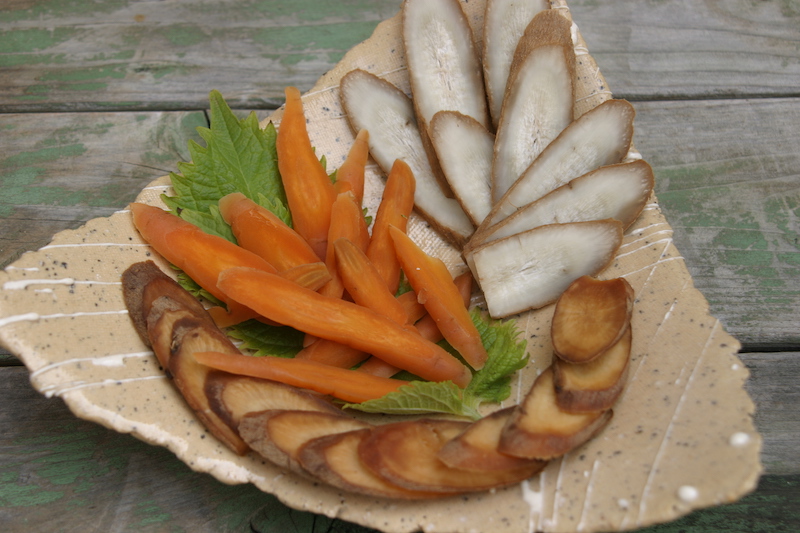
ぬか漬け(Love Sanae料理本から編集)
春らしい酸味と塩気、程よい辛味があり、シャキシャキとした食感と爽やかな風味が心地よい、私のお気に入りの漬物。
ぬか床:
- 糠(玄米糠)1ポンド (454g)
- 浄水 2カップ
- 天然海塩 大さじ2~4
- 昆布(5cm) 2 インチ四方
- 試し野菜 1カップの小さく切ったにんじん、キャベツなど
作り方:
1. ぬか漬けを作るには、最初のぬか床作りが肝心。大きめのフライパンを中火にかけ、糠の色が少し変わり、ふすまの香りが強くなるまで乾煎りします。焼き色がついたら火を止めて冷ます。
2. 小鍋に湯を沸かす。海塩を加えて混ぜ合わせます。昆布を加え、火を止めて肌温に冷まします。
3. 冷ました糠をセラミック製の壷、木製の樽、またはエナメルかガラスの容器に移します。塩、水を混ぜたものを加えます。手で材料をそっと混ぜて、昆布も加えて玄米ぬか床の土台を作ります。
4. 小さく切った試し野菜 (キッチン タオルで水気をふき取ります) を加え、発酵プロセスを促進します。清潔な綿の布で容器を覆い、一晩冷蔵庫には入れないで日のあたらないところに置きます。
5. 次の3~5日間、1日1回手(手は清潔に洗って乾かして)で糠を混ぜます。この後、試し野菜 を取り除いて捨てます(私はお庭の堆肥箱に入れます)。これでぬか床でおいしい漬物を作る準備が整いました。
6. 野菜の種類にもよりますが、1日~2日か1週間で食べごろになります。根菜や大きめの野菜は時間がかかり、葉物野菜や小さめの野菜は短時間でできます。例えば、人参は2~3日、丸ごと赤ラディッシュは1日、丸ごと小キュウリは1日。大根や赤ラディッシュそしてきゅうりなど水分が多い野菜は外で1日くらい干す事をお勧めします。
7. 野菜を加えたら、容器を冷暗所に置き、*毎日混ぜて出来上がった野菜から取り出し、新しい野菜を入れていく。食べる時は必ず水で糠を洗い流してください。
*毎日混ぜることができない場合は、冷蔵庫に数日から1週間置いておくことができます。置きすぎると野菜の酸味や塩気が増すので気をつけて下さい。しばらく留守(1ヶ月くらいまで)をして混ぜる事が出来ない時、ぬか床 を野菜なしで冷蔵庫に保管してください。その場合、またぬか床 を復活させるには新しく炒った糠を古いぬか床に追加してリフレッシュすることで、ぬか漬け作りを大体再開できます。でも水分が多すぎたりしたら初めから作り直しをお勧めします。
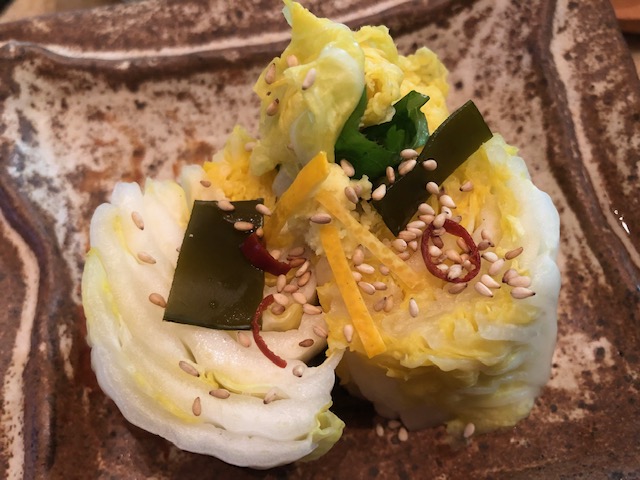
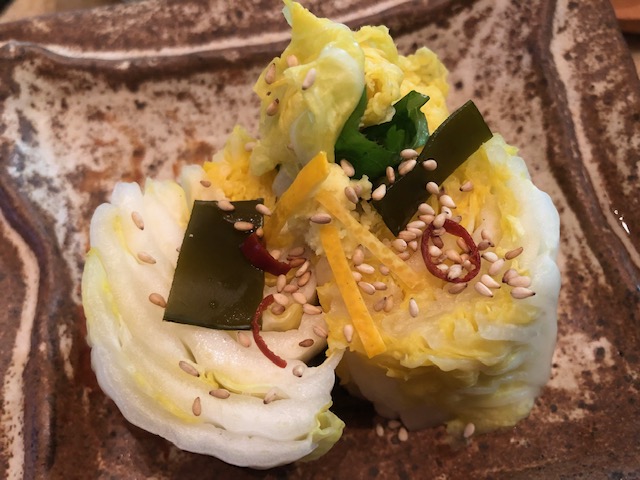
あさ漬け 白菜のピクルス
シャキシャキであっさりした野菜が好きな方に、さっぱりとした味わいが人気のお漬物です。
材料
- 白菜 500g(全体の約半分)
- 天然海塩 10~20gの(野菜の総重量の2~4%)
- 昆布 1枚 5cmx8cm/2”x 3.2″(野菜の重さの約0.5~1%)
- みじん切りの生姜 5g(お好みで)
- 種なしの乾燥赤唐辛子 2~4個 輪切りにして味を調えます(お好みで)
- 水(容器の1/3)
- 重さ – 野菜の重さの約1.5~2倍
1.*白菜を切る: 白菜の根元から約5cmの深さに切り込みを入れ、2つに裂きます。さらに同じように包丁を入れてちぎり、4つに割る。キャベツが大きい場合は6~8 等分に分割してもいいです。
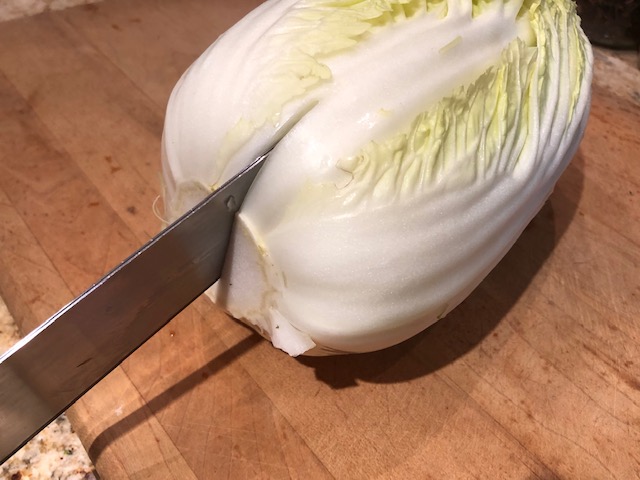
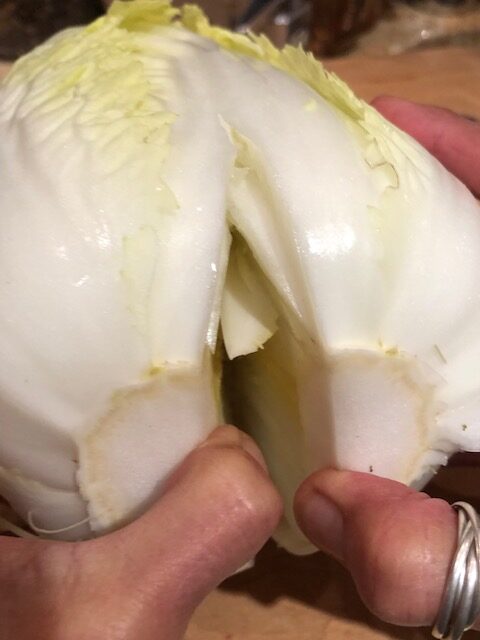
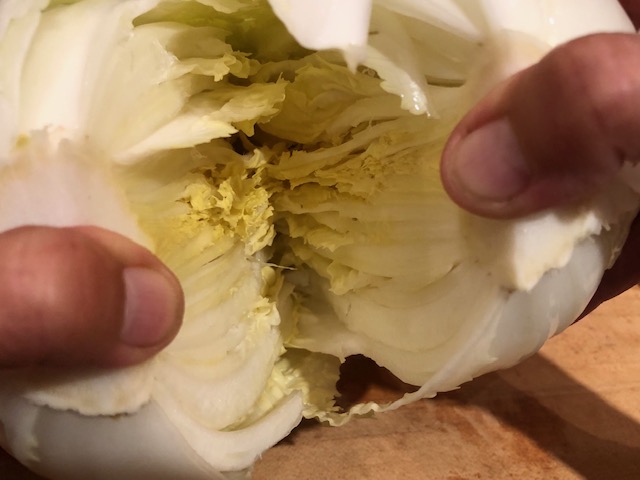
2. 漬ける容器の容量の1/3程度の水を加え、塩を加えて溶かす。
3. キャベツを同じ方向に並べる。 2 番目のものを重ねる必要がある場合は、1 番目の層に塩の半分を置き、赤唐辛子と昆布を振りかけます。残りの白菜を反対方向に並べ、2列目に並べ、残りの塩をふりかけます。手のひらでしっかり押さえながら塩水を念入りに塗るようにかけると、水が上がりやすくなります。
4. 落し蓋をして、おもり(私は大きな川石を使ってます)で押します。
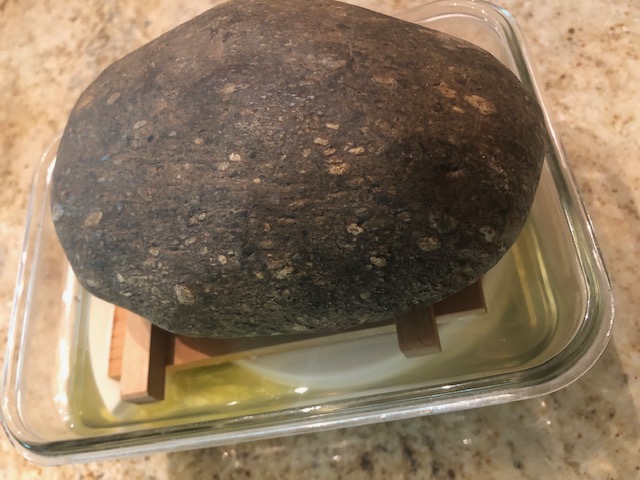
薄手の布巾をかぶせて12~24時間放置(寒い時期は24~48時間放置)
5. 食べ頃になったら、食べる分だけ取り出し、漬物汁を絞り、水ですすいでからもう一度絞る。
6. 食べる前に一口大に切り、お好みで**薬味を添える。
*白菜を切る:キャベツを早く漬け込みたい場合は、細かく切ってください。
**薬味:お好みで、いりごまやゆず、レモン、皮などの柑橘類の果汁、おろし生姜を加えるとさらに美味しくなります!
豆もやしのサラダ風浅漬け
いつものピクルスとは違い、母が私の好みに合わせてサラダのような歯応え、そして塩気を抑えて作ってくれ、子供の頃も美味しく食べられたもの。今でもおかずとして作ります。
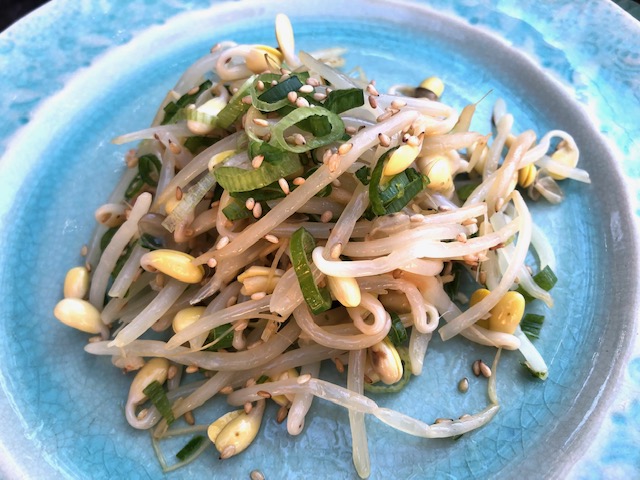
材料
- 大豆もやし 1ポンド・453g(水ですすぎ、水気を切る)
- 天然海塩 小さじ1杯
- 浄水 1/2カップ
- ネギ 1 本(みじん切り)
- 炒りごま 小さじ1
- 炒りごま油 小さじ1~2
- みじん切り にんにく 1~2片を細かく切る(お好みで特に肉・魚を食べる人用)
1. 鍋に豆もやしを入れます。塩と1/2カップの水を加えて蓋をします。中強火で5分間沸騰させます。水を切る。
2. 茹で上がった豆もやしをボールに入れてネギ、炒りごま、炒りごま油を加えて手でよく混ぜる。
3. その上に蓋として軽量プレートを置き、1時間プレスします。
4. 盛り皿に移します。ご飯のおかずとしてどうぞ。
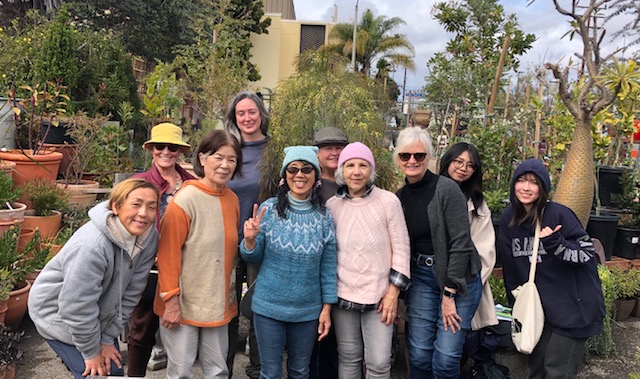
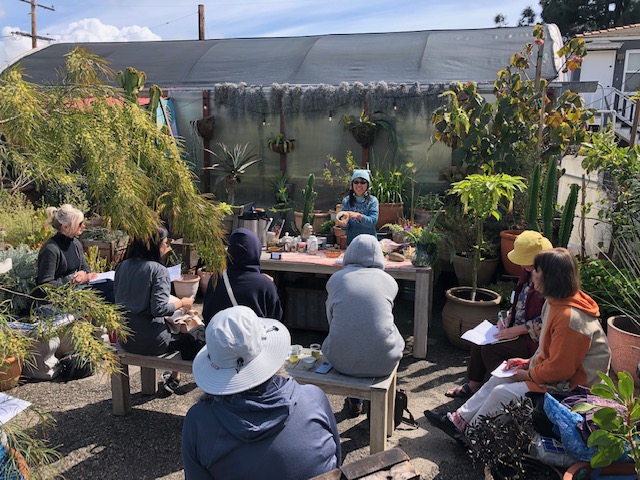
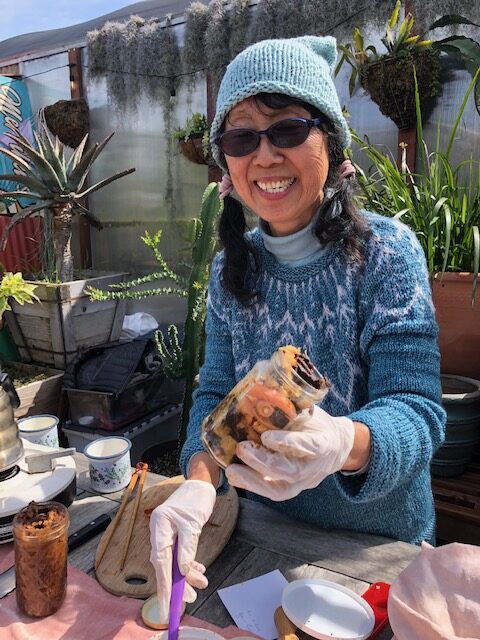
私の春の漬物と薬草茶のクラス3月5日。
春のお漬物をぜひ作ってみて下さいね!
Love, Sanae❤️
この”春は漬物作りの季節!”は「Macrobiotic Today」2023年3月15日号に寄稿したものを日本語に訳したものです。
無料で「Macrobiotic Today」Eーマガジン購読申し込みは: https://madmimi.com/signups/828f181e33dc41d0ae4d59bb5f4f2301/join