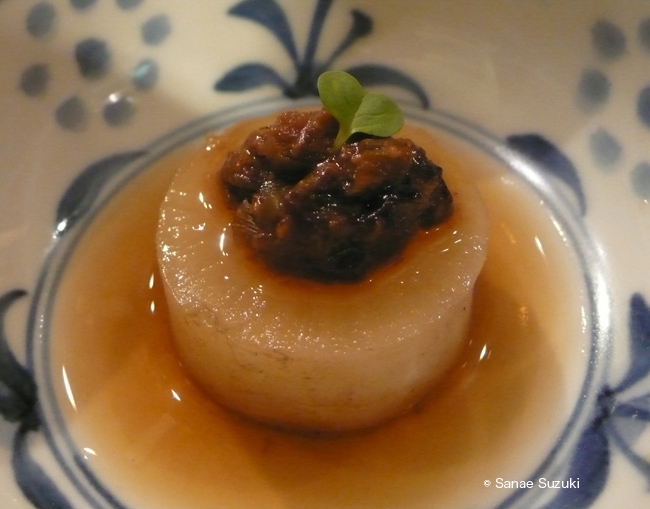
ふろふき大根

大根とは字のごとく大きな根。

アメリカでもこの私の住んでいるサンタモニカでも以前に比べてアジア系のマーケットだけでなく、自然食品店やファーマーズ・マーケットでもよく見かけるようになった。

中学生くらいから、太っていたせいもあってよく大根足と言われたせいか、大根はキムチ以外あまり好きではなかった。

母がよく鍋やおでんなどを作ってくれて私が大根を食べないでいたら、「大人になったら好きになるよ。私も好きじゃなかったけと、今は大好きだから。」と言っていた通りになった。今は、大根大好き人間だ。

大根はいろんな種類があるが、春から夏に収穫されるものと秋から冬にかけて収穫されるものがあって、季節の収穫によっても味も形も違うことがあると好きになってからわかった。春から夏に収穫されるものは少し、味が苦いというかからくピリってする。秋から冬の大根は甘みがあってやさしい味がする。

ま、これは私が勝手に感じていることかもしれないが、マクロビオティックでは、苦くからみをもったものは暖かくなって夏の暑い時期に食べるのがその時期に活発になる肝臓と心臓を助ける役目があるので、大根をサラダにしてそのままのからみを楽しむことで、健康を保っている、自然はうまく出来ているなと今さらながら感心する。また、自然の甘みをもった食物は秋から活発になる肺などを助けて冬は冷えが苦手な肝臓を助ける為に煮物にしてよく煮て食べられる。大根は自然の宝だと思う。

みなさんも自分で春から夏に収穫される大根と秋から冬にかけて収穫される大根を食べて比べてみて下さいね。

大根の効果

大根は体や足がむくんでいて、老排泄水分を消去するのに役立ちます。また、動物性の脂肪を消去することも助けます。

大根は皮の部分の方が2倍ほど多く ビタミンCが含まれていますので、オーガニッ クの大根を見つけてマクロビオティックの料理法で皮のまま料理することをおすすめしま す。また、アミラーゼというデンプン分解酵素が豊富なので消化を助けます。

大根はビタミンCやE、カリウム、カルシウム を多く含み、消化を促します。夏大根は、肉 質が硬く、辛みも強いです。大根の辛み成分 であるイソチオシアナートには、血液をサラ サラにし、血栓を予防する働きがあると言わ れています。その他にも免疫力に関係する白 血球の活性化、殺菌作用に対する効果大。 皮に近い部分には、ビタミンが豊富に含まれ

ていて、特に表皮には中央部の2倍も含まれ ているので、皮もしっかり洗って料理に活用 しましょう!また皮膚の老化を防ぎシミ・そば

かすを防止する効果があると言われています。 免疫力の強化、ガン予防、アルコールの分解 促進などの働きもあります。


Respiratory Health: The combination of antibacterial and antiviral activity with the expectorant properties of daikon and daikon juice make it ideal for clearing up respiratory symptoms. Daikon juice not only clears out phlegm, but also eliminates bacteria and other pathogens, keeping your respiratory system healthy.

Digestive Health: Daikon juice has been shown to possess enzymes similar to those found in the human digestive tract, including amylase and esterase.

Detoxification: Daikon has a diuretic benefit; it helps keep the kidneys clean and functioning at a high level by stimulating the elimination of excess toxins, fats, and even water through urination.

Cancer Prevention: Daikon not only has a high nutrient content, but it also possesses certain antioxidant phenolic compounds that have been shown to reduce various types of cancer, particularly of the stomach.

Immune System: The high concentration of vitamin C in daikon makes it an ideal partner for your immune system.

Anti-Inflammatory Action: Research has found that the level of anti-inflammatory compounds in daikon juice and the normal roots and leaves can significantly decrease inflammation throughout the body, lower the chance of developing arthritis, treat gout, and ease discomfort and pain from injuries and strained muscles.

Bone Health: Daikon is a rich source of calcium, which is essential for bone health. If you are at risk for developing osteoporosis or are beginning to feel the pain of your age, adding some daikon and calcium to your diet can definitely improve your conditions and slow the natural aging process.

Weight Loss: It is low in calories and contains no cholesterol, but it’s high in fiber and nutrient content, making it a weight-loss aid. It fills you up and gives you essential nutrients for your day without significantly boosting the number of consumed calories or cholesterol in your diet.

Skin Health: The antioxidant properties of daikon help to prevent the effects of free radicals, the harmful byproducts of cellular metabolism. So, you can use daikon juice or a slice of daikon for bug bites and other skin irritations.

A Word of Warning: Some evidence suggests that daikon and other radish varieties shouldn’t be eaten by people with gallstones. Other than that, daikon is not commonly known as an allergen and is generally considered healthy for anyone.

Source: Organic Facts


ふろふき大根と味噌くるみソース

From Love, Sanae

650 Plant Based School Furofuki Daikon 700


材料 (4人)


大根 1 本

昆布

浄水 4〜5カップ

醤油 大さじ4〜5


[味噌くるみソース]

くるみ カップ1

麦味噌大さじ2

大根の煮汁 大さじ4 〜6(味をみて、このみで入れる)

みかん汁 (冬)少々


① 大根を2cm厚の8個に切る。

② 鍋の底に昆布を敷いて大根を置いて浄水を大根の半分くらいまで入れ、沸騰するまで煮る。

③ 醤油を入れて、火を弱火にして蓋をして30〜40分煮る。

④ 味噌くるみソースをかけて食べる。


[味噌くるみソースの作り方]

① くるみを炒り、すり鉢に入れて擦る。大根の煮汁と味噌を加え混ぜる。

② みかんの汁を加える。


美味しい大根を楽しんで下さい。


Love, Sanae 💖

Furofuki Daikon

Daikon means “big” (dai) “root” (kon) in Japanese. It is a big white radish you see at Asian markets and most health stores and farmers’ markets now.


When I was a child, up to 20 years old, I did not like to eat daikon unless it was made like spicy kimchee pickles. But my mother said, “Don’t worry: I did not like to eat daikon, either. I love them now, so you will love eating them when you grow up.” She was right.


Now, daikon is one of my favorite vegetables. Daikon grows in spring, summer and autumn/winter, but I love the autumn/winter (the end of October to February) ones the best. Many different kinds of daikon are available in America. Each has a slightly different taste, and the harvesting season also affects the taste. I think the summer daikons are a little bitter and winter ones are sweeter, but you can taste and find out for yourself.


Daikon helps eliminate excess water and animal fats from the body and has a wide range of medicinal uses. It also aids in the digestion of whole grains and vegetables. Here’s a quick breakdown of the health benefits:


Health Benefits of Daikon

Respiratory Health: The combination of antibacterial and antiviral activity with the expectorant properties of daikon and daikon juice make it ideal for clearing up respiratory symptoms. Daikon juice not only clears out phlegm, but also eliminates bacteria and other pathogens, keeping your respiratory system healthy.

Digestive Health: Daikon juice has been shown to possess enzymes similar to those found in the human digestive tract, including amylase and esterase.

Detoxification: Daikon has a diuretic benefit; it helps keep the kidneys clean and functioning at a high level by stimulating the elimination of excess toxins, fats, and even water through urination.

Cancer Prevention: Daikon not only has a high nutrient content, but it also possesses certain antioxidant phenolic compounds that have been shown to reduce various types of cancer, particularly of the stomach.

Immune System: The high concentration of vitamin C in daikon makes it an ideal partner for your immune system.

Anti-Inflammatory Action: Research has found that the level of anti-inflammatory compounds in daikon juice and the normal roots and leaves can significantly decrease inflammation throughout the body, lower the chance of developing arthritis, treat gout, and ease discomfort and pain from injuries and strained muscles.

Bone Health: Daikon is a rich source of calcium, which is essential for bone health. If you are at risk for developing osteoporosis or are beginning to feel the pain of your age, adding some daikon and calcium to your diet can definitely improve your conditions and slow the natural aging process.

Weight Loss: It is low in calories and contains no cholesterol, but it’s high in fiber and nutrient content, making it a weight-loss aid. It fills you up and gives you essential nutrients for your day without significantly boosting the number of consumed calories or cholesterol in your diet.

Skin Health: The antioxidant properties of daikon help to prevent the effects of free radicals, the harmful byproducts of cellular metabolism. So, you can use daikon juice or a slice of daikon for bug bites and other skin irritations.

A Word of Warning: Some evidence suggests that daikon and other radish varieties shouldn’t be eaten by people with gallstones. Other than that, daikon is not commonly known as an allergen and is generally considered healthy for anyone.

Source: Organic Facts


Furofuki Daikon (Simmered Daikon) Recipe

From Love, Sanae

650 Plant Based School Furofuki Daikon 700


MAKES 4 SERVINGS


8 rounds (each 3/4″ thick) daikon radish

2 strips (each 7″ long) kombu

4–5 tablespoons tamari

2–3 tablespoons sesame seeds, washed

2 tablespoons barley miso

4–5 cups spring water


  1. Put the kombu in a pot; layer the daikon on top.
  2. Add water to half-cover the daikon, and bring it to a boil.
  3. Add 1–2 tablespoons tamari for each cup of water. Cover and reduce heat to low. Simmer until daikon is tender, about 30–40 minutes.
  4. To make sesame-miso sauce, dry-roast the sesame seeds in a heavy skillet over medium-­high heat, until lightly toasted and fragrant. Stir constantly.
  5. Place toasted seeds in a suribachi and grind to a paste.
  6. Blend in miso, and thin the mixture with 2–3 tablespoons of the cooking liquid.
  7. Serve the daikon topped with the sesame-miso sauce.


Enjoy!

Love, Sanae 💖

Grief

If any of you read my blogs about my beloved dog daughter, Kula—who departed last August—you know I was sad and missing her. I took a time to take care of my inner self and also put together Kula’s ceremony on her 49th day, according to Buddhist tradition. I invited many of Kula’s friends and people who loved her. You can read about it here and see a YouTube video of the ceremony here.


I heard that by Buddhist tradition, I must not cry after the 100-day ceremony. I did not think I took the tradition so seriously, but after November 9, Kula’s 100-day ceremony, I not only stopped crying, but I also stopped talking or writing about her. It was not intentional, but Thanksgiving and the holidays were coming, so I must have felt it was not a good time to share my sad feelings with anyone. I kept all the memories of Kula inside of me.


650 Kula with geta

photo: Kula wearing my wood sandals at her favorite place – the beach!


I gradually started to feel numb and did not feel “Sanae.” Sanae is usually excited every morning, motivated about the day, and she is curious. But I had no excited feeling and no motivation or curiosity anymore. I thought it was just holiday blues, which I do feel almost every year. So, I kept doing my usual things—teaching, counseling, taking dogs for walks, and practice my yoga.


About a week before Christmas, Eric got sick (which was unbelievable, because the last time he got sick and took a day off was in 1992 when he first moved to Los Angeles.) He had to go to Utah for his cooking job the day after Christmas, so I took care of him with my best ability. He had to take only one day off from work; he got better and went to Utah. But I was getting a high fever and stayed home alone with the dogs and cats for seven days. I got a little better, so I wrote my final 2016 newsletter to my friends and family. I was hoping to get better soon after I wrote the newsletter. It took another week or so, but I got better and taught cooking classes, did counseling, etc.


In mid-January, we found out we had a flood in our mountain cabin in North Fork, California. It was lots of work for Eric to clean and make trenches, so I cooked and took care of our dogs and cats. Then I got a fever again for one week; it ended but came back again last week. After more than a month, I decided to go get some tests done. My main symptom was a fever of 100–102. I had some sore throat and a little cough, but nothing major—except I was not able to eat my favorite foods, like brown rice, miso soup and twig tea (kukicha). Also, my sleeping pattern had changed. I was able to do most of the housework and things I normally do, except when I had a high fever. But I did not want to socialize much, and I got tired very easily and had no motivation to do music or new or physical things. I just wanted to go see the ocean and be with my dog and cat family. I did not feel like I was depressed (I went through depression before, so I usually notice if I am feeling that way).


It took a while, but I realized I was going through “grief.” I was grieving for Kula! I was thinking about her most of the day. I remembered her with everything I did and everywhere I went since she had been my service dog when I was in a wheelchair.


I knew I was feeling very sad and missing Kula a lot, but I thought I was doing all right. I have sent many dogs and cats to heaven since I was 8 years old. Of course, I was sad and missed each of them, but I was able to process the sadness every time, so I did not think I was going through “grief” for Kula. Also, I still have five other dogs and two cats, so I felt bad missing Kula so much. I told myself that I can’t miss her so much—an excuse not to feel my sadness. That’s how I completely stopped talking about her.


Since finding out that I must be grieving for Kula, I have been reading a book about grief and learning how to process it and find self-support meetings and workshops. The book told me that in order to deal with grief, I need to talk about my sadness and pain and how much I miss Kula—which is a relief because whenever I talk about her, my heart is lifted and open. The book also says, “Sadness and joy are part of your memories.”


What I have learned so far from The Grief Recovery Handbook  – John W. James and Russell Friedman

650 Grief book IMG_7567

Myths About Grief

Most of us, over the course of our lifetime, have heard at least one of the following statements after a loss:

  • Time Heals All Wounds. You may still be grieving after losing someone five, 10 or 20 years ago. Does it hurt any less? Do you miss that person any less? Probably not. For some, the pain may get even worse. Time definitely does not heal all our pain. Yes—I thought after Kula had been departed 100 days, I should be okay.
  • Grieve Alone. We have been taught that we are not to burden others with our grief. I felt that way after the suicides of two friends. You don’t want to bother others with your sadness, so you keep it to yourself. In some cases, you reach out to others, but they don’t know what to do to help you. As a result, you feel lost and alone, so you isolate yourself as a way of handling the grief that others can’t. Grieving alone certainly, doesn’t work. Yes—I did not want to bother people, and I just stayed alone.
  • Be Strong. If you are the oldest child in your family, you know this one well. If something happens, you have to be the strong one for your younger siblings. You have to suck it up and not show your emotions. Heaven forbid the younger ones to see you crying. What sort of message does that send? Maybe they will think you are weak instead of just plain sad. Trying to be strong just gives the wrong message that you are trying not to be human. Yes—as long as I stayed strong, I was all right.
  • Don’t Feel Bad. How many of us have been told as a child not to cry when something bad happened? Rather than expressing our emotions, we were told to hold it in. I think many of the generations before us were never allowed to show their feelings. Men joined the military and were told to check their emotions at the door. Some children have never seen their parents cry. No wonder they grow into adults who can’t deal with their own emotions. Yes—it has been a while, so I should not feel sad.
  • Replace the Loss. I am pretty sure most of my generation has heard after a relationship breakup, “Don’t feel bad; there are plenty of fish in the sea.” I’m not sure if that was supposed to make us feel better, but in actuality, it made it worse. It implies that we should not wait and grieve over the loss of the relationship, but instead move on right away and replace the old one with a new one. That can’t be healthy. Maybe that is why so many people have a revolving door in relationships—maybe even two at one time, in case one of them doesn’t work out. No wonder there are so many divorces these days. This one did not fit me.
  • Keep Busy. Speaking from experience, I can say I became a workaholic just so I didn’t have to think after the suicides of my two friends. Keep busy. Keep working. Don’t think about it. It’s much easier than facing your grief. In reality, it’s worse, because you don’t end up facing your grief at all. Yes—I thought as long as I kept busy, I was all right.


All relationships are unique—no comparison and no exceptions.

I am also reading The Grief Recovery Handbook for Pet Loss  – John W. James, Russell Friedman and John W. James

Grief book pets

I started to talk about Kula a little bit again, and I am writing about my feelings and letting some friends know what I am going through, which is helping me.

I went to see the new movie A Dog’s Purpose. I cried a lot and thought about Kula and miss her a lot.

Now I started to talk to Kula once again and using animal communications that I have learned. She supports my feelings and told me “Mommy, I love you and miss you too. Please take all your time, you are all right! I am here for you no matter what.”

I am thinking of trying a support group meeting or taking a workshop to learn more.

If any of you are interested here is their website.


Bach Flower remedy and a homeopathic remedy are also very good to take during grieving period, as well as using essential oil and a healing crystal power stone. I would like to share about it in my next blog.


If you are going through grieving, please share also!


With my love,

Sanae

 

Looking Back at 2016

Life’s challenges come just like the waves of the ocean.
Some are big, and some are small.
2016 is almost over.
Eric and I had an opportunity to look back over the whole past year.

I wish I could write about how wonderful 2016 was, but I want to share our real life and true feelings and be honest about the many challenges we had.


The last month of the year, I usually feel sad and unable to match the outside world of cheerful faces and holiday gatherings, so I tend to stay home more, be with my dogs and cats family, and do knitting/crocheting or other hand-making projects. But two weeks ago, I was feeling run-down and unable to do what I wanted to do my daily chore.
I told Eric that I was not feeling well, and he responded, “Okay,” and then he started talking about a GoPro he was trying to get with his credit card reward points. I asked him what he meant by “Okay,” and he did not have much of an answer. We ended up having an argument that did not make any sense. We felt frustrated because we argued over nothing, and because of our argument, our cat Mai Mai got scared and started peeing all over. Tin Tin laid down in his litter box and not coming out for a few hours.


650-tin-tin


Mai Mai peed all over the house about a year ago also, when we did not know what to do with our Seed Kitchen business and we were very stressed out, so I knew this must be from stress again.
It took about a week, but I realized that I was not the only one feeling sad and tired. Eric also felt sad, tired and grieving. Eric almost never gets sick or takes sick days off from work, but he had a dry cough (which usually comes from grieving) and fever, and he had to take a day off. I was weak and had no motivation to do much. We both had bad dreams.

650-eric-with-his-remedy-dogs


What did we do?
We nurtured ourselves with respect and friendly manners—meaning no arguments.
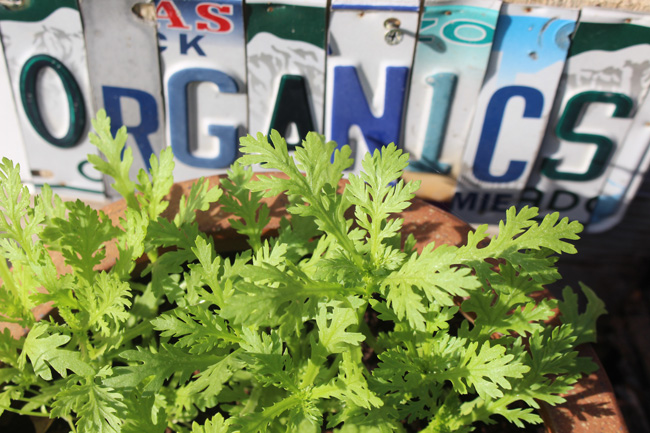
We made special remedy drinks (Lotus Root), homeopathy (Ignatia Amara for grieving), and cooked healing food, our garden wintergreen Shungiku water sauteed ; we took a warm bath with Bach Flower (Rescue Remedy and Honeysuckle) and Aromatherapy oils (Mandarin, Lavender and Clary Sage) ; we stayed in bed with a hot water bottle and slept; when we were awake, we watched good movies and cuddled; we meditated in bed and just saw our feelings as they were. We also cried and rested with our five dogs and two cats. They totally understood us and never complained. They comforted and rested with us. I think they needed this family bonding. Mai Mai stopped peeing all over.


650-mai-mai


Looking back at 2016, we realized what we lost this year was big—from my completely cracking a tooth while having a nightmare, to losing our beloved dog daughter Kula and our lifetime work Seed Kitchen. Life has struggles, no matter what; it is up to us to live as though this is a beautiful struggle or a miserable struggle.

Today, we decided that our life is a beautiful struggle, and we appreciate what we still have—I still have 31 teeth out of 32—so I am ready to move forward to 2017.


Whatever you are going through, I hope you are able to look at the bright side.
If you are not able to do so, take a rest and please nurture yourself like I am doing for myself now; that is the best remedy you can give yourself.


Thank you for your support and being our friends and family.


Wishing you a healthy and happy New Year 2017!


Love, Sanae💖

新年のレシピ:おめでとう

小豆玄米粥の名称である“おめでとう”は「病気が 治って良かったね、おめでとう」という意味でマクロ ビオティックを提唱した桜沢如一先生が名付けま した。

新年おめでとうの意を込めて、お雑煮の代わ りに食べて平静な1年をスタートするのはいかがで しょうか。

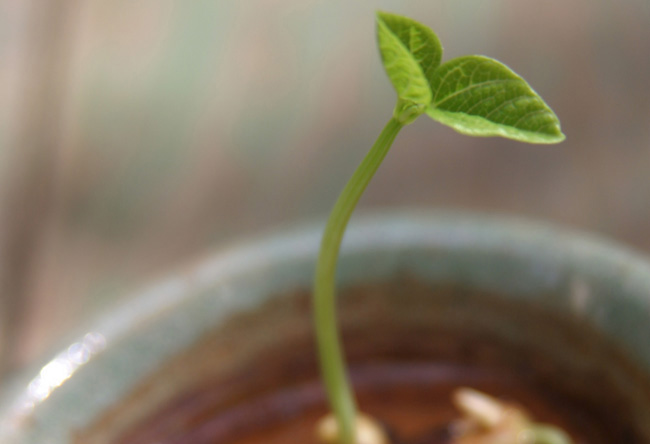
(小豆はとても力強い豆です。小豆の芽は写真のようにとても美しいです)

材料(4人分)

玄米 · · · · · · · · · · · · · · · · · · · · · · · · · · · ·1カップ

小豆 · · · · · · · · · · · · · · · · · · · · · · · · · · ·1/2カップ

水 · · · · · · · · · · · · · · · · · · · · · · · · · · ·5〜10カップ

昆布 · · · · · · · · · · · · · · · · · · · · ·2cm×2cm 1枚

炒りごま · · · · · · · · · · · · · · · · · · · · · · · · · · · ·少々


650-%e3%81%8a%e3%82%81%e3%81%a6%e3%82%99%e3%81%a8%e3%81%86-br

photo: Omedetou in my cat rice bowl 写真:大好きなネコお椀に盛った”おめでとう”!


作り方
圧力鍋の場合

❶玄米をやさしく洗った後、玄米の透明感がなくなりキツネ色になるまで炒る。小豆はゴミを取り除き洗う。

❷鍋に1と水、昆布を入れ中火にかける。

❸圧力がかかり、蒸気が出てきたら弱火にして40分〜1時間炊く。

❹火から下ろし、圧が抜けるまで待つ。


土鍋の場合

❶上記1〜2を参照。

❷沸騰後、弱火にして約2時間炊く。途中、鍋蓋の開

ポイント

小豆には、良質のたんぱく質はもちろん、豊 富なビタミン類(B1・B2)やカリウム、リン、 鉄、食物繊維まで幅広く含まれています。ま た、食物繊維には身体を温める効用もありま す。小豆は他の豆類に比べて、脂肪分が少な く、便秘、不眠を解消。消化がよく利尿作用もあり腎臓の働きを助けてくるので、水分代謝 が良くなり、むくみ解消にも役立ちます。

よく噛んであなたのおめでとうを食し、素晴らしい新年をお迎えくださいね。


Love,

Sanae💖

New Year Recipe: Omedetou

In the macrobiotic world, azuki bean congee has a special name: omedetou.

(Azuki beans are strengthing beans and the sprout is beautiful as the front photo.)

The word means “congratulations” and is used especially in the New Year and for happy occasions like having a baby, passing a big exam, etc. George Ohsawa (founder of the macrobiotic philosophy) named azuki bean congee omedetou for when you get well from illness. Eating this porridge in the New Year will help you have a positive mind.


650-%e3%81%8a%e3%82%81%e3%81%a6%e3%82%99%e3%81%a8%e3%81%86-br

photo: Omedetou in my cat rice bowl


Makes 4 servings


1 cup brown rice

½ cup azuki beans

5–10 cups purified water

1″ square kombu sea vegetables昆布 (2cmx2cm)1枚

Roasted sesame seeds


Pressure Cooker Method:

  1. Wash the rice gently, about three times. Roast till golden brown. Wash the azuki beans and remove pebbles, etc.
  2. Place the rice and beans in the pressure cooker. Add the water and kombu, cover, and heat over a medium-high flame.
  3. When the pressure is up, turn the flame to simmer and cook for 60 minutes.
  4. Remove from the flame and wait till the pressure is down.
  5. Serve with roasted sesame seeds.


Non-Pressure Method:

  1. Wash the rice gently, about three times. Roast till golden brown. Wash the azuki beans and remove pebbles, etc.
  2. Place the rice and beans in a stainless or ceramic pot, add water, and heat over a medium-high flame.
  3. When it starts to boil, add the kombu, cover, turn the flame to simmer, and cook for 2 hours.
  4. Remove from the flame, and wait till the pressure is down.
  5. Serve with roasted sesame seeds.


Enjoy your omedetou and chew well!

Love,

Sanae💖