My mind is not so different from when I came to America at 19— still curious, still moving at my own pace.
What has changed is the quiet. A deeper calm lives in me now. With time, I have softened. I enjoy each day more fully, and I accept myself—and others—just as we are.
Perhaps I can say I live with a free spirit, most of the time.
On my 71st birthday, I felt no desire to do much at all. Only a few simple things, gently chosen.
I didn’t plan ahead, which is unusual for me— and yet, I felt completely at ease.
The night before, a feeling came to me: “I want to see cherry blossoms.”
Of course, I am not in Japan. Still, I asked Eric.
He looked at me, surprised— “What cherry blossoms? Where? We are not in Japan.”
I smiled inside. There was no need to explain.
“We’ll see in the morning,” I said.
And morning came.
I woke early, as I usually do, feeling quietly happy to be one year older. I searched, followed a feeling, and chose a place— not for certainty, but for possibility.
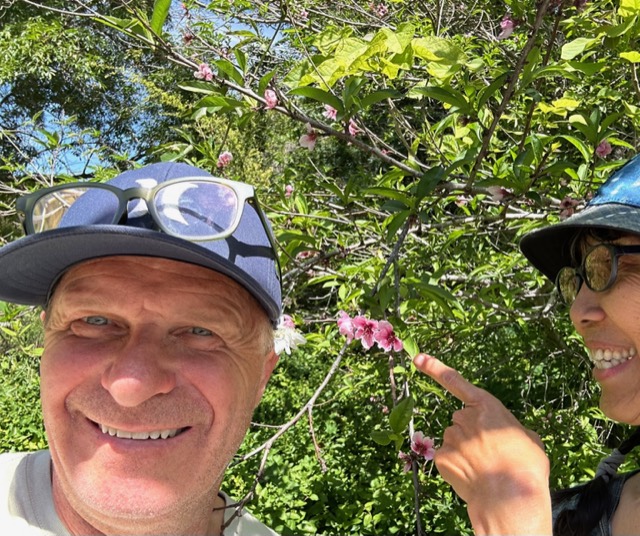
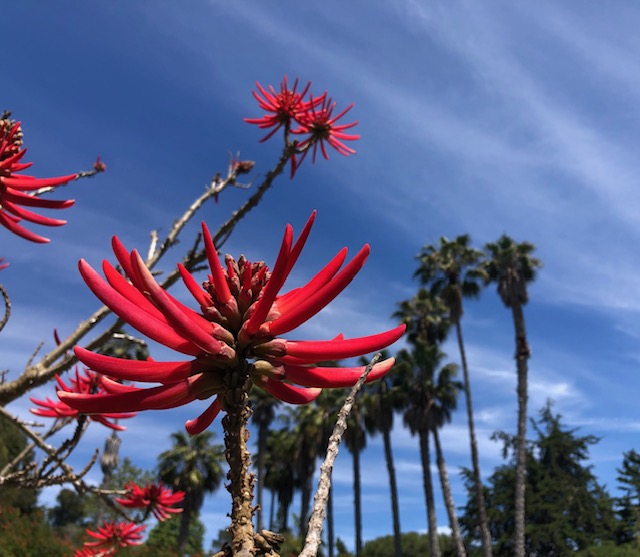
At the South Coast Botanical Garden, only a few blossoms remained— soft, fragile, almost gone.
And still, they were enough.
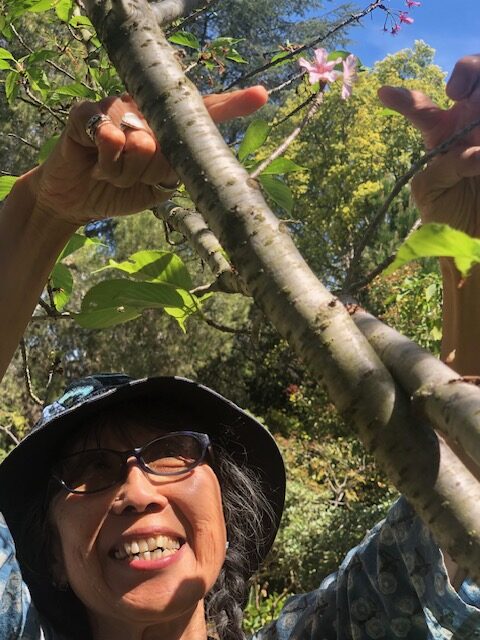
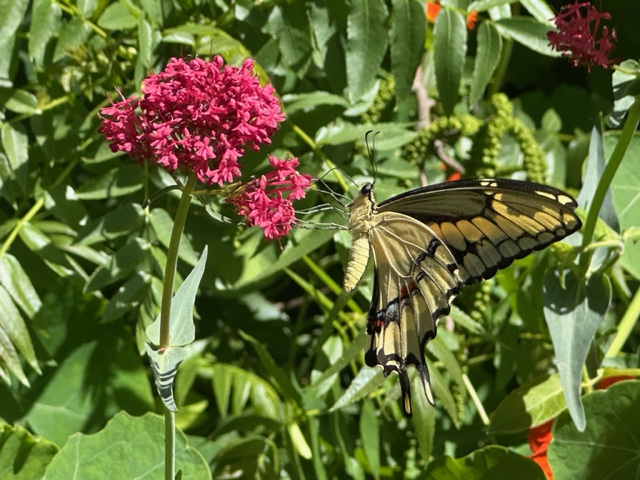
We walked slowly, held by the scent of herbs and flowers, surrounded by the gentle life of trees and air.
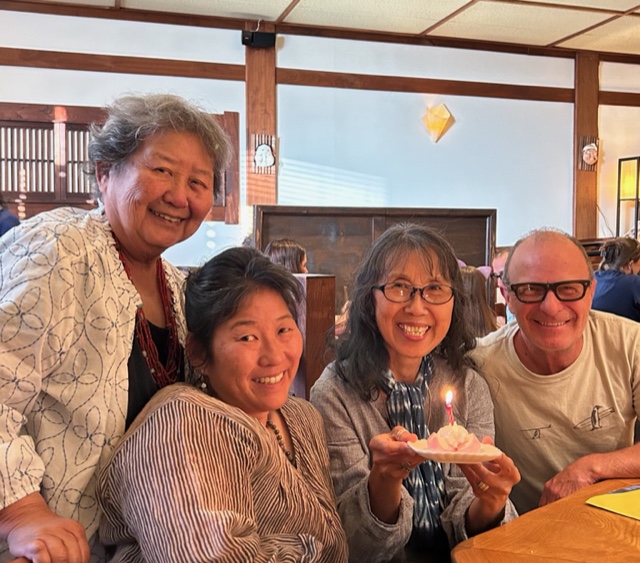
That evening, I said yes to an invitation— a simple dinner with a friend and her mother.
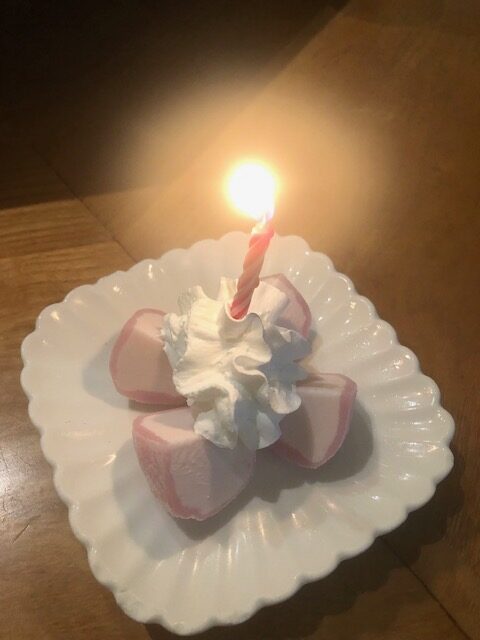
There was laughter, and a mochi ice cream cake with a candle.
For a moment, I was a child again.
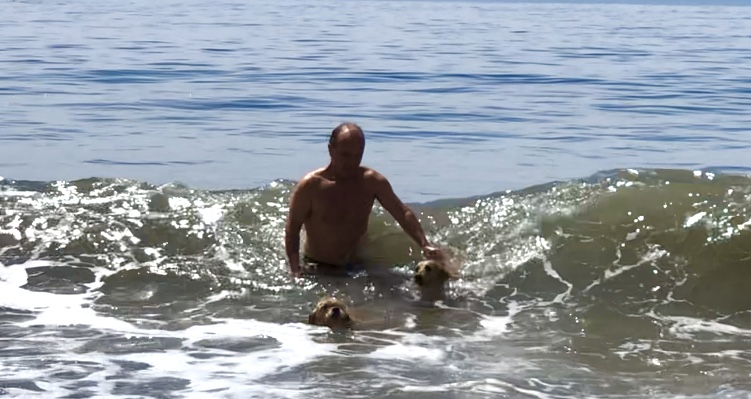
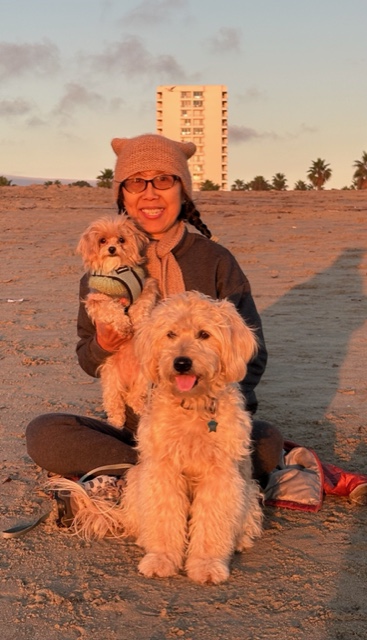
The next morning, we went to the dog beach in Santa Barbara— with our beloved dog family, Nalu, Kai, Lani, Makani, and our guest dog, Mocha.
We walked along the shore, listening to the ocean breathe.
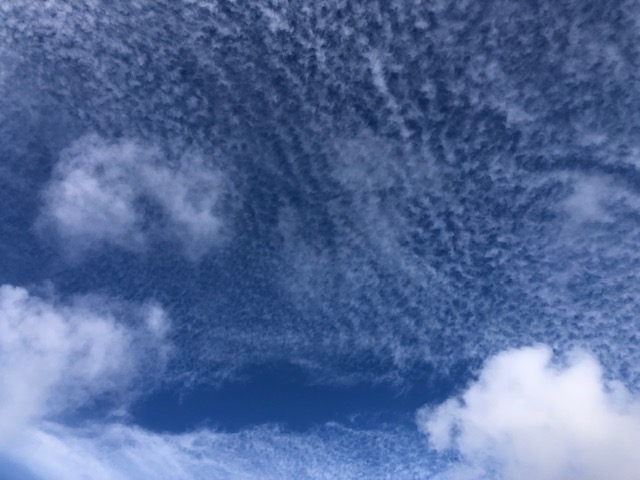
Clouds stretched wide across the sky. Pelicans and birds moved freely above us.
The water touched my feet, cool and alive.
I watched Eric and Kai swimming in the ocean.

And I thought— this is one of my favorite ways to be alive.
On the way home, we stopped in Ojai.
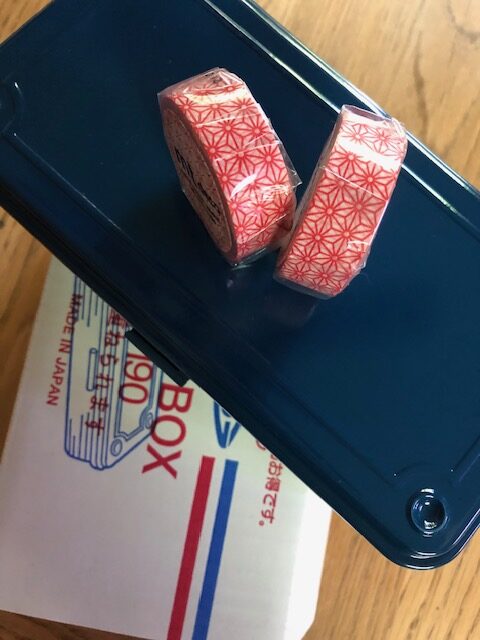
At my favorite stationery shop, “Noted,” I found small treasures— Japanese washi tape, and a simple toolbox I can use for my sashiko while traveling.
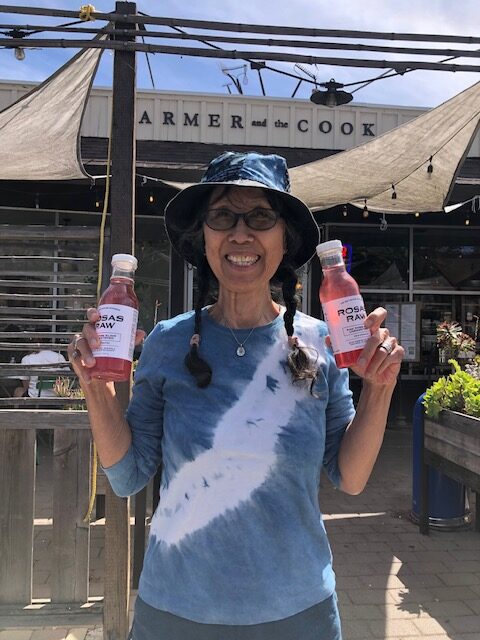
At Farmer and Cook, I chose macrobiotic cookies and a rose elixir drink— a quiet sweetness to carry with me.
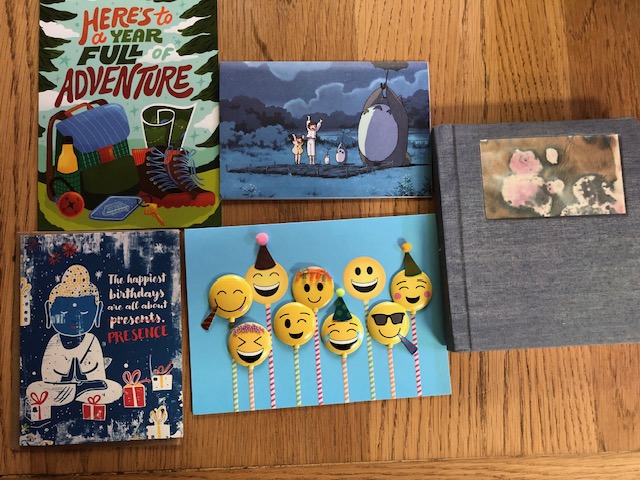
Over the weekend, love arrived in many forms— flowers, cards, small gifts, voices across distance, messages from near and far.
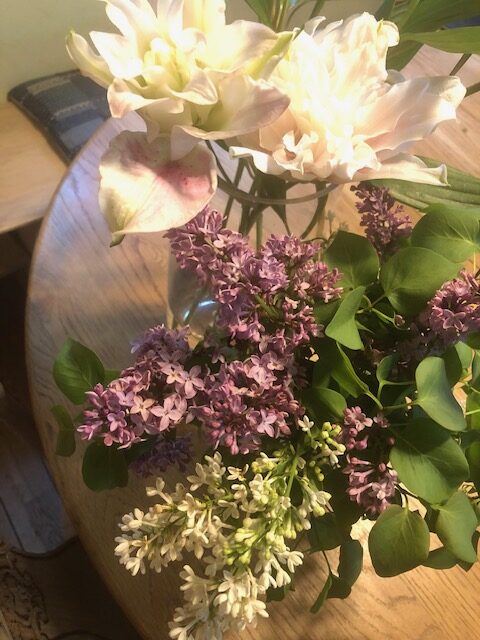
I felt held. I felt loved. I felt grateful.
It was simple. And it was enough.
It was, truly, the birthday I needed.
Four weeks before, my body told a different story.
A cold that stayed— longer than expected.
Eric recovered quickly— but I did not.
Each time I thought I was better, I returned too soon— to teaching, to walking, to qigong— and the cold returned to me.
Again and again, I had to stop.
My symptoms were mild— a little cough and a runny nose, a slight fever each day, and a quiet weakness.
And yet, in that weakness, another voice appeared:
“Is it coming back?”
Both of my past cancers began this way— softly, quietly.
So I listened.
Not with fear, but with awareness.
This kind of thought belongs to those who have walked that path.
I do not push it away. I acknowledge it.
And then— I choose patience. I choose trust.
I do what I can, and I care for myself.
I remember a saying from Japan: “The common cold is the root of all illness.”
So I nourish myself.
Through the lens of Yin and Yang, I listen more deeply.
Eric’s cold was Yang— strong, active, with coughing at night— easing with grated apple and its juice, and fresh lotus root tea.
Mine was different— more Yin, more quiet— a sore throat, a morning chill, a headache, a body asking for warmth, with little appetite.
My macrobiotic counseling work began after I was diagnosed with ovarian cancer and healed myself through macrobiotic practice—which is not just about food, but a way of living.
After completing Levels 1–3, I continued my studies in an intensive counseling program at the Kushi Institute.
I later worked at Erewhon Natural Foods, where I offered weekly cooking demonstrations, taught classes, prepared staff meals, so they could experience what macrobiotic food tastes like—and how it can support their health and mood. I also spoke daily with customers seeking health guidance.
Looking back, I am not sure how I did it—but I always did my best.
Over the years, I have become very used to offering guidance and sharing what I have learned. Through my work, not only clients but also friends, neighbors, and students have often asked me for health advice.
I do not know how many people I have supported, and I do not know how many truly practiced what I shared.
Recently, a few people close to me asked for help.
As I was writing detailed recommendations, I realized that instead of offering the same guidance repeatedly in private, I could share it here—so that those who are ready may benefit.
This is caring guidance, without attachment, from me to anyone who needs and wants to practice a macrobiotic life as I do.
Leg Swelling and Constipation After Chemotherapy
These are common side effects of chemotherapy and medication.
Leg swelling may indicate that the kidneys are under strain. Constipation reflects stress on the digestive system.
These teas may support kidney function and help ease constipation.
Drink:
1 cup before breakfast
1 cup in the afternoon between meals
If constipation becomes severe, cassia seed tea (Habu tea) may be helpful.
For swollen legs:
Foot baths
Baths with sea salt
Gentle massage and body care
Weakness After Chemotherapy — Rebuilding Strength
Kimpira Root Vegetable Soup (2–3 times per week)
1. Chop very fine equal amounts of burdock root, carrot, and lotus root.
2. Lightly brush the bottom of a pan with sesame oil and heat over medium-high heat. When the oil is hot, sauté the burdock for 2 to 3 minutes, adding a pinch of sea salt.
3. Layer the lotus root and carrots on top of the burdock. Cover all vegetables with purified water, bring to a boil, lower the flame, cover, and simmer for a long time (30~40 minutes) until vegetables are very soft.
4. Mix sweet white miso and dark 3-year-old barely miso in a half-and-half ratio, and dilute in some of the soup broth.
5. Slowly add enough miso mix to achieve a good taste for you (not too salty, please).
Koikoku (Whole Carp Soup)
A whole carp (as fresh as possible – ask the fish market to remove the bitter gallbladder and thyroid and leave the rest of the fish intact, with all scales, bones, head, and fins. If you must remove them yourself, place the carp on a fish cutting board to remove the thyroid and gallbladder. If the carp has roe, it must also be removed.
1. Chop the fish into large 2-to 3 –inch slices, including the head, scales, fins, and bones. The eyes may be removed if desired. Set these aside.
2. Wash and chop burdock into very thin slices or matchsticks. The amount of burdock is the same volume as that of carp. Sauté the burdock in oil for a few minutes, or water-sauté if needed.
3. Tie used bancha twigs or stems (about 1 cup) in cotton cheesecloth to make a tea bag as big as a tennis ball. Layer the tea bag on top of the burdock and place the chopped fish on top. The tea twigs will help soften the bones while cooking.
4. Add enough liquid to cover all ingredients. Use approximately 1/3 bancha tea and 2/3 spring water. Cover with a heavy lid or pressure cooker lid. Bring to a boil over high heat. Reduce the heat. If boiling, simmer for 2 hours or longer; if using a pressure cooker, simmer for 1 to 11/2 hours or longer.
5. While cooking, the burdock and carp neutralize each other, and the bones of the fish become very soft. When almost cooked, bring down the pressure, if necessary, and remove the lid. Add miso dissolved in water to season to taste, as you would for regular MISO SOUP.
6. Add 1 tablespoonful of juice from freshly grated ginger and mix well. Cover and simmer for another 5 minutes on a low flame. When seasoning with miso, you may need to add some water if the soup is too thick.
7. Serve with the cooking liquid. Garnish with chopped scallions and serve hot.
* Have a small bowl of this preparation every day for 3 days. Save leftovers in the refrigerator or freezer for future use, then reheat for 10 to 15 minutes before eating.
* If a carp and burdock are unavailable, trout or other white-meat fish may be substituted for carp, and carrot for burdock. Cook for 1 to 11/2 hours. But the effectiveness of this preparation is less.
* It is better to use twigs (Kukicha) that have already been used, since fresh twigs (Kukicha) can impart a bitter taste to the dish.
On Medication and Side Effects
A different friend asked about possible side effects of several medications.
Examples include:
Amlodipine (blood pressure)
Atorvastatin (cholesterol)
Levothyroxine (thyroid support)
Each of these medications may have side effects, including digestive discomfort, muscle pain, or changes in mood and energy.
Even when something is considered “not common,” individuals may still experience it.
It is important to:
Pay attention to your own body
Ask questions
Stay informed
A Broader Perspective
Over time, I have observed that many health conditions are influenced by:
Busy lifestyles
Excess stimulants (food and drink)
Ongoing mental and emotional stress
We may be in a stage of life where the body is asking us to slow down—yet many continue to push forward.
General Food Suggestions
Increase fiber-rich vegetables
Include easily digestible protein such as beans
Use prepared organic beans if needed (for convenience)
After chemotherapy, I was prescribed medication for bone density.
I experienced side effects, although they were described as “not common.” After requesting a change, I tried another medication and again experienced side effects.
At this time, I have stopped medication and am observing how my body responds.
Previously, I also experienced strong reactions to medications during chemotherapy.
These experiences remind me that each body responds differently.
I have also seen this with my mother, who gradually began taking multiple medications. Over time, she experienced many symptoms without realizing they were side effects.
A Final Thought
Medication may be necessary in some situations.
However, it is important to remain aware that:
All medications have potential side effects
The more that are taken, the more complex the effects may become
Listening to your body is essential.
I share this for those who are ready to receive—not only to ask.
Life taught me that care is not an idea, but a daily practice of living—with tenderness.
For more than 40 years, I have shared this way of caring with others, first through food – Macrobiotics, and now through textiles – Sashiko.
Before Sashiko entered my life, I spent many years teaching macrobiotic cooking and working as a macrobiotic counselor. I loved that work and never imagined I would teach anything else. Then I was given the opportunity to teach Sashiko embroidery, and something quietly shifted.
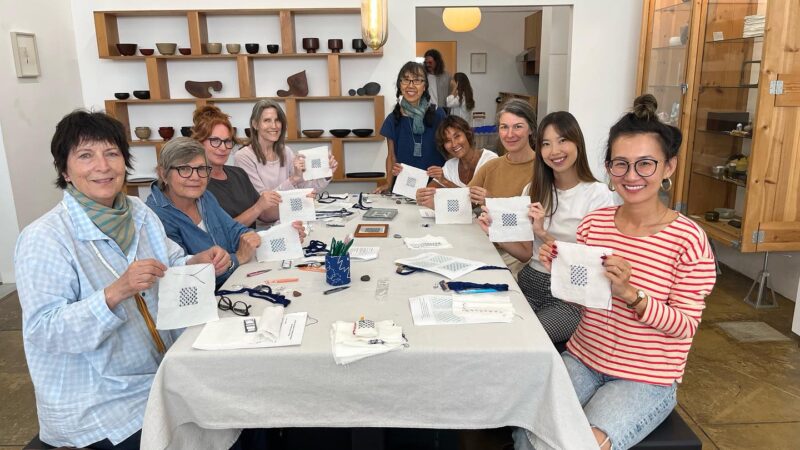
Last year, I was deeply grateful to teach Sashiko workshops to over 200 people. I now teach Sashiko every month, two to four times, at places such as JACCC, Wildfiber Studio, Tortoise, and other venues. What began as a new experience has become an essential part of my life.
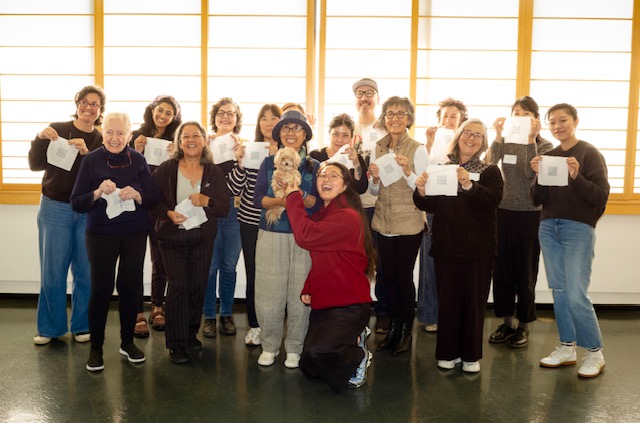
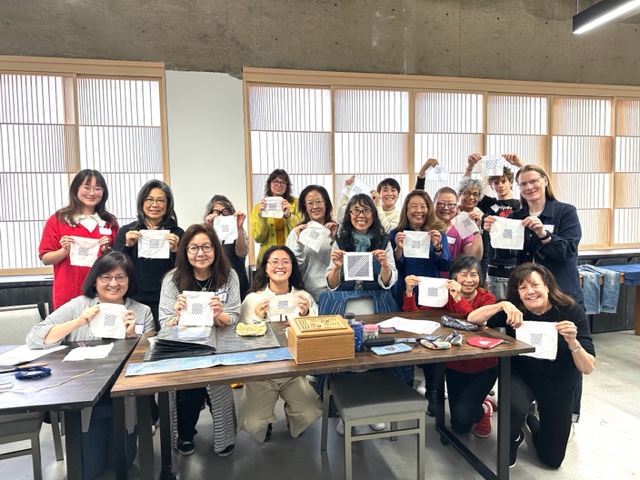
Sashiko Beginners Workshop in December 2025
What I love most about Sashiko is its simplicity. The basic running stitch can be learned by anyone, regardless of skill level. Yet Sashiko is also deeply meaningful. Traditionally, the stitches reinforced fabric for warmth and strength, while patterns carried wishes and prayers—for good harvests, protection from harm, and prosperity in daily life.
The repetitive, meditative nature of stitching fits naturally into my lifestyle. Stitch by stitch, Sashiko slows me down. It asks for presence rather than perfection.
Another reason I love Sashiko is mending—reinforcing, repairing, and strengthening something worn or damaged so it can continue its life.
My parents taught me to take care of my belongings and not to waste what I had. In Japan, we have the word Mottainai(もったいない・勿体無い). It expresses a deep respect for objects and a quiet sense of regret toward waste. It is not only about saving things, but about honoring them.
Because of this, I tend to keep old clothes, cotton sheets, books, calligraphy paper, and other materials. Some of them have been with me for decades.
I still have a T-shirt from when I was 16 years old. That T-shirt carries the history of my teenage years. When I wear it, I remember who I was at that time.
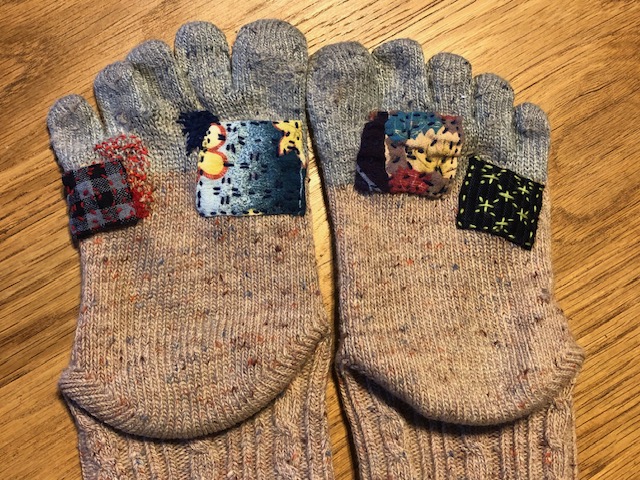
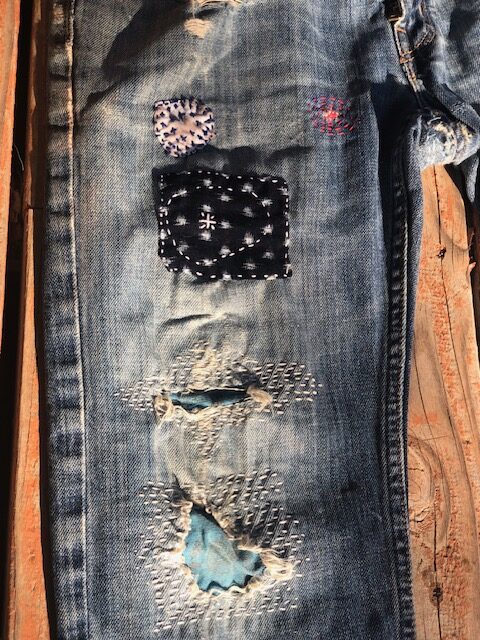
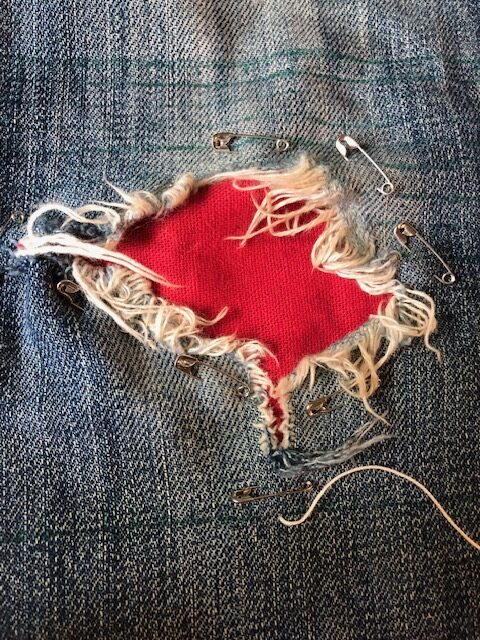
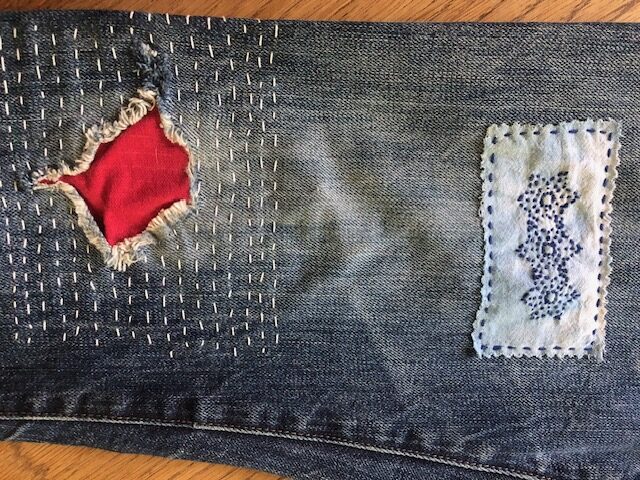
Sashiko Mending socks and jeans
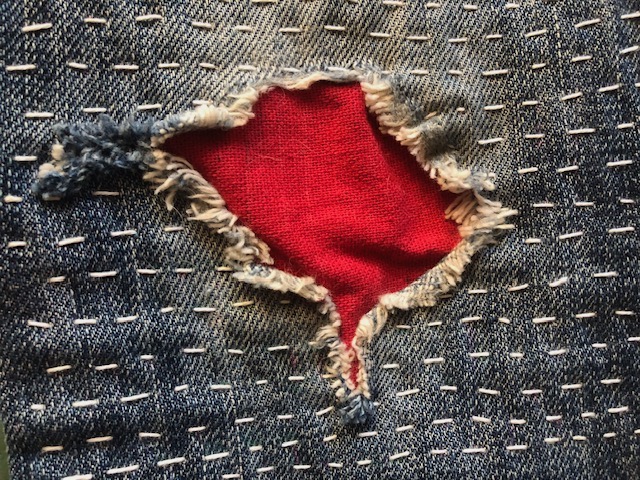
Sashiko mending creates visible, beautiful repairs on clothing, bed covers, and other fabrics. Instead of hiding damage, the stitches make care visible. I mend in order to keep what is precious to me—repairing, reinforcing, and strengthening so these textiles can continue their lives.
Each year, an overwhelming number of garments are produced, while landfills continue to fill with discarded clothing. Many items are worn only a few times before being thrown away. This cycle of overconsumption feels deeply disconnected from care.
Mending is a quiet but powerful act. It reduces waste, conserves resources, and shifts our attention from constant buying to caring for what we already have. More than anything, it invites us to slow down.
I want to support sustainability—even in a small way—by mending my own clothes and teaching others to mend theirs.
The clothes we choose to keep, wear, love, and repair carry our memories. When we mend them, we give them new life—and add new stories to the ones they already hold.
Happy New Year! I wish that this year will be a good one for you.
In Japan, New Year’s Day is the first day we welcome Toshigami-sama ( Japanese kami and a part of the Shinto pantheon), the deity of the year. Families, relatives, and friends gather to celebrate together. People visit their local shrine or a shrine or temple in the direction considered auspicious for that year, praying for peace, safety, and well-being in the year ahead.
Since I live in the United States, instead of going to a shrine or temple, my New Year’s Day tradition has been to hike into the Santa Monica Mountains to watch the first sunrise of the year and offer my prayers there. I’ve been doing this for nearly thirty years.
This year, however, we had heavy rain. I stayed up through the night, listening to weather reports, hoping that if the rain eased into a drizzle, I could still go. But the rain continued, and I realized the mountain trails were probably unsafe—muddy and unstable. I made the difficult decision to stay home.
Not being able to go see the first sunrise, something I’ve done for so many years, felt like my New Year’s start had been taken away from me. I felt an emptiness open up inside.
Absentmindedly, I turned on the TV. The local news was showing severe mudslides in areas already devastated by last year’s wildfires, where people had lost their homes. Then, on Japanese news, I saw coverage marking two years since the devastating earthquake that struck the Noto Peninsula in Ishikawa Prefecture on New Year’s Day—magnitude 7.6, seismic intensity 7. Six hundred ninety-eight lives lost, and even now, two people are still missing.
When disasters strike at the beginning of a new year, how do people find the strength to move forward?
Watching the people in Noto observing a “New Year’s Day of remembrance,” I suddenly felt ashamed of myself. How foolish I had been to feel so depressed just because I couldn’t see the sunrise—when I am healthy, have a warm home to protect me from winter cold, a husband I love, our animal family, and even a comforting bowl of ozōni to enjoy.
I felt strongly again how precious this life is, and that I want to continue doing what I can, right now, with what I have.
At the end of last year, I wrote a blog highlighting 2025. But the truth is, even if today feels peaceful, we never know what tomorrow will bring.
That afternoon, a friend who wanted to try embroidery for the first time came over. She brought a 100 Embroidery Stitches book by the coats & clarks book no.150 publshed in 1964.
I reset my spirits and celebrated the New Year together with ozōni and Eric’s delicious flax, hemp, and chia seed waffles.
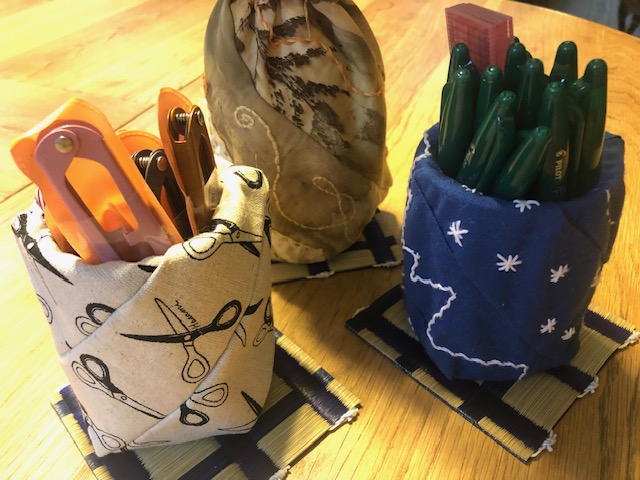
After that, I demonstrated how to do blanket stitch embroidery, and she began her very first embroidery project. Later, I spent some quiet time hand-stitching a scissors holder for my Sashiko workshops, using a recycled tin can and scissors-patterned fabric.
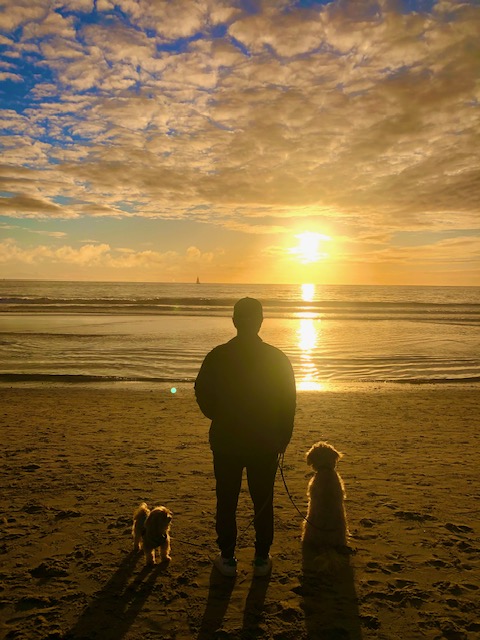
By the time we finished our stitches, my gloomy mood had completely lifted. After the friend left, Eric and I started talking about travel plans for the year—we’re thinking of going a bit farther than usual this time. Then the rain finally stopped, the sun appeared, and we decided to go to the beach to watch the first sunset of the year instead.
The sky was a dramatic canvas, filled with layers of clouds. During the hour before sunset, I quietly looked around. So many people had come to the beach—some were swimming, children were wading into the ocean fully dressed, and seagulls and sandpipers looked perfectly content.
Since I started Aqua Yoga last September, I joked, “If I keep doing Aqua Yoga all year and strengthen my legs, maybe next New Year I’ll be able to swim in the ocean too.” Eric replied with his own joke, “Why not swim now?”
The old me might have taken that as a challenge and done something reckless – jumping into the water right away. But I don’t do that anymore. This year, I want to watch, take my time, make plans, and someday make them real. I realized I really like this version of myself.
So I smiled and said to Eric, “Today, I set a goal—to swim next year.”
Before long, the sun steadily emerged from behind the clouds gaving us a powerful, radiant sunset light. It was as if it was shining extra brightly to make up for the sunrise I couldn’t see in the morning.
Such a magnificent light.
I saluted the sun—full of respect and gratitude.
Thank you.
That was all I felt. Just thank you. Thank you. Thank you.
As 2025 comes to a close, I look back on a year that began with wildfires in Los Angeles and unfolded with many challenges.
There were moments of deep uncertainty. During that time, I wrote a blog post titled “Sharing My Feelings After the Wildfires…”, trying to give words to what I was experiencing.
Uncertainty brings fear, and it often reveals a darker side within us.
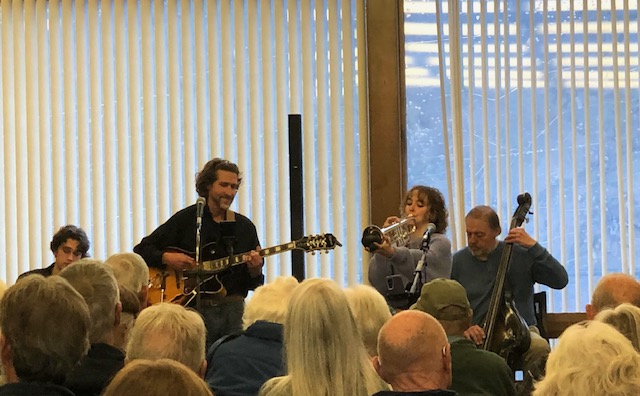
After Christmas, we were invited to a small jazz gathering at the North Fork Library. A 19-year-old singer and trumpeter named Elba performed a Nina Simone song.
One part of the lyrics stayed with me:
“So forget your foolish pride, life is too short for sorrow. You may be here today and gone tomorrow. You might as well get what you want,
I have been writing about my feelings and experiences on my blog for over 10 years. This feels like a moment to pause and reflect.
Yes, I will continue to write as I always have.
I am here now, but I may be gone tomorrow. That is simply the truth. While I am here, I will write it like it is.
Around the world, many things have happened, and many are still happening. Some are deeply painful—wars, gun violence (especially in America), natural disasters, and so much more.
Because of that, I try to focus my life on what I can do to move forward.
When I face difficult situations, I often need to stop and reset myself—sometimes picking up where I left off, and other times starting over completely. I use whatever ability I have at that moment and do what I can.
Here are the highlights of my year, in the order they came to my mind.
Staying healthy
For me, health is the most important foundation for living. I do my best to take care of myself. I have survived two cancers—ovarian cancer and lymphoma—as well as physical and emotional disabilities from a near-fatal car accident. Through all of this, I have learned a great deal about how to care for “Sanae.”
Physical health is important, but for me, mental and emotional health are essential. It took a long time to understand this and to turn that understanding into daily practice.
When I feel foggy or stuck in a low emotional place, I am not happy. At those times, I need to communicate with myself about what is happening inside. When necessary, I also share how I am feeling with Eric, so he can understand what is going on with me. This helps keep my thoughts from drifting too far into dark places.
My best friends, Eric and dogs
I try to communicate with friends as well, but it is not always easy. Many people are not practiced in expressing their feelings, so sometimes I end up saying very little.
Meaningful communication is not only about speaking emotions directly. It can also be expressed through letters, cards, gifts, and by setting healthy boundaries.
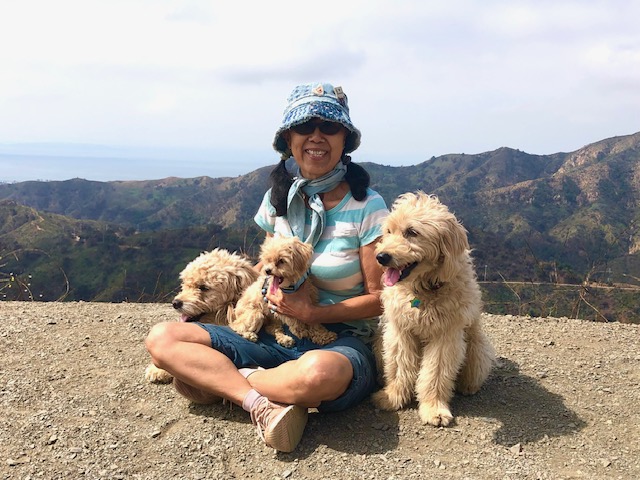
Also, being with the animal family and spending time in nature. I love cuddling my cats and going hiking with my dogs!
Building strength and moving my body
To stay healthy, I have been trying new ways to be more physical—building muscle and getting outside more often. Walk more steadily!
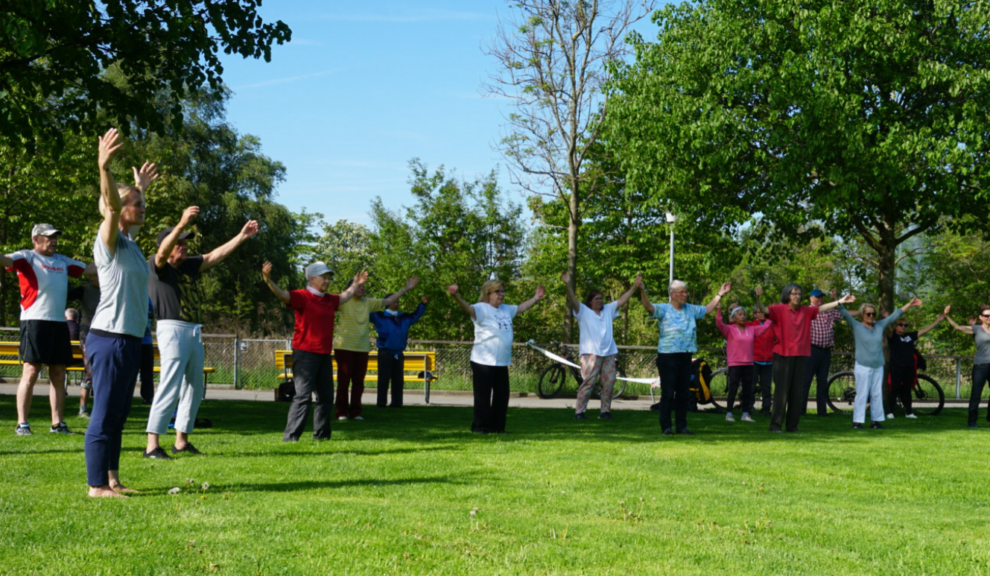
I have not been able to practice yoga regularly since I injured my left knee when a neighbor’s dog attacked me and one of my dogs, Nalu, two years ago. The Qigong class at Virginia Park has been very helpful because it is outdoors. I walk two blocks to get there and enjoy a little conversation with the people taking the class. I also tried Tai Chi for 6 weeks, but it worsened my knee pain, so I knew it was not for me right now.
I wanted to do more than Qigong and find a way to improve my knee so I could reduce—or eliminate—pain. Two years ago, after the dog attack, I had only gone to urgent care. The X-ray showed no broken bones, but my knee was already weak from previous injuries. I received acupuncture and therapeutic massage, but the knee joint is complex, involving bones, cartilage, ligaments, tendons, and muscles working together. Remembering how helpful physical therapy had been in the past, I finally went to see my primary care doctor. My doctor agreed and recommended physical therapy.
I had avoided seeing my primary doctor for a long time, but I am glad I finally did.
I attended physical therapy at UCLA Hospital off and on for about eight months. I learned that less, but more frequent movements, are better than pushing too hard. Each visit, the therapists would ask, “Any falls or injuries?” That question made me realize how important it is—especially now, at age 70—to avoid falls and injuries.
I remembered how my mother’s health declined after she felt and had a hip surgery when she was 70, and how she eventually stopped walking before she passed away. That memory stays with me.
After lymphoma and chemotherapy in 2017, I lost a great deal of muscle, and my bone structure was affected. Since then, I have been working to rebuild my bones through daily movement and supplements such as Vitamin D. I want to avoid osteoporosis and other bone diseases.
Although my oncologist recommended seeing a bone specialist, it took me three years to finally do so. I had a bone density test and learned more about my bone health. Lightweight lifting was recommended, but I do not enjoy weightlifting or going to the gym—especially because I am very sensitive to smells, so people’s perspiration bothers me so much.
It took time, but I eventually found what works for me.
Aqua Yoga became the best way to rebuild strength without causing pain in my knee. I am grateful that I did not give up and continued searching for something I truly enjoy. I feel stronger and more upright now.
Teaching again
Because I stayed healthy, I was able to teach consistently—two to four times a month—for the entire year. I am deeply grateful to be teaching again.
Next year, I am scheduled to teach more Sashiko workshops, a new mending workshop at JACCC (Japanese American Cultural Community Center), and even a Macrobiotic class. I have also been invited to teach a two-day workshop at the Southern California Weaver Guild, and I am looking forward to what I can share there.
I have not taught Macrobiotic cooking itself for some time. Macrobiotics is much more than cooking—it is a holistic philosophy and lifestyle centered on balance and harmony through food, activity, mindset, and environmental awareness. It emphasizes whole, natural foods prepared mindfully to support physical, emotional, and spiritual well-being.
Through my Sashiko workshops, I have been teaching practices that support mental and environmental awareness. Recently, I was asked to teach Macrobiotic cooking and the Five Element principles, so there may be another opportunity to share that work soon.
Saying goodbye to Lumi
I am deeply grateful that I was able to support Lumi in living fully until her very last breath.
She was one of my most beloved dogs, and I still miss her every day. I was blessed to share fifteen and a half years with her, and she passed peacefully at home. Every morning, I still light a candle to honor her and feel her presence.
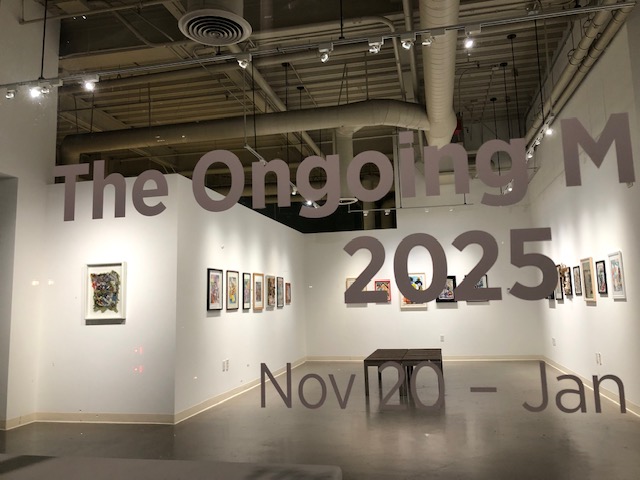
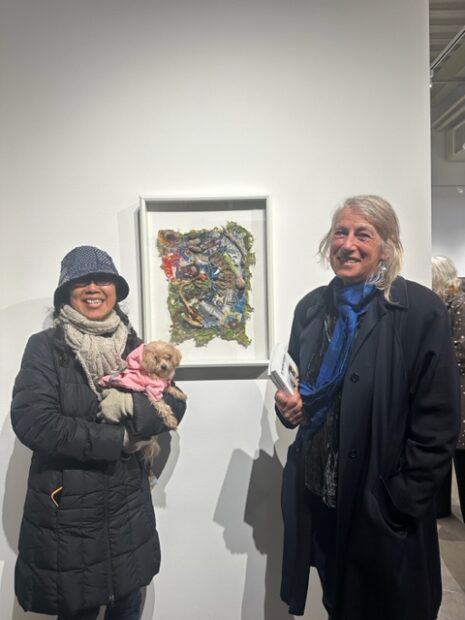
This was my third time submitting a collage to the Santa Monica Emeritus Gallery exhibition.
The curator, Jesse Benson, selected my piece for display alone on the first wall. When I saw it, I almost cried with joy.
The collage was created mostly from screws, metal, and seaweed I collected while walking with Lumi around our neighborhood and the beach in Cayucos. I also used postage stamps, photographs, watercolor, colored pencils, and washi paper.
with my art teacher, Cathrine Tirr
Despite the rain, many people came to the opening reception. I am grateful to everyone who took the time to see my work, especially the friends who came to support me.
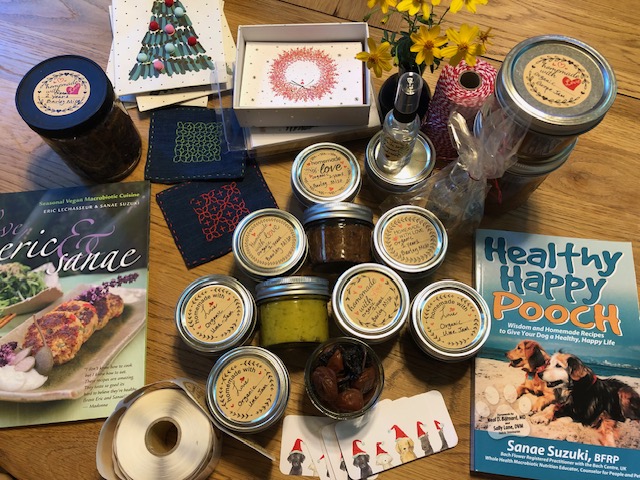
Making handmade holiday gifts
I am not sure when it started, but handmade gifts have become part of our holiday tradition.
Each year, we make miso, umeboshi plums, ume plum jam, elderberry tea, yuzu kosho, and more. This year, we also made grape jam—Eric had the opportunity to harvest a large amount of grapes from Leonardo DiCaprio’s property—and yuzu jam after making yuzu kosho.
I also stitched several Sashiko pieces as gifts.
Reconciliation after the dog attack
Two years ago, one of our dogs, Nalu, and I were attacked by a neighbor’s dog. At the time, I did not know how—or if—I could reconcile with the dog’s owner.
Five years earlier, Nalu had been attacked by the same dog. She was so terrified that she ran nearly two miles before being rescued. She was injured and suffered severe PTSD, becoming reactive toward other dogs for a few years. It was a heartbreaking period, though she slowly improved.
Then, two years ago, the same dog attacked again. This time, I was with Nalu and also injured. Both of us took Bach Flower Remedies to help with fear and emotional trauma.
Eventually, I contacted the dog’s owners. The wife was kind and thoughtful, but the husband was not. He denied the first attack, even though I talked to him that time once, but he never returned my calls after the second call. This time, I considered suing, but I knew it would be too stressful.
The wife left a card and a gift for Nalu, and later paid part of my medical expenses. We met for tea at a nearby café, where she shared that she was going through a divorce and no longer had the financial means to help further.
I needed to decide what would truly help me heal. I chose to focus on physical therapy for my knee. Because I do not drive, I asked her to take me to my therapy appointments, which she did.
The dog that attacked us has since passed away. I felt deep compassion for this woman—she had been through so much, not only because of the dog, but because of her marriage, the divorce, and her own losses.
She did the best she could. For the holidays, I gave her our homemade gift. I wished her well and hoped for a gentler year ahead.
What truly matters
I believe that money brings convenience, but not true happiness. I have not seen that wealth alone creates joy. I am at peace with the choices I made in handling this difficult situation with compassion and care.
Overall, 2025 was a deeply meaningful and fulfilling year for me.
I want to continue planting seeds, allowing them to grow and bloom, and harvesting new seeds for the future.
After the rain, the day after Christmas at Bass Lake
Thank you all for supporting me through another year.
Wishing you a healthy, peaceful, and joyful New Year.
It’s been a long time since I last wrote my blog. Longer than I expected.
The last post was in August, and somehow the months slipped by. This year of 2025 was full, in a steady, physical, everyday way.
Teaching Sashiko workshops two to four times a month.
Continuing to attend Qigong class in Virginia Park from last year, started physical therapy at U. C. LA Hospital in the spring, and Aqua Yoga from September at Santa Monica College Emeritus.
Eight years after being diagnosed with stage IV cancer, the cancer is not coming back, so I’m gradually working on building up my physical strength.
And having a good time stitching Sashiko or hand sewing projects or painting every day, wherever I had time.
Writing had to wait.
And now the new year is only ten days away.
There are many things I want to write about, and Thanksgiving feels like the right place to begin again.
For the last twenty years, we’ve spent Thanksgiving in North Fork, California. It’s a small mountain town in the Sierra Nevada, about thirty miles from the south entrance of Yosemite National Park. Quiet. Grounded. A place where time feels slow and is not rushed like living in the city.
I first came to North Fork 20 years ago for a ten-day Vipassana meditation retreat. Eric came to pick me up after I completed the meditation course. Somehow, the place stayed with us. North Fork became our sanctuary—a place we return to when we need to reset. Every visit feels like an exhale.
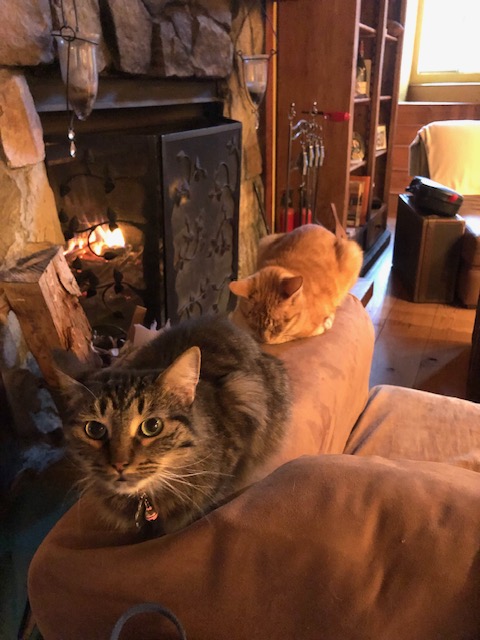
Even our cats love there.
For Thanksgiving, we usually leave Santa Monica early on Thanksgiving morning. Traffic is lighter, the air feels calmer, and the drive becomes part of the experience. A few times, we left the night before, and it took a long time because of holiday traffic, and we arrived so exhausted. We realized the morning of Thanksgiving works better.
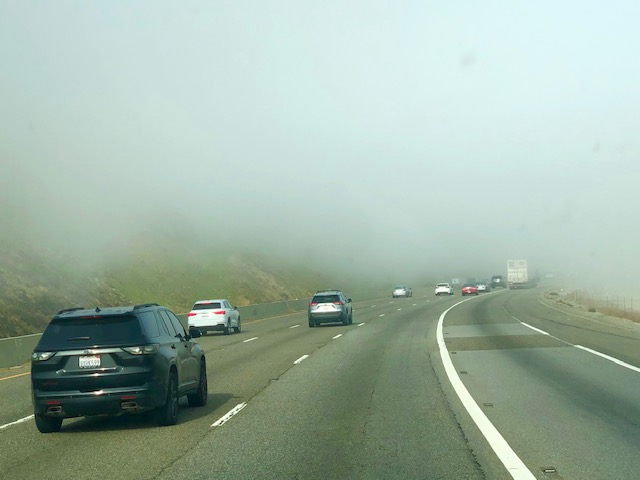
We passed through Tejon Ranch this year, and the road disappeared into thick white fog. For a moment, it looked like smoke, and then it became something else entirely. Driving into that silence felt unreal—like crossing a threshold, or entering another world. Maybe heaven’s gate looks like that.
Most years, it’s just the two of us. Sometimes we invite friends to share the quiet, tranquil, and Eric’s cooking. This year, our frineds who we’ve known for about twenty years finally came to visit—with their dog. When we first met them, learned they loved the mountains, so we said, “Someday, come visit us in North Fork.”
Life got busy. It took time.
But that someday came.
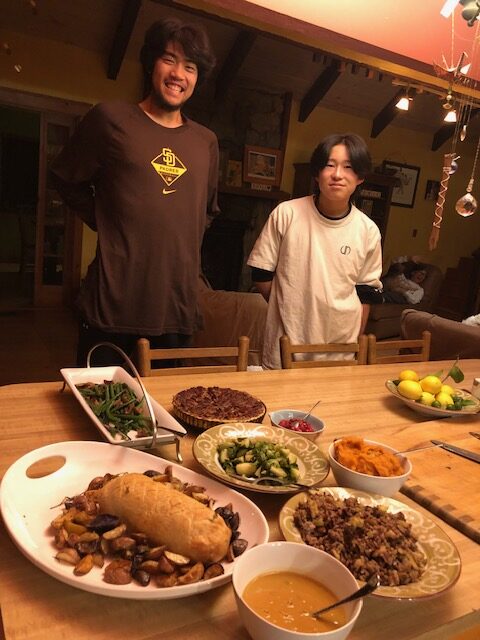
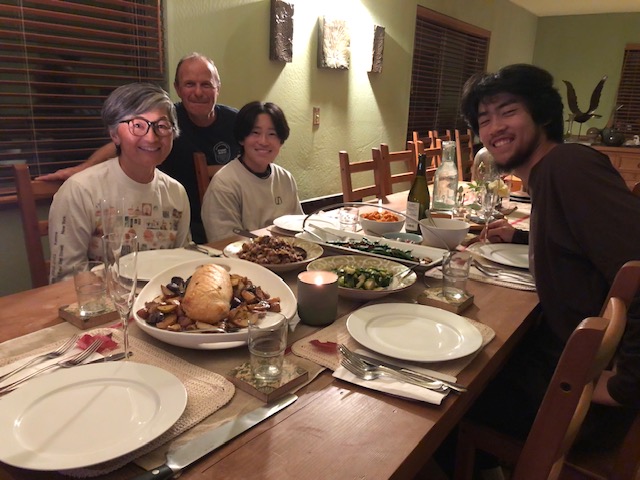
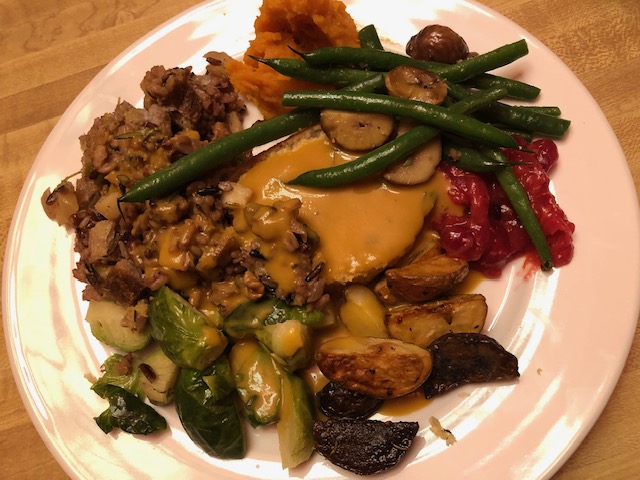
At the Thanksgiving table, surrounded by food, our dogs and their dog, and familiar voices, I felt grateful for the power of wishing. Even when it takes years, a wish doesn’t disappear. It comes true.
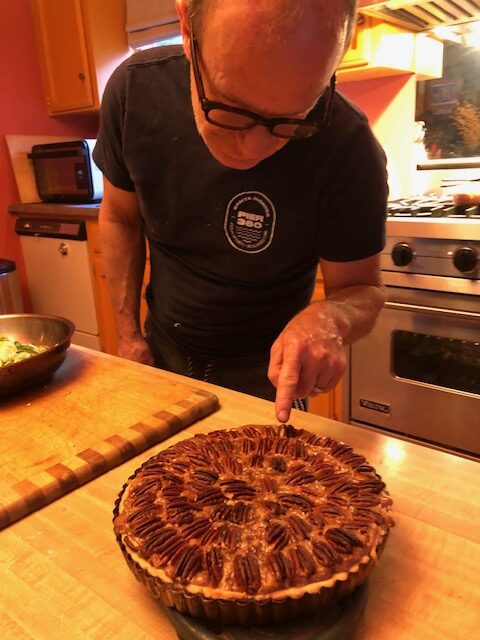
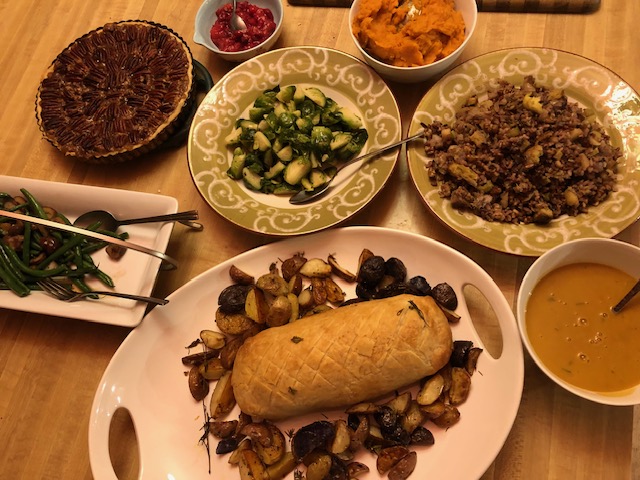
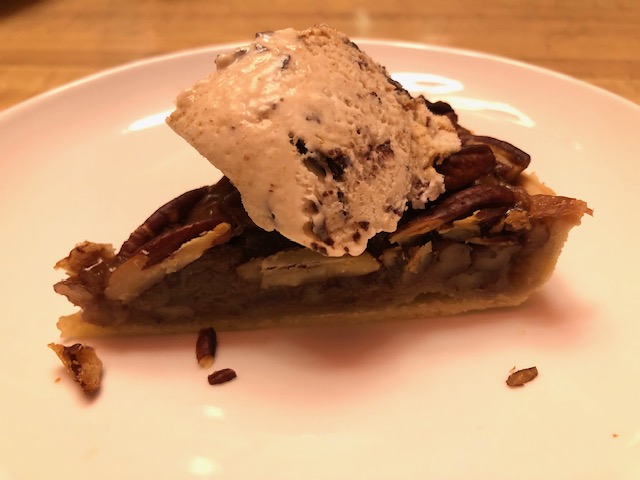
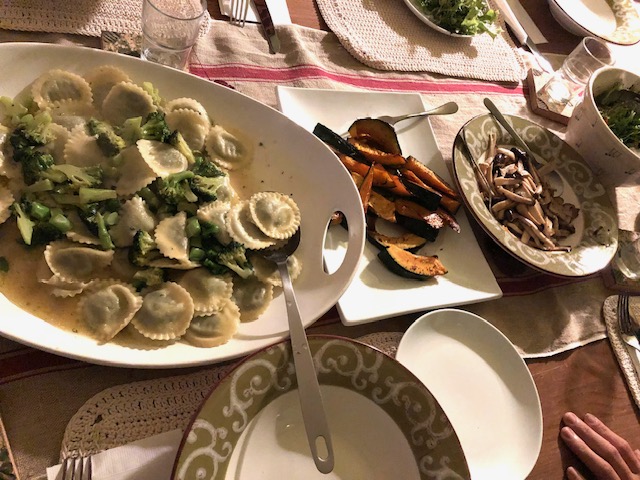
Eric cooked every day throughout the weekend—Thanksgiving dishes and everything in between. Our friends don’t follow a macrobiotic or plant-based lifestyle, but they enjoyed the food, which made the meals feel even warmer.
There wasn’t much snow yet at China Peak this year, so snowboarding and skiing were set aside. Instead, we filled the days in other ways.
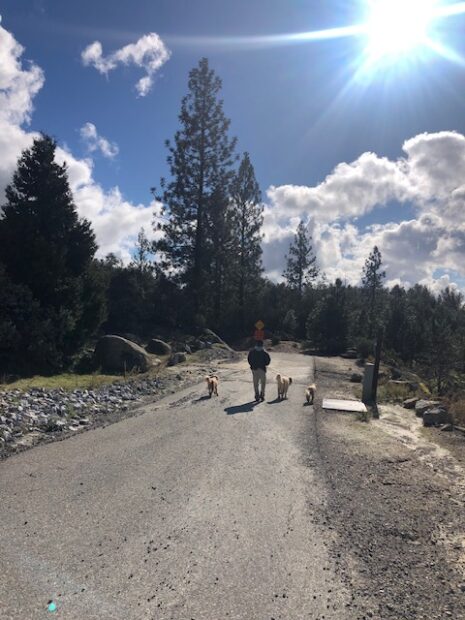
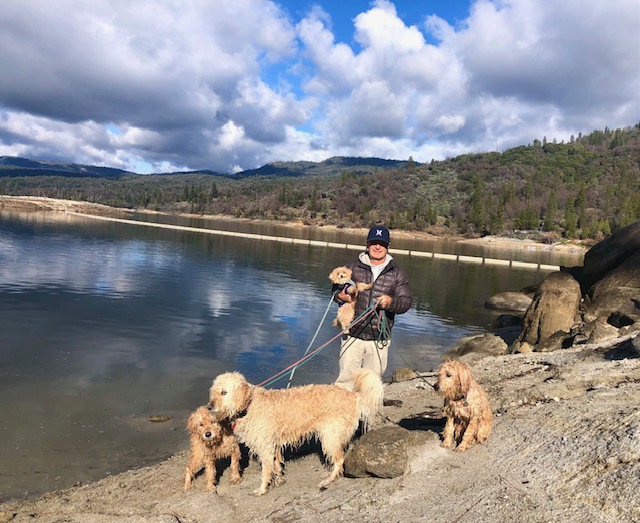
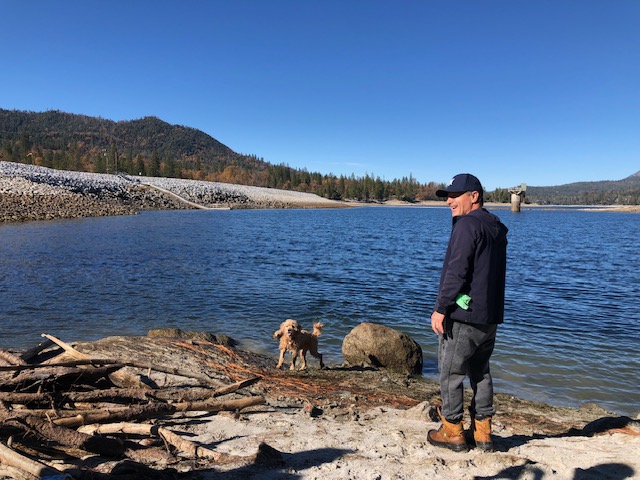
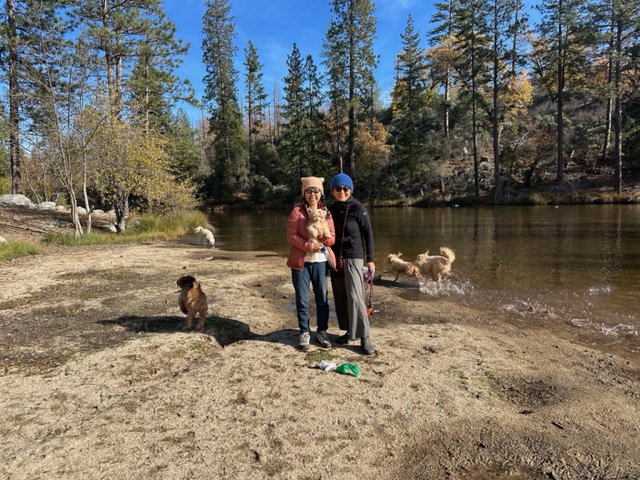
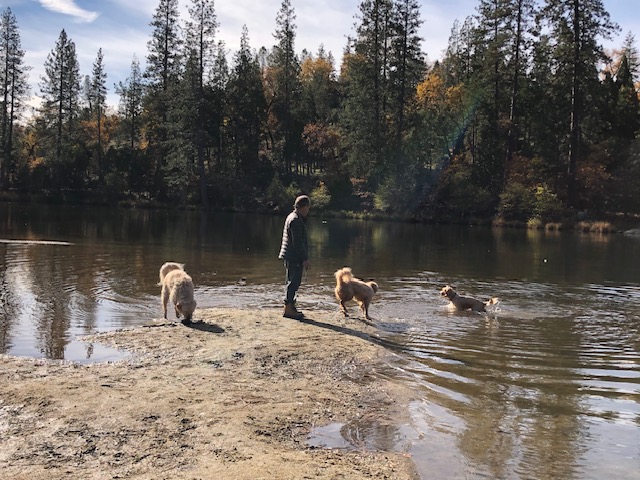
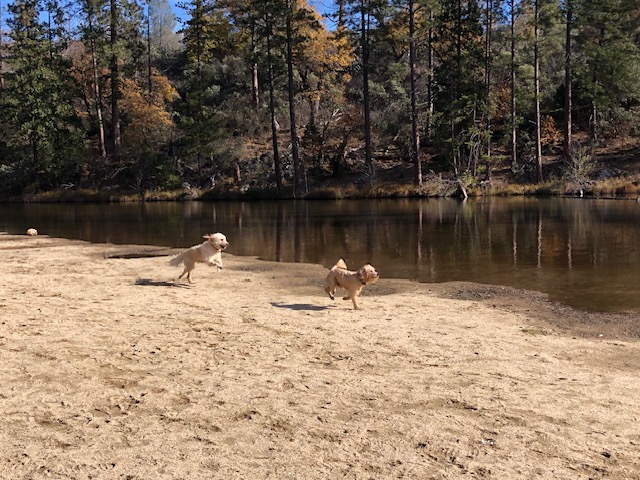
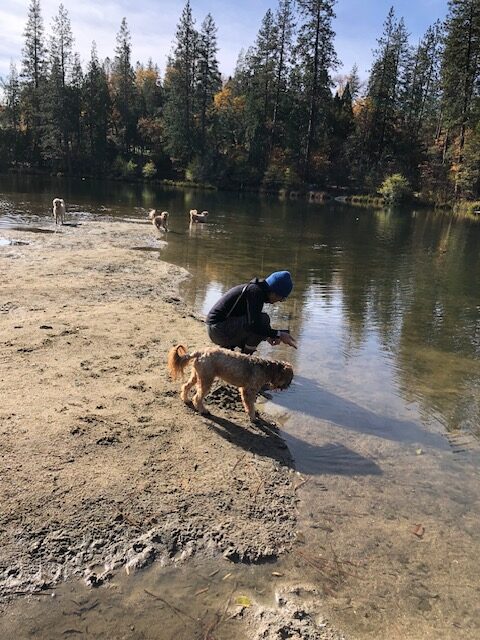
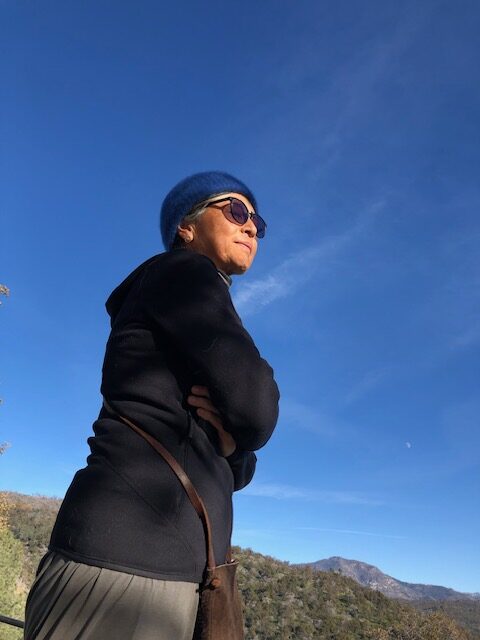
Hiking around Bass Lake and Manzanita Lake with the dogs.
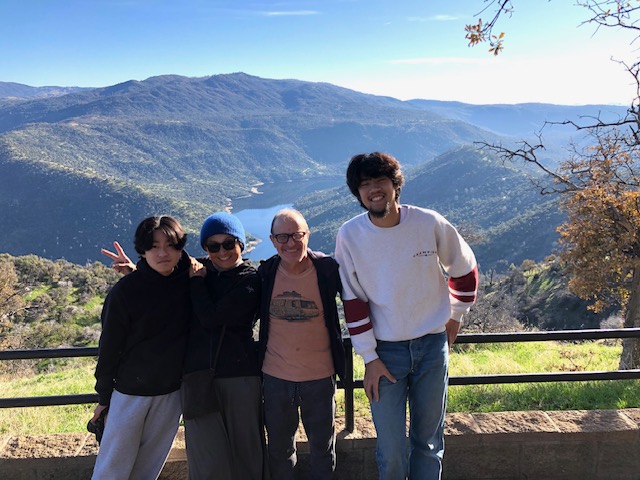
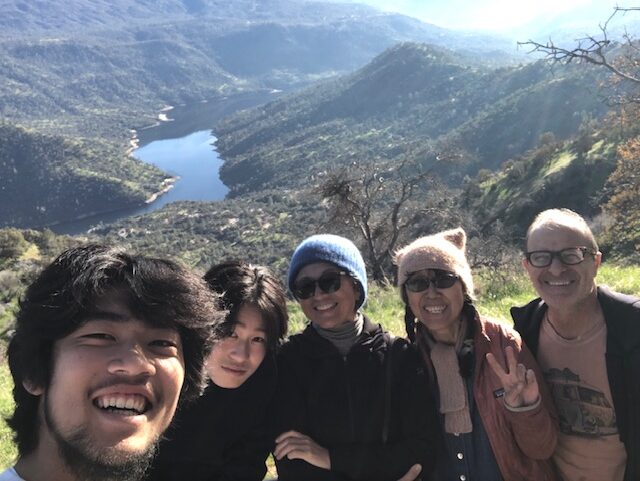
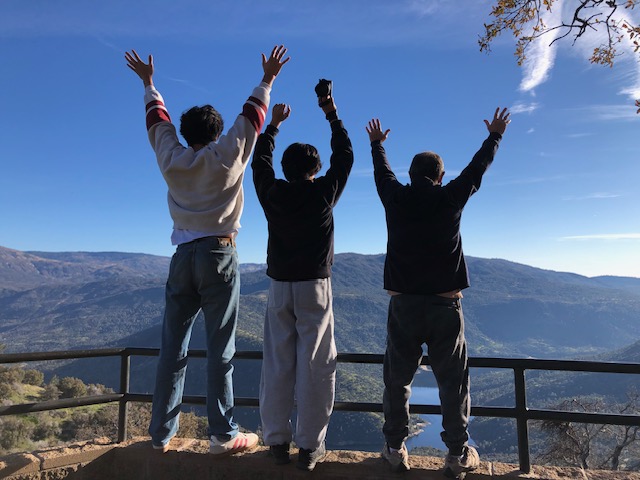
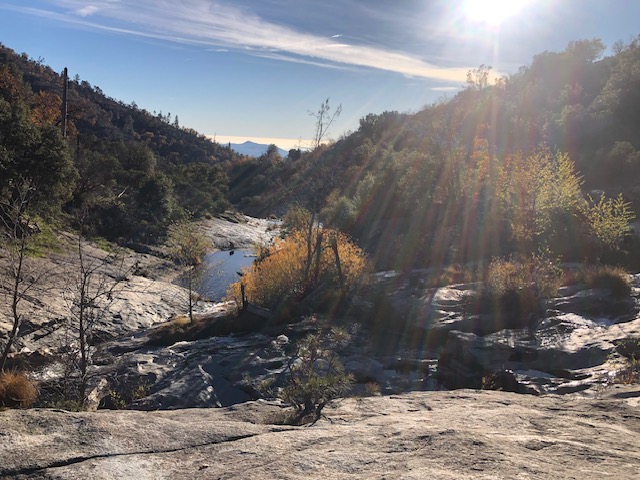
Driving up to the panoramic views at Redinger Lake.
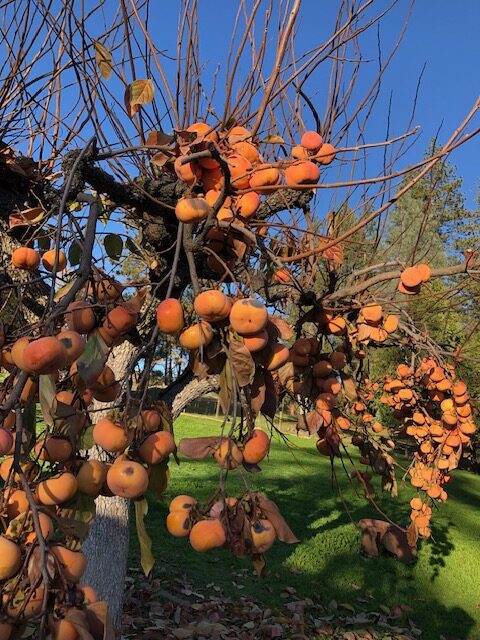
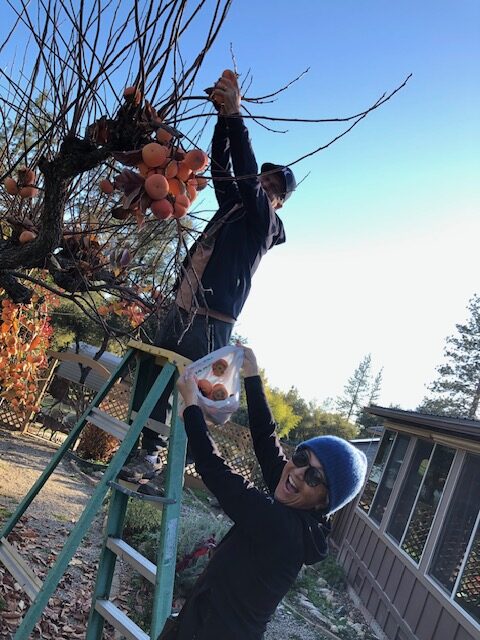
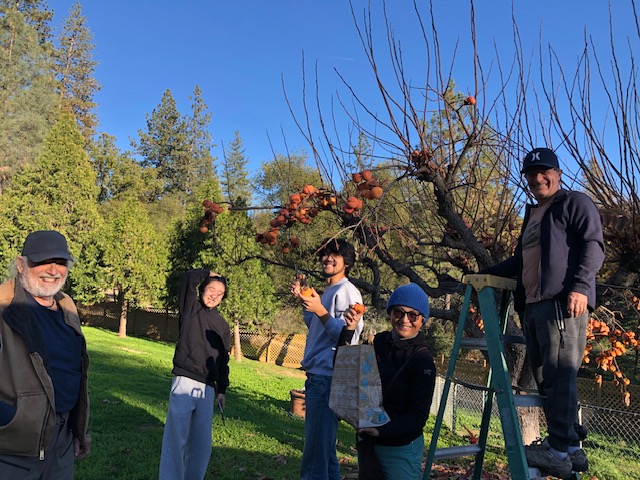
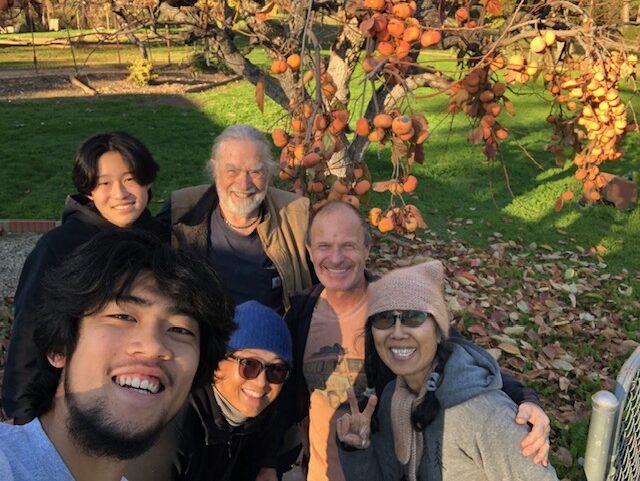
Picking persimmons at Keith and Merry Gale’s house.
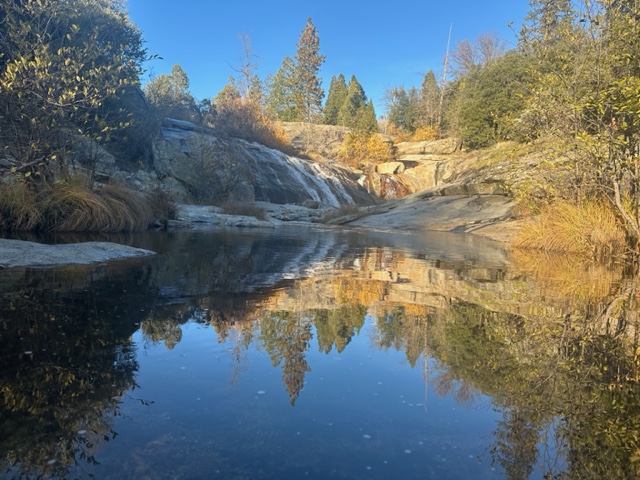
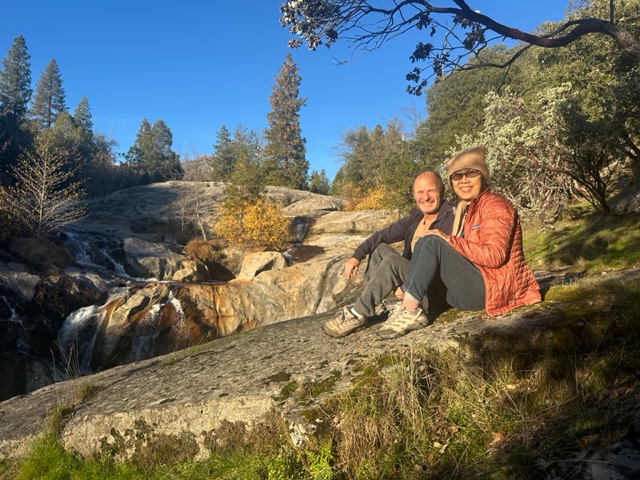
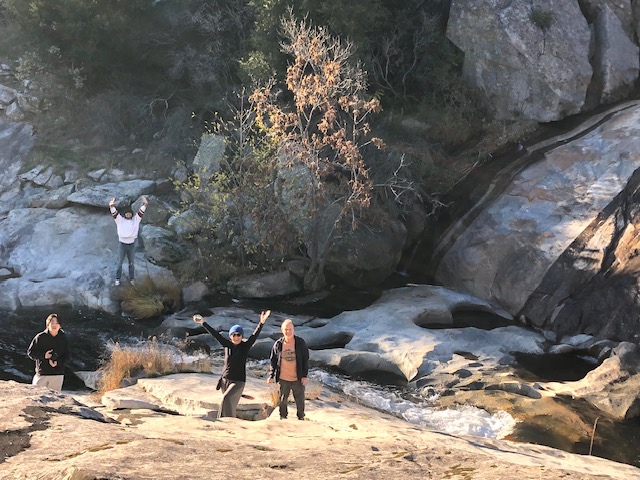
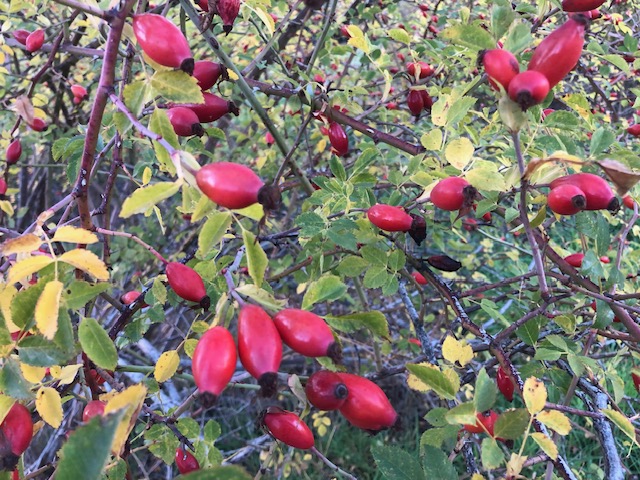
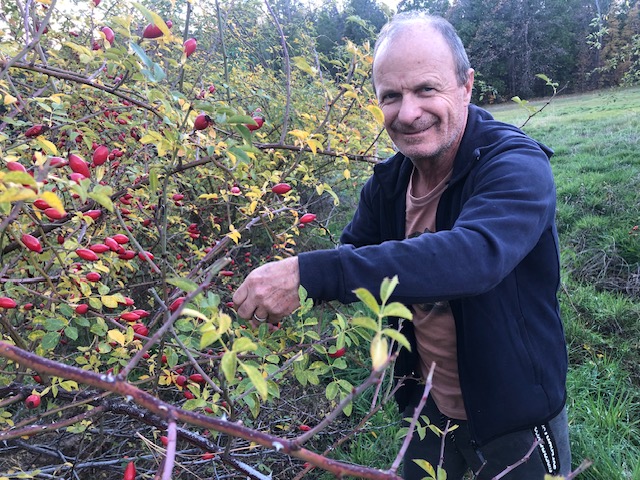
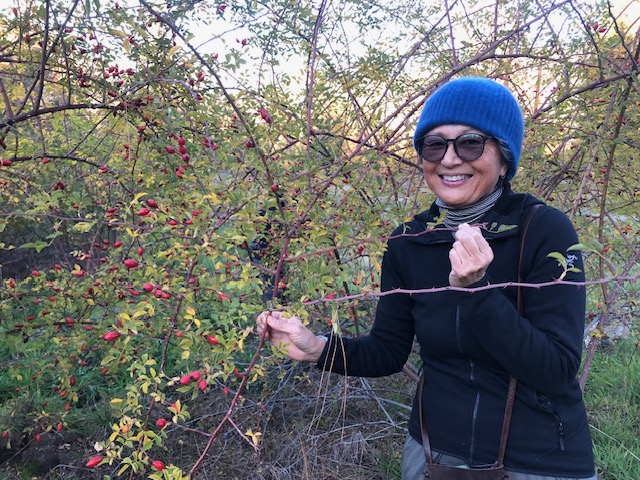
Visiting Cascadell Falls and pick wild rosehips.
Thanksgiving at a mountain cabin in North Fork.
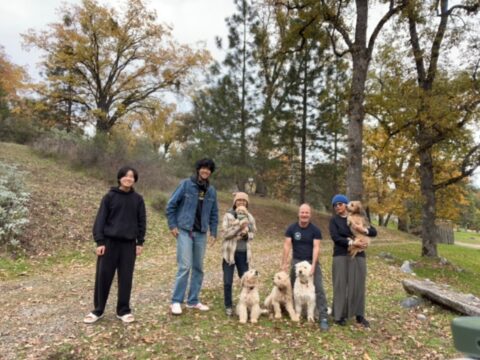
Wonderful memories of a long-awaited wish fulfilled with long-time friends, quiet moments, much gratitude, and finally, a group photo.
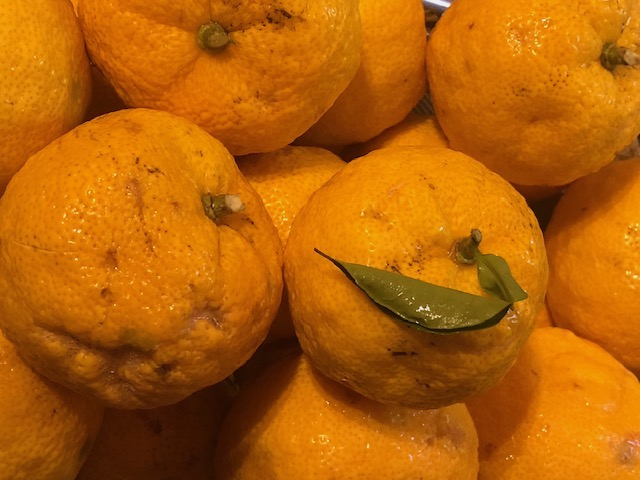
On the way home, we stopped in Clovis to pick Yuzu from Nakano family, already thinking about Yuzu Kosho to be made.