
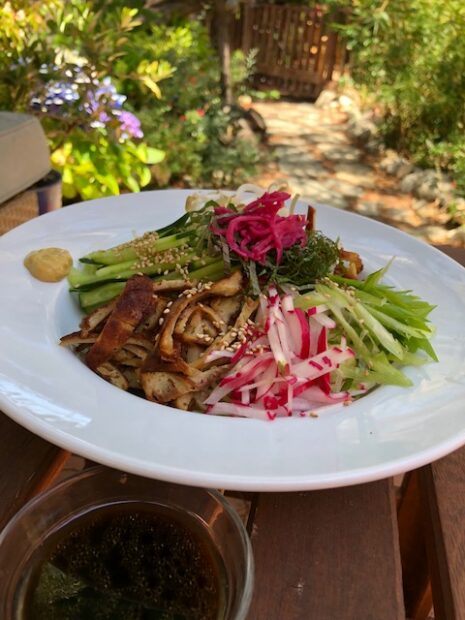
Vegan Hiyashi Chuka (Cold Ramen)
I grew up loving Japanese noodles of udon, soba, ramen, hiyamugi, and somen so much!
One of my favorite noodle dishes in summer is Hiyashi Chuka (Cold Ramen). It is “Ramen Salad” to me!
When I started to eat vegan plant-based macrobiotic food in 1993, I thought I had to give up eating ramen noodles, but I found some companies were making vegan ramen noodles in 2005 and had been enjoying them since then.
Eric and I served Goddess Miso Ramen in the winter season at our “Seed Kitchen” restaurant in 2008~2016.
Summertime ramen must be Hiyashi Chuka (Cold Ramen). I had to introduce it to Eric.
We do not have hot, humid summer here in Santa Monica like in Japan, but I crave to eat Hiyashi Chuka (Cold Ramen) every summer, so I had to make it again this summer.
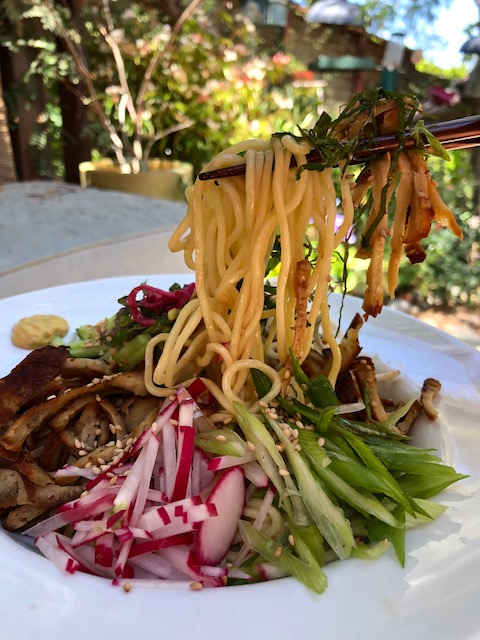
It is like cold soba noodles, but a much uplifted and happy feeling and cools my palette when I eat Hiyashi Chuka (Cold Ramen); verse cold soba gives me cooling, but a grounding, contented feeling.
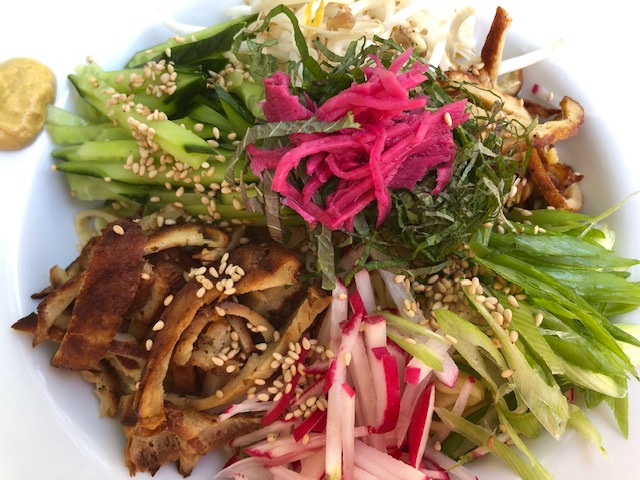
You can create what you want to put on the top. I like cucumber, seitan/tofu, scallion, green shiso leave, and homemade red shiso pickled ginger on top.
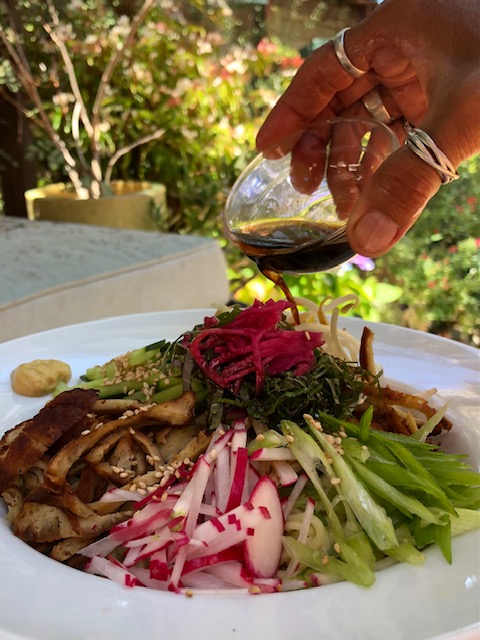
Japanese karashi hot mustard is on the side, with homemade tamari (soy sauce) and sesame seed sauce.
I have seen Hiyashi Chuka packages in the Japanese market, but they are full of MSG and preservatives, so I have never used them. Vegan ramen noodles are available at natural food markets here, but if you can’t find them, you can use other vegan noodles.
I hope you try making it; then you will know how delicious and enjoy summer ramen!
Hiyashi Chuka (Cold Ramen) Recipe
Servings: 2~3
For Hiyashi Chuka Sauce
- 6 Tbsp Tamari (soy sauce)
- 2 Tbsp Mirin
- 2 Tbsp Lemon juice(if you want sweeter taste use orange juice)
- 1~2 Tbsp roasted sesame oil
- 2 Tbsp Kombu dashi* or water
- 1 Tbsp toasted sesame seeds
- ¼ tsp grated ginger
- ½-1 tsp la-yu (option Japanese chili oil)
For Toppings
- 1~2 Japanese or Persian cucumbers (or ⅓ English cucumber, julienned)
- 3 Red radish (cut into thin strips)
- ½ tomato (cut into wedges)
- 3-4 slices Seitan (cut into thin strips)
- 2 scallions (cut into thin strips)
- 3 Green shiso leaves (rinse and pat dry)
- Red shiso ginger pickle (benishoga, kizami beni shoga, if you buy them at the store, make sure there is no MSG)
For Hiyashi Chuka Noodels
- 2~3 servings of fresh vegan ramen noodles (6 oz or 170 g of fresh noodles per person)
- 1 Tbsp toasted sesame seeds (optional garnish)
- Japanese karashi hot mustard (optional side garnish)
To Make Sauce:
- *Kombu dashi – Stove top method: combine the kombu and water in a saucepan over medium-high flame. Bring to a boil, reduce the heat and simmer for about 20~30 minutes. Strain out the kombu and use it for sauce when it cools (this recipe from Love, Sanae).
- Combine all the sauce ingredients in a medium bowl and whisk them together. You can keep it chilled in the refrigerator for up to a week.
To Prepare Toppings:
- Cut all the topping ingredients into thin strips (so it’s easier to eat with noodles).
To Cook Noodles:
- Bring a big pot of water to a boil and add the noodles. Separate the noodles before dropping them into the water. Cook according to package directions. Drain the water and rinse the noodles to remove starch. Soak the noodles in a bowl of ice water to cool. Drain thoroughly and divide the noodles into individual plates/bowls.
At last:
- Place all the toppings and put Japanese karashi hot mustard on the side. Pour the sauce just before you eat with your favorite amount.
Bon appétit!
Love,
Sanae ❤️
エルダーベリー酵素シロップとジュース
夏の手仕事ひとつ、ワイルドエルダーベリーをノースフォークで収穫する事。
大体梅仕事が終わった後の6月下旬から7月末。
エルダーベリーにはAntioxidant と言われる、抗酸化物質が豊富。
詳細は癒しのエルダーベリーティーを書いたところに書いてあるので見て下さい。
https://sanaesuzuki.com/2022/08/01/癒しのエルダーベリー・ティー/?lang=ja&_thumbnail_id=7518
ずっとタイミングが良くなかったのか新鮮なエルダーベリーを豊富に収穫できていなかったのですが昨年、ノースフォークに行った時にたくさんのエルダーベリーを収穫できて、後でお茶にする乾燥用以外にエルダーベリーの酵素シロップとジュースなどを作った。
青梅の酵素ジュースとコンブチャしか作った事がなかったのでどうなるかわかりませんでしたがとても上手く出来て美味しかった。泡一杯。
また作りたくって今年はずっとエルダーベリーの木を観察して収穫日を逃さないようにしてました。
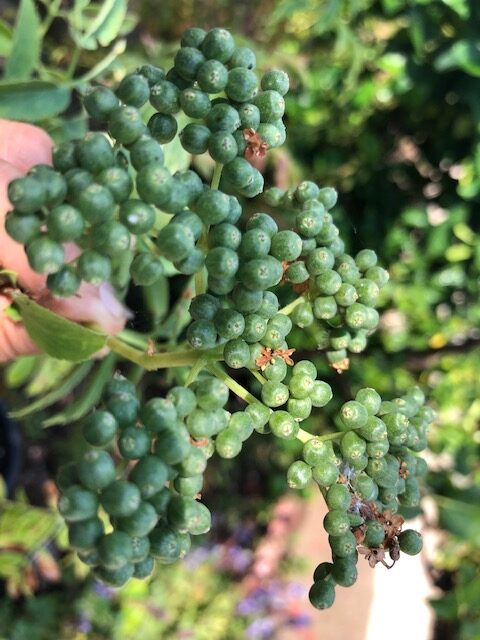
お花が咲いて(お花でシロップとスキンオイルも作ったのでこのレシピまたいつか)、緑の可愛い実がなって。。。
エルダーベリーの木は私のその期待を破らないで今年もたくさんのベリーを収穫させてくれた。ありがとう!
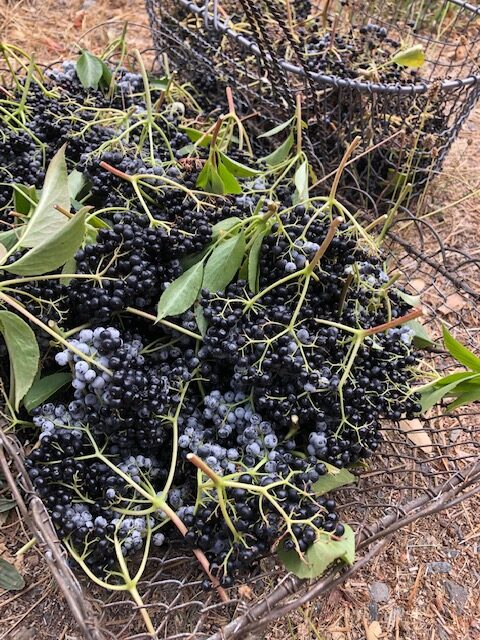
これが今年作ったエルダーベリーの酵素ジュース。
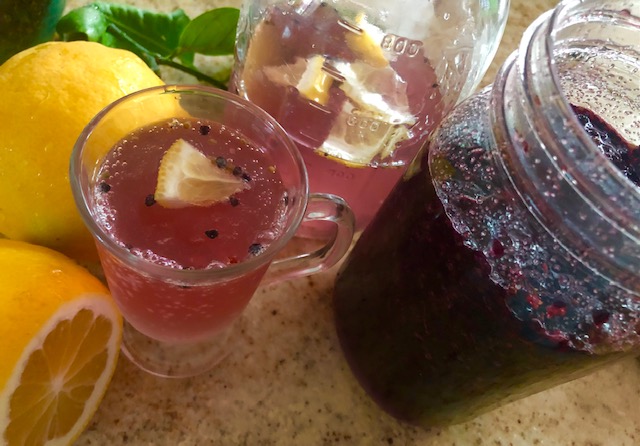
作り方は赤紫蘇のジュースと少し似ていますがお水は加えないで煮る事もしないでただ甘味料(私は甜菜糖を使った)とエルダーベリーだけ。
赤紫蘇ジュースのブログ。
https://sanaesuzuki.com/2019/07/22/赤紫蘇ジュース-夏の美味しいレメディードリンク/?lang=ja
エルダーベリー酵素シロップとジュースレシピ
材料:
- 300 グラム (約10 オンス) エルダーベリー
- 150~600 グラム (約5~20オンス) 甜菜糖
ジュースとして飲む時:
- 大さじ1かもしくは少しか多め(甘味の好みで決める)
- 1カップ 冷たい炭酸水、スプリングウォーターか暖かい浄水
- 大さじ1~3のレモンジュースとレモンスライス
作り方:
1. エルダーベリーを収穫した後、大体の茎や葉をとる。小さい茎や葉っぱは少し残して置くと酵素作りに役立つ。虫を見つける事もあるので優しいく扱う。
2. お水でていねいに洗ってきれいにする。
3. 水を切ってなるべく水気をとる。
4. エルダーベリーをガラスのジャーに入れて甘味を入れる。
5. ジャーをゆすってなるべく混ぜ合わせる。
6. そのまま暗くて風通しのよい涼しいところにおいて毎日ジャーをシェイクする。乾いたきれいな手で調節混ぜる事も出来ます。
7. 3~4週間で出来上がる。
8. 酵素ジュースとして飲むときは大さじ1~2のエルダーベリーシロップを1カップの冷たい炭酸水、スプリングウォーターか暖かい浄水に入れる。好みでレモンジュースとスライスを入れる。

私は氷を入れないのですが必要な人は好みで氷を入れる。
冷たい飲み物としてではなく暖かい飲み物として、お湯をさしても楽しめる。
いつか是非エルダーベリーの酵素シロップ・ジュース作ってみて楽しんでみて下さい。
Love, Sanae ❤️
P.S. エルダーベリーモクテルのレシピを新年の飲み物として書いたブログはこちら
Elderberry Enzyme Syrup & Juice
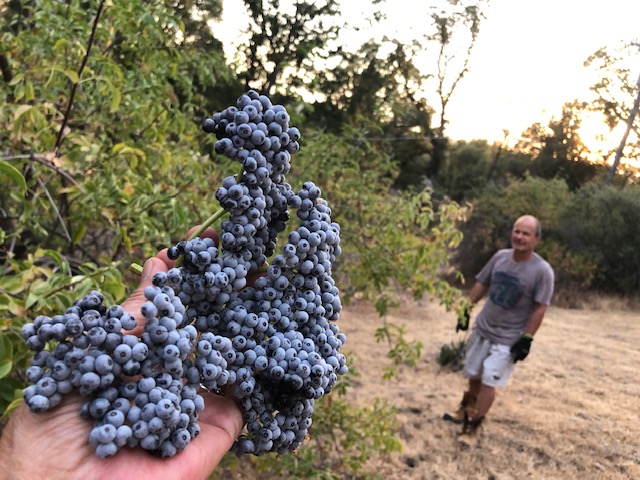
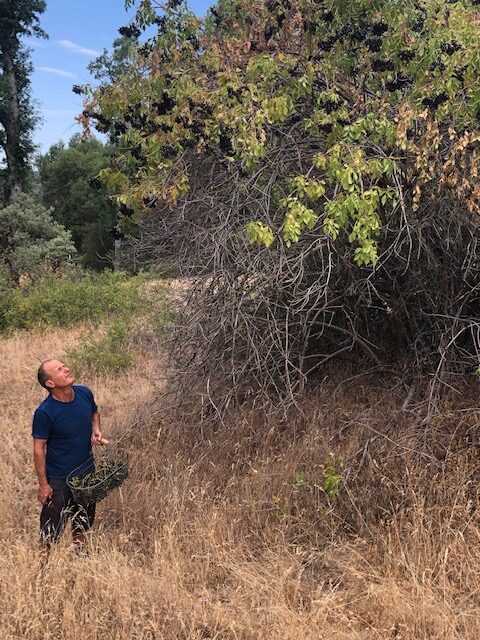
One of the seasonal works I do in summer with Eric is harvesting wild elderberries in North Fork.
It is usually after Umeboshi plums making in the end of June to the end of July.
Elderberry has antioxidants and many benefits for our health.
I posted my blog before on how to make elderberry tea with more information about its benefits.
https://sanaesuzuki.com/2017/02/27/healing-elderberry-tea/
I was making elderberry tea with dried elderberry most of the time since I could not harvest many fresh ones, but last year the timing was perfect when I went to North Fork, so I got so many fresh elderberries.
I saved some to dry for making tea later and tried to make enzyme syrup, juice and jam with extra fresh elderberry.
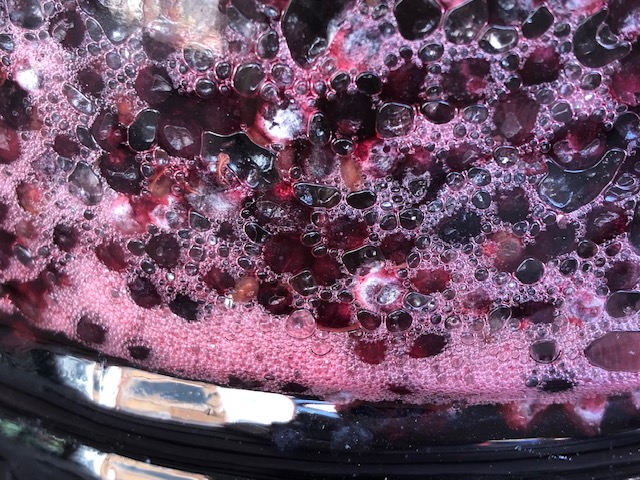
I only made Ume plum enzyme juice and Kombucha, so I did not know how elderberry works for making the enzyme syrup/juice. Wow, wow…it was so delicious. Beautiful enzyme bubbles!!!
I wanted make it again this year so every time I went to North Fork this year, I checked elder trees and hoped I would be able to harvest enough fresh ones this year too.
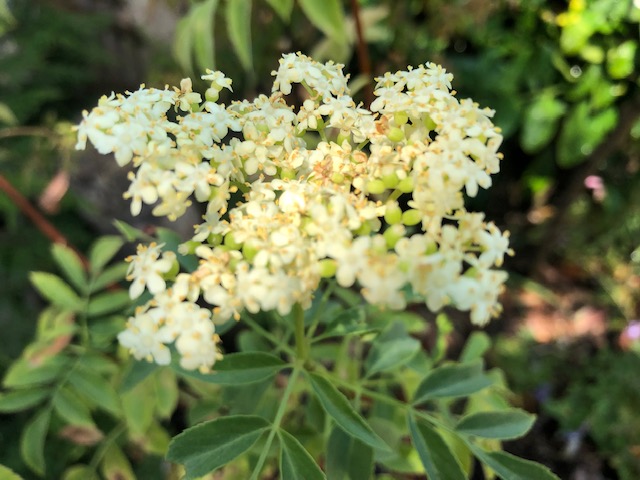
The elderberry flowers had a soft aroma (I made syrup and skin oil with the flowers, which I will share someday). After the flowers, the green berries were so cute.
Elder trees did not disappoint me. Thank you, elderberry trees!
Here is the juice I made this year.
It is similar to Red Shiso Juice I shared before.
https://sanaesuzuki.com/2019/07/22/red-shiso-juice-delicious-summer-remedy-drink-for-health/
The difference is I did not add any water and no cooking. It is only elderberries and beet sugar. They are fermented together.
Elderberry Enzyme Juice Recipe
Ingredients
- 300 g (about 10 oz) fresh elderberries
- 150~600 g (about 5~20oz) sweetener (I used beet sugar)
To make juice to drink
- 1 tablespoon, less or more (depending on how sweet you want)
- 1 cup, cold sparkling water, cold spring water, or hot spring water
- 1 tablespoons, lemon juice and a slice of lemon
Instructions
1. Prepare elderberries; trim the stems from elderberries after harvesting them. You can leave some of the leaves and stems for enforcing enzymes. There might be insects, so be careful handling them.
2. Wash elderberries with water and cleans them carefully.
3. Strain the water of elderberries in a basket and dry them as much as you can.
4. Place elderberries in a bottle jar and add beet sugar.
5. Shake the jar to mix them as much as you can.
6. Leave them a cool dark place near you and shake it every day or every other day. You can also mix it with your clean dry hand.
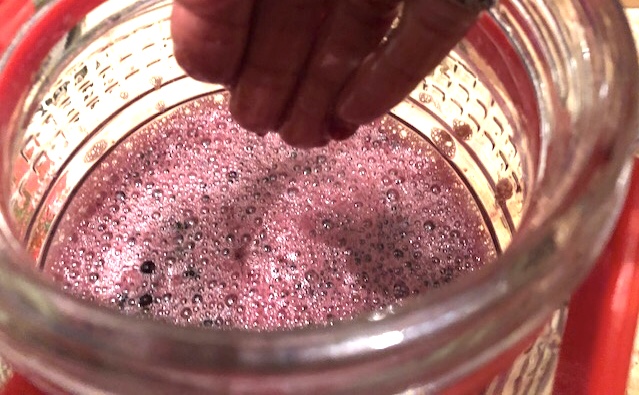
7. It should be ready to drink in about 3~4 weeks.
8. To drink Elderberry enzyme syrup as juice, you put 1~2 tablespoons of elderberry enzyme syrup and add about 1 cup of cold sparkling water or spring water. I usually do not put ice cubes, but If you like, you can add ice cubes. Lemon juice and a slice of lemons enhance the taste too.
You can also put hot/warm water for someone who loves a warm drink/tea.
I hope you like it and enjoy Elderberry Enzyme Juice!
Love, Sanae ❤️
P.S. Here is Elderberry Mocktail recipe that I posted for new year, if you like to try something new.
https://sanaesuzuki.com/2020/12/31/new-year-elderberry-mocktail/

癒しのエルダーベリー・ティー
エルダーベリーにはたくさんの効能がある。
エルダーベリーにはたくさんの効能がある。Antioxidant と言われる、抗酸化物質(抗酸化剤とも呼ばれ、過酸化脂質を作り出し、動脈硬化、がん、老化、免疫機能の低下などを引き起こす活性酸素を取り除き、酸化の働きを抑える物質)が多く含まれているのでコレステロールを下げ、視覚改善、免疫力促進、心臓動脈効果、咳、かぜ、扁桃腺、インフルエンザ、ウイルス感染などの回復に役立つ果実。昔から食用だけでなく万能薬としても使われています。
利尿作用、便秘改善、発汗促進、体内の毒素を排出してくれるのでむくみ予防にも適している。
Sauce: http://www.herbwisdom.com/herb-elderberry.html
Affinity/ Systems affected: Lungs and liver Sauce: https://www.holistichealthherbalist.com/the-benefits-of-elderberry/
エルダーベリーのシロップやキャンディーなどは見たことあったが実際にフレッシュなエルダーベリーを初めて見たのはノースフォーク(ヨセミテ国立公園近辺)に行くようになってから。
通常売っているエルダーベリーのシロップやお茶にはお砂糖が入っているので使ったことがなかった。ノースフォークのお友達のリンダさんが自分の敷地に育っているワイルドエルダーベリーをくれたのが初めて自分でエルダーベリーのお茶を作るきっかけになったので感謝。
リンダが作り方を教えてくれて初めて飲んだエルダーベリー・ティーは気持ちを落ち着かせてくれる大地の癒しの味がした。
美味しくて簡単に作れる。甘味がどうしても欲しい人は玄米あめか麦芽糖メープルシロップ、または甜菜糖を入れてもいいかも。
免疫力アップのエルダーベリーティーを飲んでみましょう。
アメリカ国内なら下記のサイトで乾燥したエルダーベリーが購入できます。
エルダーベリー・ティーのレシピ
Serves: 二人分
Ingredients:材料
- 16 オンス 浄水 (2 カップ)
- 大さじ2 乾燥エルダーベリー
- 小さじ1 甘味料ー 玄米あめか麦芽糖メープルシロップ、または甜菜糖(必要なら)
Instructions:作り方
- お水とエルダーベリーをお鍋に入れます。
- 沸騰してきたら火を弱めて20〜30分ゆっくり蓋をして煮込む。
- 火から移して3〜6時間そのままにして置く。こうする事によってエルダーベリーの効果が注入される。
- エルダーベリー濾してもう一度温め直して飲む。
- 必要なら甘味を加える。

写真: エルダーベリー
みなさんがこのエルダーベリーの癒しの茶を試してくださることを願いつつ。
Love, Sanae 💖
追伸:このブログは初め英語だけで書いて2月2017年にアップしたものを編集して日本語にしたものです。

薬草茶(レメディ)作りクラス
私が3歳くらいかな、祖母の家に行くと玄関前にあった土手際に猫の額くらいの小さなお庭があったのを覚えている。おばあちゃんの気持ちと愛で育てられた野菜やお花たちは元気で私たちの食卓に使われるのを嬉しそうにしていた。
人間は曇りの日や雨の日ちょっと落ち込んだり悲しくなるけど、お天気がいい日、曇り空の日、雨の日も毎日少し育って、楽しそうにいる植物の力って凄いなと思った。
おあばちゃんは近所の人たちに少しヒーリンワークをしてた。疳の虫で夜中泣き止まない赤ちゃんや産後うつ病やホルモンバンランスを崩した女性がよく来ていた。山に野草·薬草や木の子を探しに行くのに連れて行ってもらった記憶もある。
いつか自分のお庭が持ちたい、野草·薬草を探しに行きたいとずっと願ってた。
7歳の時に近所の市場でリンゴの木箱をもらって猫の額より小さいお花ガーデンを借家の前に作った。自分ではとってもうまくできて花が咲いた時の感動は涙がでるくらいだったから通る人たちからたくさんきれいだと喜んでもらえたのが嬉しかったな〜。
それから、どんなところに住んでいてもいつも植物を育てていた。小さな鉢を大学の寮の窓側においたり、ゲストハウスを借りていた時期はプラスティックの植木鉢で50個以上のプラントを育てていた。
今、住んでいるサンタモニカの家に1985年に引っ越して、芝生の庭を竹とハーブの自然風ガーデンに作りかえた。
家の前の歩道のところもカリフォルニアのネイティブハーブを植えて屋上にはコンテイナーガーデンを作って薬草を育てている。

たくさんの鳥さんたち、蝶々さんたち、蜂さんたち、イモムシさんたち、てんとう虫さんたち、リスさんたちがお庭で楽しんでハミングバードさんたちとドーブ鳥さんたちが巣を作ってる。
1995年にハーブ学をディヴィッドクロウ氏(アメリカで有名なアロマセラピーの会社Floracopeiaオーナー)からカリフォルニアーヒーリンアート大学で学びました。カリフォルニアネイティブハーブと薬草の事をたくさん学んでハイキングに行ったりしてどのハーブか見分けができるようになり薬草を探せるようになり嬉しかった。マクロビオティック同様に薬草の事を長い事勉強して自分の生活に使ってきて本当に良かったなと思う。
特にカリフォルニアのネイティブハーブや薬草、薬花でレメディードリンクを作ったりスキンケアーのオイルをそして痛みに効くクリームを作るのが好き。
いつか私がしてきているのをみなさんにシェアーできたらと願いがあった。
1985年から近所のメリヒューサンセットガーデン(1947年から営業している植木屋さん)に行っているのだが、最近新しい若いオーナーのフランクとアティに変わった。二人は私のしている事にすごく興味を持ってくれてなんと私の願いが叶ってクラスをする事になった。

クラスは:
お家で育てられる薬草茶(レメディ)作り
日にち:6月18日(土)
時間:午前11時から午後12時
料金:一人$40
場所:メリヒューサンセットガーデン
1526 Ocean Park Boulevard
Santa Monica, CA 90405
クラスは野外ですのでドッグOKです。
内容:
-5種類の薬草の効果を学ぶ。
-フレッシュ薬草と乾燥薬草で3種類のお茶·レメディの作り方
– お家での薬草の作り方ヒント
- どうやっていつ薬草を収穫する
- どのように乾燥させる
- フレッシュと乾燥薬草の利点の違い
ぜひ、時間があって参加できる方は来て下さいね。
参加はこちらのサイトから
Love, Sanae❤️
今回のクラスに使う薬草の効果:
1)ハイビスカスのお花 🌺

2)ペッパーミント
3)ローズマリー

4)ホリーバジル
5)カレンデュラ

-免疫力を高める
-老化防止
-高血圧·コレステロール
-抗炎剤, 抗菌剤, 抗ウィルス, 抗うつ剤, 抗不安、抗腫瘍性、神経保護、-
-スキン、髪の毛などをサポート
その他
英語で詳しく説明はこちら
BENEFITS OF HERBS:
1) Hibiscus 🌺 (hibiscus sabdariffa) Family – malvaceae-mallow family Calyx
- Rich in antioxidants such as beta-carotene, vitamin C and anthocyanin.
- Fights inflammation, Lowers blood pressure. Lowers cholesterol, Promotes weight loss.
- Fights bacteria, Supports liver health and more
Taste: sour, naturally sweet, spicy, and fruity
Action: Anticatarrhal, anti-inflammatory, antimicrobial, antioxidant, astringent, cardiotonic, demulcent, diuretic, hepatic, hypocholesterolemic, immune stimulant, refrigerant, reproductive tonic
Energetics: cooling and drying, uplifting, strengthening, refreshing
Use: Traditionally, hibiscus calyces have been used throughout the world as “refrigerants” to cool the body (Engels, 2007). In Egypt, hibiscus has been used as a diuretic and for cardiac and nerve diseases; in North Africa for coughs and sore throats; in Europe for colds and upper respiratory tract congestion, sleeplessness, and as a laxative and diuretic; and in Iran for hypertension (Engels, 2007).
The sour, astringent, cooling nature of hibiscus helps to cool and regulate the body’s temperature, as well as tone and cool irritated tissue and mucous membranes throughout the digestive tract and genitourinary system. This is particularly indicated in the case of overheated states and inflammation in the body, such as irritation in the liver, stomach, bladder, urinary tract, uterus, or colon. Hibiscus is also clearing, helping to move stuck mucus
in the lungs and energy in the digestive, respiratory, circulatory, and reproductive systems.
Sauce from Herb Academy
2) Peppermint (Mentha x Piperita)
- Relieves gas and bloating while relaxing the digestive muscles and breaks up flatulence.
- Stimulates digestive juices and can ease nausea and motion sickness.
- Aids in colds, fevers, and flu.
Taste: sweetish odor and a warm, pungent taste with a cooling aftertaste
Action: carminative, anti-inflammatory, antispasmodic, aromatic, diaphoretic, antiemetic, nervine, anti-microbial, analgesic
3) Rosemary (Rosmarinus officinalis)
- Help alleviate muscle pain and improve memory.
- Boost the immune and circulatory system, and promote hair growth.
Taste: acrid & aromatic
Action: anti-microbial, anti-inflammatory, anti-oxidant, anti-apoptotic, anti-tumorigenic, anti-nociceptive, and neuroprotectiv
4) Holy Basil, Tulsi (rama – ocimum tenuiflorum)
- Calms the nervous system, moves stagnation, colds and flu, upper respiratory illness.
- Protects against toxicity from chemicals, heavy metals, and radiations.
Taste: robust, slightly sweet flavor and crisp taste
Actions: anti-inflammatory, anti-microbial, anti-viral, anti-fungal, anti-depressant, anti-anxiety
5) Calendula (calendula officinalis)
- Prevents muscle spasms, starts menstrual periods, and reduces fever.
- It is also used for treating sore throat and mouth, menstrual cramps, cancer, and stomach and duodenal ulcers.
Taste: Acrid, bitter, cool
Action: Anti-inflammatory, vulnerary, antiseptic
6) Lemon Balm (melissa Officinalis) Family: Lamiaceae
- Calming and uplifting the nervous system
- Relieves spasms and gas, hot water extracts have anti-viral properties
Taste: Acrid, bitter, cool
Actions: carminative, nervine, antispasmodic, antidepressant, diaphoretic, antimicrobial, antiviral, hepatic
Contraindication: hypothyroidism
7) Chamomile (matricaria recutita) Family: Asteraceae
- Calming to the nervous system, anti-inflammatory
- Calming to digestive cramping and gas upset, mild
Taste: flowery, earthy and apple-like sweetness
Actions: nervine, antispasmodic, carminative, anti-inflammatory(抗炎剤), antimicrobial, bitter, vulnerary

4. TIPS for GROWING MEDICINAL HERBS
(your garden or pots – you can even grow a lot in a small space!)
1) If you love/like gardening or are curious about gardening, you can grow medicinal herbs even in a small container if you do not have a garden and live in an apartment. I once grew them when I was living in the school dormitory.
2) If you have a small space, choose the one easy to grow and you want to make fresh herbal tea.
3) A connection you make with plants/herbs/nature is essential.
4) As you observe the cycle of season/nature/life by little, seeds sprout and grow to produce flowers and maybe seeds again.
5) Recognizing the cycle of life is natural healing.
6) Most medicinal herbs grow like weeds in the wild. They are pretty hardy, so they usually thrive when you give decent soil, light, and water.
5. HOW/WHEN to HARVEST
1) Buds and Flowers are best harvested just as they are opening.
2) Don’t wait for them to open fully: they will lose their medicinal potency.
3) Leaves are usually best harvested before a plant is in full bloom.
6. HOW TO PROPERLY DRY
- Once you’ve harvested medicinal herbs for future use, I recommend drying them to preserve them.
- Dried quickly, protected from direct sunlight, packaged, and stored correctly
- Minimal humidity and good airflow
- If you use a dehydrator: a temperature should be around 90º to 110º
- The traditional method for drying herbs is to hang them in small bundles from rafters.
7. FRESH VS. DRIED
- Fresh-picked herbs taste good, but high-quality dried herbs can be as effective as fresh herbs.
- The best reason to use dried herbs is that fresh herbs are unavailable year-round, and some medicinal herbs are not grown locally.
- When making salves and oils, it is better to use dried herbs because the water content in fresh plants can spoil the oil.
If you have a question, send me email sanaehealing@gmail.com or post here.
Thank you!
Medicinal Herbs and Plants Tea Workshop
When I was about three years old, I saw my grandmother taking care of her tiny garden (Japanese saying that the size of a cat’s forehead )by the cliff of stream in front of her house.
Her loving and naturing energy to her garden’s vegetables and flowers helped them so cheerful to serve us.
It was fascinating to see them grow a little bit each morning with blight sunshine, cloudy sky, or even a rainy day with a smile because humans tend to get depressed on a cloudy day and feel sad on a rainy day.
My ground mother was a local healer to help babies who cried at night excessively and women who had Postpartum depression and hormone imbalance. She took me to Forrest to forage to find medicinal herbs/plants and mushrooms.
I always wanted to have my own garden someday and forage wild plants.
When I was seven years old, I created my tinier plant container flowers garden with a wood apple box from a fruit market in front of the five unite rental complex my parents were renting. Many people who passed by gave compliments on how beautiful my flowers were.
Since then, I have continued my garden wherever I lived, whether just a few planting pots by the window in my school dormitory or 50 plastic pots by the entrance of a guest house in Los Angeles.
I finally moved to the Santa Monica house where I have now since 1985, and when I started macrobiotic first stripped the lawn and created my rustic garden with bamboo and herbs.
I planted native California plants in the sidewalk area and built a rooftop container garden to grow medicinal herbs.
Many birds, butterflies, bees, caterpillars, ladybugs, and squirrels come to my garden and enjoy themselves—hummingbirds and doves nests on the tree branches.
I started to study herbology in 1995 with David Crow (founder of Floracopeia) at California Healing Art College in West Los Angeles.
I learned so much about native California plants and medicinal herbs.
I enjoyed recognizing those herbs when I go hiking and start foraging.
I have been learning about medicinal herbs and plants for a long time with macrobiotics.
I especially enjoy growing native California plants and medicinal herbs to make my healing tea and infused oil for my skin, health, and pain relief. I have been hoping to share what I do for a while.
Recently, Merrihew’s Sunset Garden’s new owners, Frank and Ati, were interested in what I do.
We started to talk about something we could do together.
I started going to Marrihew’s Sunset Garden since 1985 (they have been in business since 1947), and I never thought I would teach there, but my wish comes true, and I will be teaching there.
Medicinal Tea from Your Garden
Saturday, June 18th
11 am ~ 12 pm
Merrihew’s Sunset Garden
1526 Ocean Park Boulevard
Santa Monica, CA 90405
– outside classroom next to the chicken coop
$40/person
LEARN:
-medicinal benefits of 5 different herbs or more
-how to make infusions of fresh and dried herbs (i.e., hot tea, sun tea, sprays, etc.)
-tips for growing the herbs in your garden/pots (you can even grow a lot in a small space!)
-how/when to properly harvest the herbs
-how to dry the herbs
-fresh vs. dried
* Three kinds of organic medicinal tea tasting and handout included!*
To register and pay for the class, please go to this link
I hope some of you can come to learn plant healing power and taste them and enjoy the outdoor class ambiance.
Love, Sanae❤️
BENEFITS OF HERBS:
Disclaimer: The information offered is for educational purposes only!
Here are the benefits of the medicinal herbs/plants I use for the class.
1) Hibiscus 🌺 (hibiscus sabdariffa) Family – malvaceae-mallow family Calyx
- Rich in antioxidants such as beta-carotene, vitamin C and anthocyanin.
- Fights inflammation, Lowers blood pressure. Lowers cholesterol, Promotes weight loss.
- Fights bacteria, Supports liver health and more
Taste: sour, naturally sweet, spicy, and fruity
Action: Anticatarrhal, anti-inflammatory, antimicrobial, antioxidant, astringent, cardiotonic, demulcent, diuretic, hepatic, hypocholesterolemic, immune stimulant, refrigerant, reproductive tonic
Energetics: cooling and drying, uplifting, strengthening, refreshing
Use: Traditionally, hibiscus calyces have been used throughout the world as “refrigerants” to cool the body (Engels, 2007). In Egypt, hibiscus has been used as a diuretic and for cardiac and nerve diseases; in North Africa for coughs and sore throats; in Europe for colds and upper respiratory tract congestion, sleeplessness, and as a laxative and diuretic; and in Iran for hypertension (Engels, 2007).
The sour, astringent, cooling nature of hibiscus helps to cool and regulate the body’s temperature, as well as tone and cool irritated tissue and mucous membranes throughout the digestive tract and genitourinary system. This is particularly indicated in the case of overheated states and inflammation in the body, such as irritation in the liver, stomach, bladder, urinary tract, uterus, or colon. Hibiscus is also clearing, helping to move stuck mucus
in the lungs and energy in the digestive, respiratory, circulatory, and reproductive systems.
Sauce from Herb Academy
2) Peppermint (Mentha x Piperita)
- Relieves gas and bloating while relaxing the digestive muscles and breaks up flatulence.
- Stimulates digestive juices and can ease nausea and motion sickness.
- Aids in colds, fevers, and flu.
Taste: sweetish odor and a warm, pungent taste with a cooling aftertaste
Action: carminative, anti-inflammatory, antispasmodic, aromatic, diaphoretic, antiemetic, nervine, anti-microbial, analgesic
3) Rosemary (Rosmarinus officinalis)
- Help alleviate muscle pain and improve memory.
- Boost the immune and circulatory system, and promote hair growth.
Taste: acrid & aromatic
Action: anti-microbial, anti-inflammatory, anti-oxidant, anti-apoptotic, anti-tumorigenic, anti-nociceptive, and neuroprotectiv
4) Holy Basil, Tulsi (rama – ocimum tenuiflorum)
- Calms the nervous system, moves stagnation, colds and flu, upper respiratory illness.
- Protects against toxicity from chemicals, heavy metals, and radiations.
Taste: robust, slightly sweet flavor and crisp taste
Actions: adaptogen, anti-inflammatory, anti-microbial, anti-viral, anti-fungal, anti-depressant, anti-anxiety,
carminative
5) Calendula (calendula officinalis)
- Prevents muscle spasms, starts menstrual periods, and reduces fever.
- It is also used for treating sore throat and mouth, menstrual cramps, cancer, and stomach and duodenal ulcers.
Taste: Acrid, bitter, cool
Action: Anti-inflammatory, antimicrobial, antispasmodic, cholagogue, hemostatic, lymphatic, vulnerary
6) Lemon Balm (melissa Officinalis) Family: Lamiaceae
- Calming and uplifting the nervous system
- Relieves spasms and gas, hot water extracts have anti-viral properties
Taste: Acrid, bitter, cool
Actions: carminative, nervine, antispasmodic, antidepressant, diaphoretic, antimicrobial, antiviral, hepatic
Contraindication: hypothyroidism
7) Chamomile (matricaria recutita) Family: Asteraceae
- Calming to the nervous system, anti-inflammatory
- Calming to digestive cramping and gas upset, mild
Taste: flowery, earthy and apple-like sweetness
Actions: nervine, antispasmodic, carminative, anti-inflammatory(抗炎剤), antimicrobial, bitter, vulnerary
4. TIPS for GROWING MEDICINAL HERBS
(your garden or pots – you can even grow a lot in a small space!)
1) If you love/like gardening or are curious about gardening, you can grow medicinal herbs even in a small container if you do not have a garden and live in an apartment. I once grew them when I was living in the school dormitory.
2) If you have a small space, choose the one easy to grow and you want to make fresh herbal tea.
3) A connection you make with plants/herbs/nature is essential.
4) As you observe the cycle of season/nature/life by little, seeds sprout and grow to produce flowers and maybe seeds again.
5) Recognizing the cycle of life is natural healing.
6) Most medicinal herbs grow like weeds in the wild. They are pretty hardy, so they usually thrive when you give decent soil, light, and water.
5. HOW/WHEN to HARVEST
1) Always harvest in the morning, after the dew has evaporated, and before the sun and heat hit the plant.
2) Make sure to use clean shears. This is beneficial both to you and the plant.
3) Buds and Flowers are best harvested just as they are opening.
4) Don’t wait for them to open fully: they will lose their medicinal potency.
5) Leaves are usually best harvested before a plant is in full bloom.
6. HOW TO PROPERLY DRY
1) Once you’ve harvested medicinal herbs for future use, I recommend drying them to preserve them.
2) Brush off and remove any organic material, such as bugs and dirt.
3) Dried quickly, protected from direct sunlight, packaged, and stored correctly
4) Minimal humidity and good airflow
5) If you use a dehydrator: a temperature should be around 90º to 110º
6) The traditional method for drying herbs is to hang them in small bundles from rafters.
7. FRESH VS. DRIED
1) Fresh-picked herbs taste good, but high-quality dried herbs can be as effective as fresh herbs.
2) The best reason to use dried herbs is that fresh herbs are unavailable year-round, and some medicinal herbs are not grown locally.
3) When making salves and oils, it is better to use dried herbs because the water content in fresh plants can spoil the oil.
If you have a question, send me email sanaehealing@gmail.com or post here.
Thank you!